
On September 12-13, POPVOX Foundation, in collaboration with the House Democracy Partnership and ParlAmericas, convened parliamentary staff from 17 Caribbean parliaments, alongside the House of Commons of Canada's Director of Digital Products and Services, at Florida International University in Miami for a workshop on applying AI and digital solutions to modernize parliamentary practice.
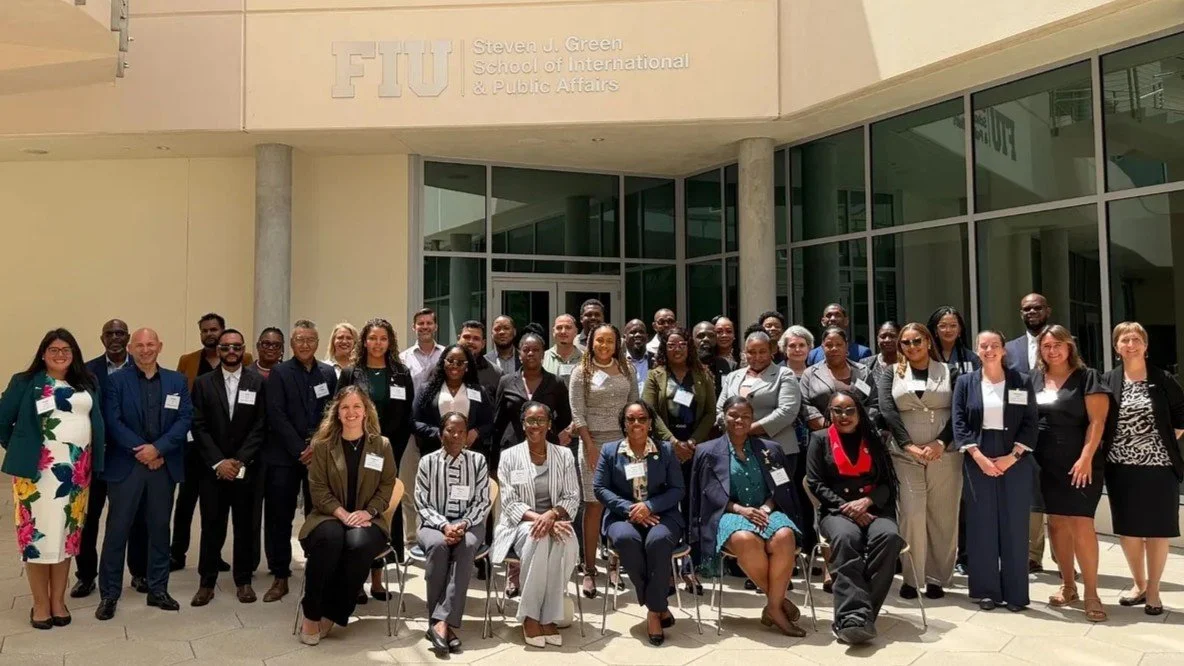
The delegation for the 2026 Caribbean Regional Workshop
The workshop marked a return to where the Digital Parliaments Project (DPP) began. In September 2024, the House Democracy Partnership and ParlAmericas brought Caribbean Members of Parliament, advisers, and parliamentary support organizations to Miami to discuss the changing digital landscape. A deep-dive “world cafe” discussion asked: What single project could benefit every parliament in the region? The answer was nearly unanimous. Parliamentarians wanted access to digital tools to modernize their internal operations, tools that could be shared, adapted, and improved across borders. In response, POPVOX Foundation launched DPP in January 2025 with a founding cohort of five Caribbean parliaments. The project has since grown to include additional parliaments across the Caribbean, as well as partners in Africa and the Western Balkans.
Two years after that first conversation, clerks, Hansard secretaries, and ICT staff returned to Miami to explore practical steps of adopting AI within parliamentary workflows.
The Workshop Details
Day One opened with framing from the House Democracy Partnership, ParlAmericas, and POPVOX Foundation regarding the timeliness of parliamentary modernization initiatives and the shared experiences of parliamentary staff around the world in navigating AI adoption. POPVOX Foundation presented on the origins of the DPP and provided an overview of ParlLink, an AI-powered platform for parliamentary workflows, developed by POPVOX Inc., in collaboration with POPVOX Foundation and made available at no cost to participants in the Digital Parliaments Project. Its current feature set allows parliaments to digitize and enrich documents, and create standardized metadata and embeddings that can be accessed through APIs or chatbots embedded on the parliament’s website.
Participants then took part in a facilitated roundtable on their own digitization approaches, with perspectives spanning the full arc of the journey: from parliaments still working through paper archives, to those running fully digital workflows, to teams already building AI prototypes into their daily work.
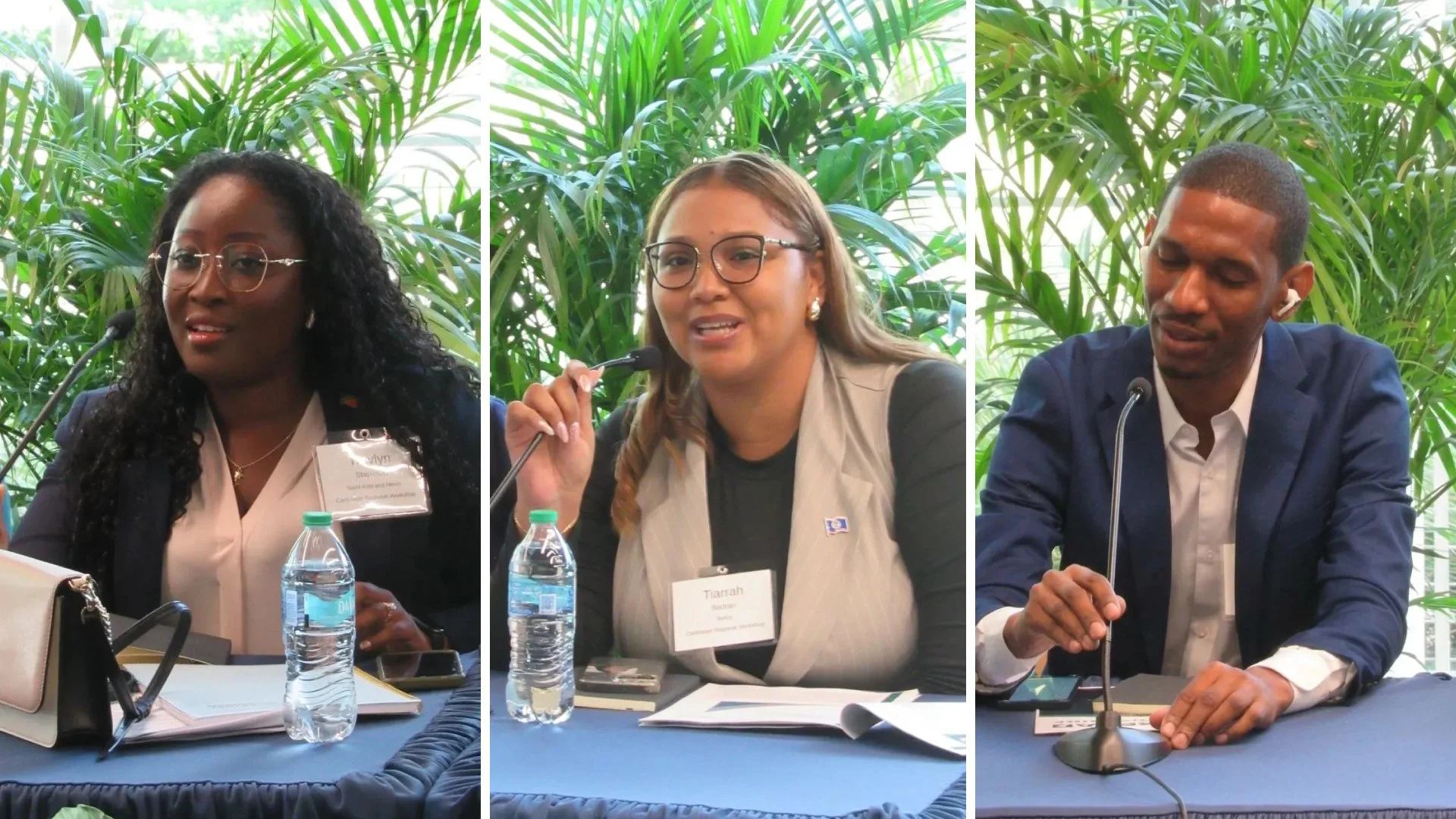
Delegates from Saint Kitts & Nevis, Belize and Jamaica sharing their perspectives with the group.
Camelia Iliut, Director of Digital Products and Services at the House of Commons of Canada, led a deep dive on legislative data standards, explaining why consistent standards matter for interoperability and long-term preservation. The afternoon continued with a World Café breakout session that gave participants space to work through four practical questions together:
AI policy,
AI training,
change management, and
digitization and transparency.
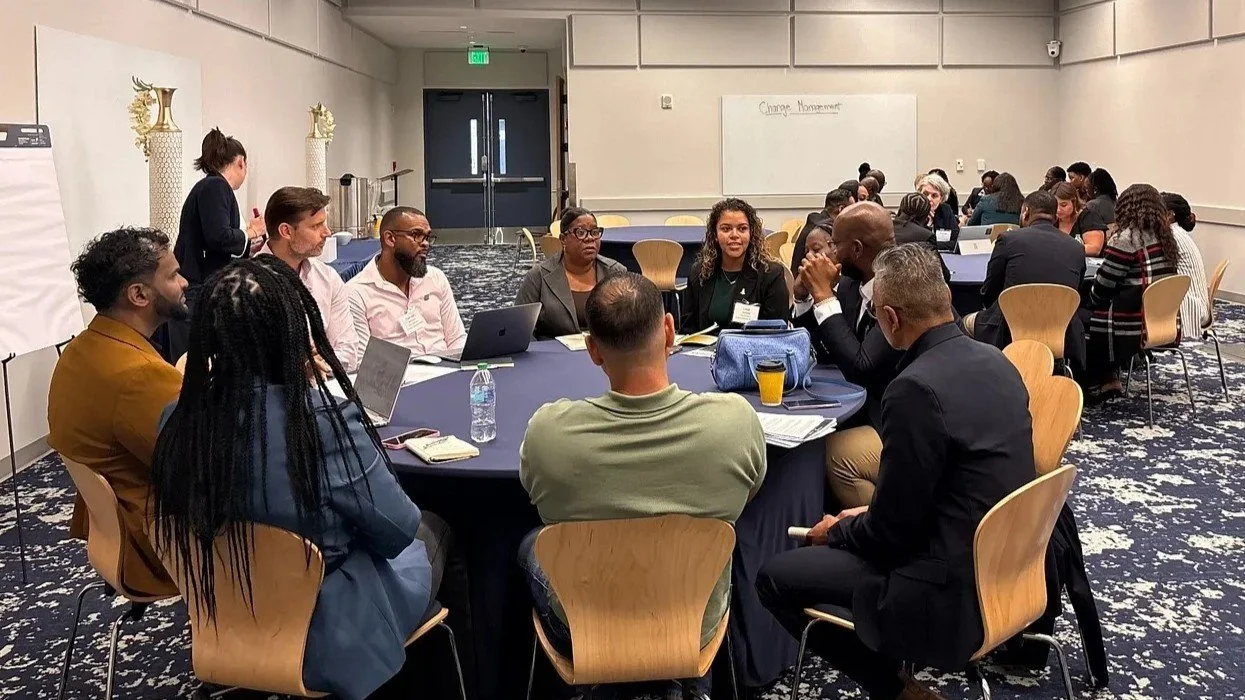
Participants discussed a variety of topics, including AI Training and Change Management.
Each table produced guidance that delegations can adapt to their own institutions. Day one closed with a reflective session on current AI use in parliaments and knowledge-sharing about best practices and unique use cases.
Delegates spent Day Two turning toward the workflows and capabilities they want to build next. The morning opened with POPVOX Foundation Cofounder and Executive Director Marci Harris, who made the case for why institutional AI matters for parliaments and laid out what it takes to get there. Delegates mapped their Hansard workflows step by step, surfacing shared pain points and brainstorming technical solutions. An open-ended AI skills panel fostered full audience participation in a live survey that highlighted shared AI knowledge gaps, skills, and interests. The day's centerpiece was a live vibe coding session in which delegations built working tools of their own. A final discussion looked ahead to what becomes possible once parliamentary data is digitized and can serve the public, not just the institution.
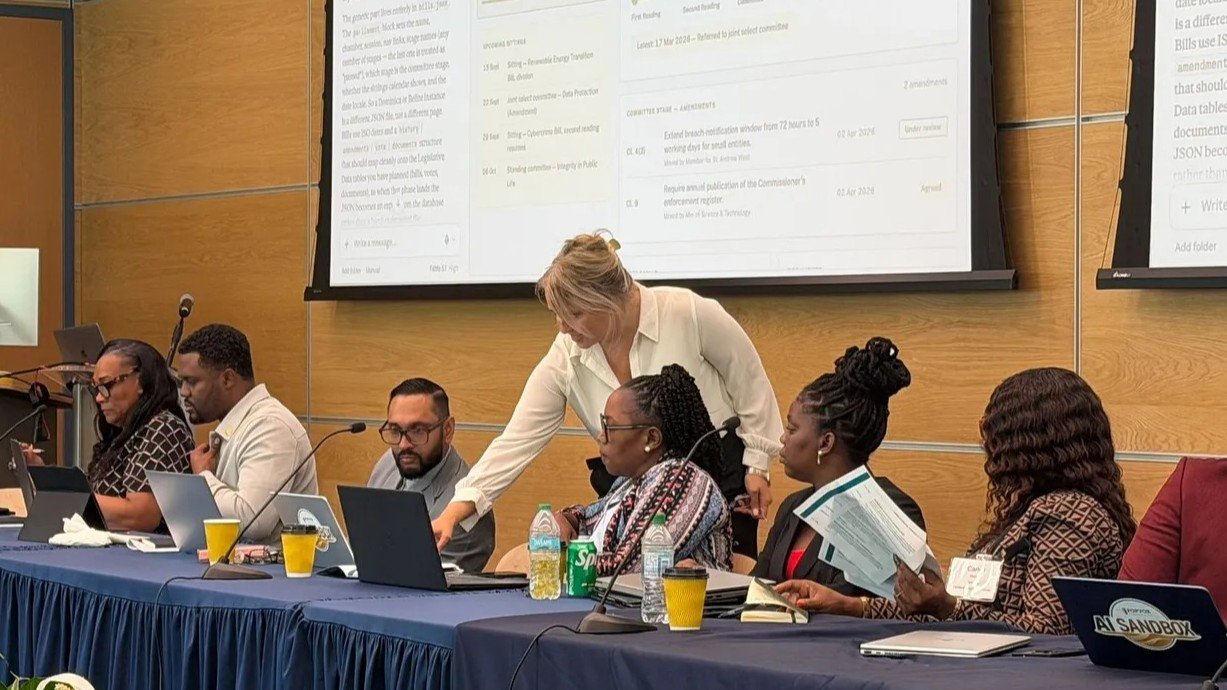
Delegates getting to be hands-on with the POPVOX Foundation AI Sandboxes.
What We Heard
Across the weekend's discussions, delegations were encouraged to tie the information presented back to the real work that takes place within their parliaments. For some parliaments, the first step is protecting what they already have. Where records have been threatened by hurricanes, physical decay, or years of informal storage, digitization is as much about resilience as modernization: it safeguards institutional memory before it can be lost. Other parliaments have been integrating AI for years, which raised a question for the whole room: must newer e-parliaments pass through every stage of that journey, or can they leapfrog ahead? Through knowledge sharing, delegates identified that many steps can be accelerated, though the information and institutional foundations for sustained modernization still have to be built.
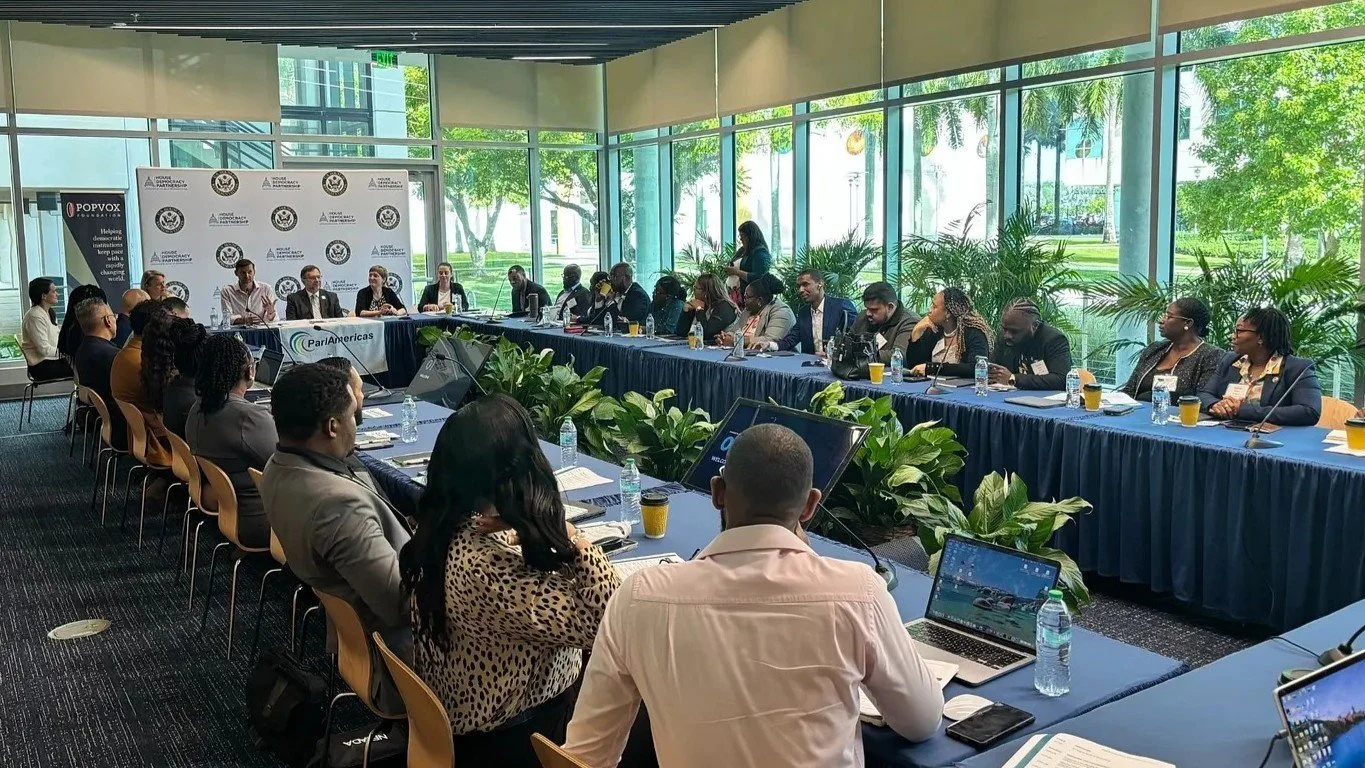
Delegates around the room discussing how integration of AI is happening in their respective parliaments.
Delegations described building prototypes in-house, pairing commercial tools with tailored AI workflows, and forming internal working groups to guide adoption. Conversations often turned to topics of change management, as individuals shared how tools only get adopted when staff, Members, and the public have confidence in how they are governed. Whatever their starting point — digitization to AI tool design and adoption — every delegation was working on the same problem: closing the gap between how fast AI is moving and how fast their institutions can move with it.
What Comes Next
Each parliament received an individually tailored assessment report reflecting its own parliament's priorities and next steps as well as a general follow-up report with the workshop's outputs. In addition, each delegation left Miami with an open invitation to join the DPP as a partner parliament, becoming part of a community built on continued knowledge sharing through quarterly convenings, the DPPLink newsletter, and shared resources.
The value of the weekend showed up as much in the hallways and at the networking reception as it did in the sessions. Delegations that had spent the day comparing Hansard workflows and policy drafts kept the conversation going over coffee and dinner, and a WhatsApp group created during the workshop is already carrying those exchanges forward. Those connections are what turn a single workshop into lasting momentum. With peers across the region and around the world no parliament has to chart this course alone. As one participant wrote in an anonymous survey, "This initiative and workshops like these are allowing parliaments to steer their own ships rather than be swept away by the current of the waters that is artificial intelligence."
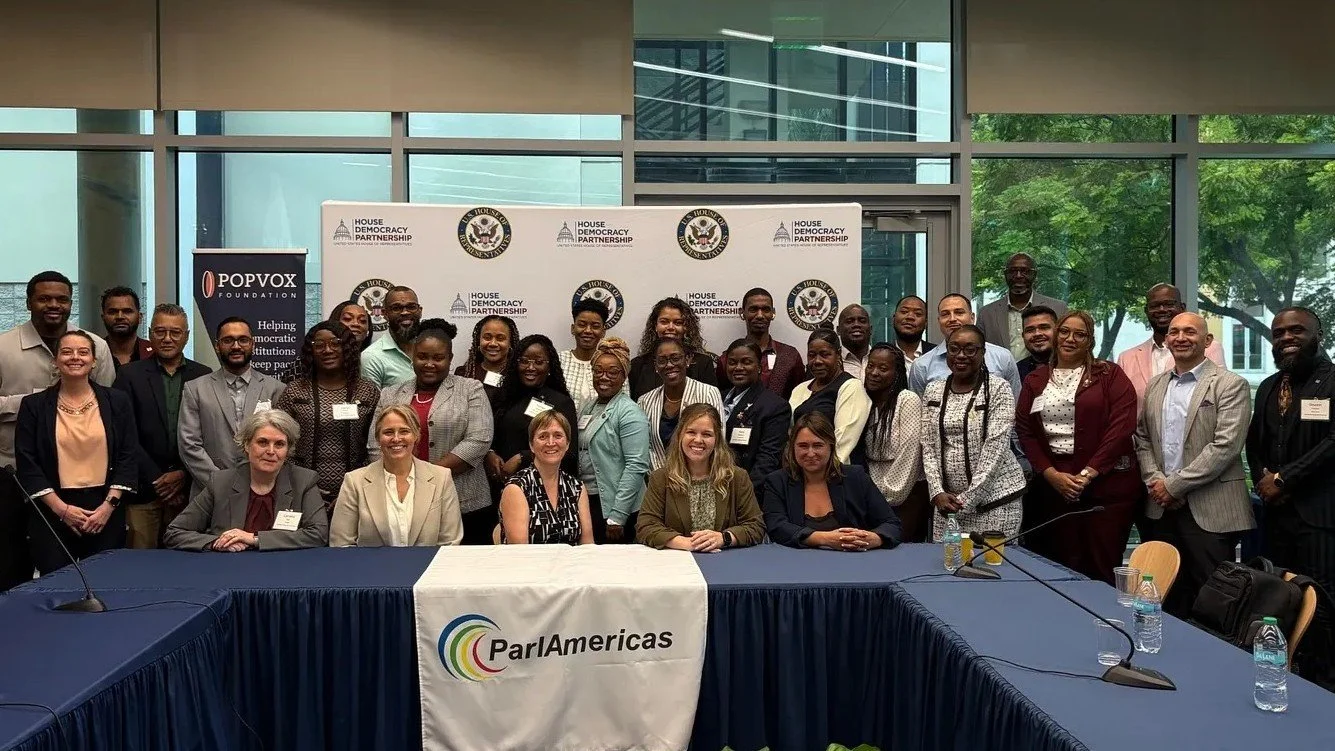
POPVOX Foundation is grateful to the House Democracy Partnership and ParlAmericas for their collaboration, to Florida International University for hosting, to the House of Commons of Canada for sharing its expertise, and to every delegation that came to Miami ready to learn alongside with us.
Questions about the Digital Parliaments Project? Contact Chloe Ladd at chloe@popvox.org.