In late July of 2026, POPVOX Foundation joined legislators, legislative staff, and international delegations at the National Conference of State Legislatures (NCSL) Legislative Summit in Chicago. Over three days, the team presented a general session on AI in legislatures, ran hands-on AI sandboxes from the exhibit hall floor, cohosted a panel on constituent services, and convened an evening reception for international delegates.
Below is a summary of what we presented, what we heard, and what it means for the work ahead.
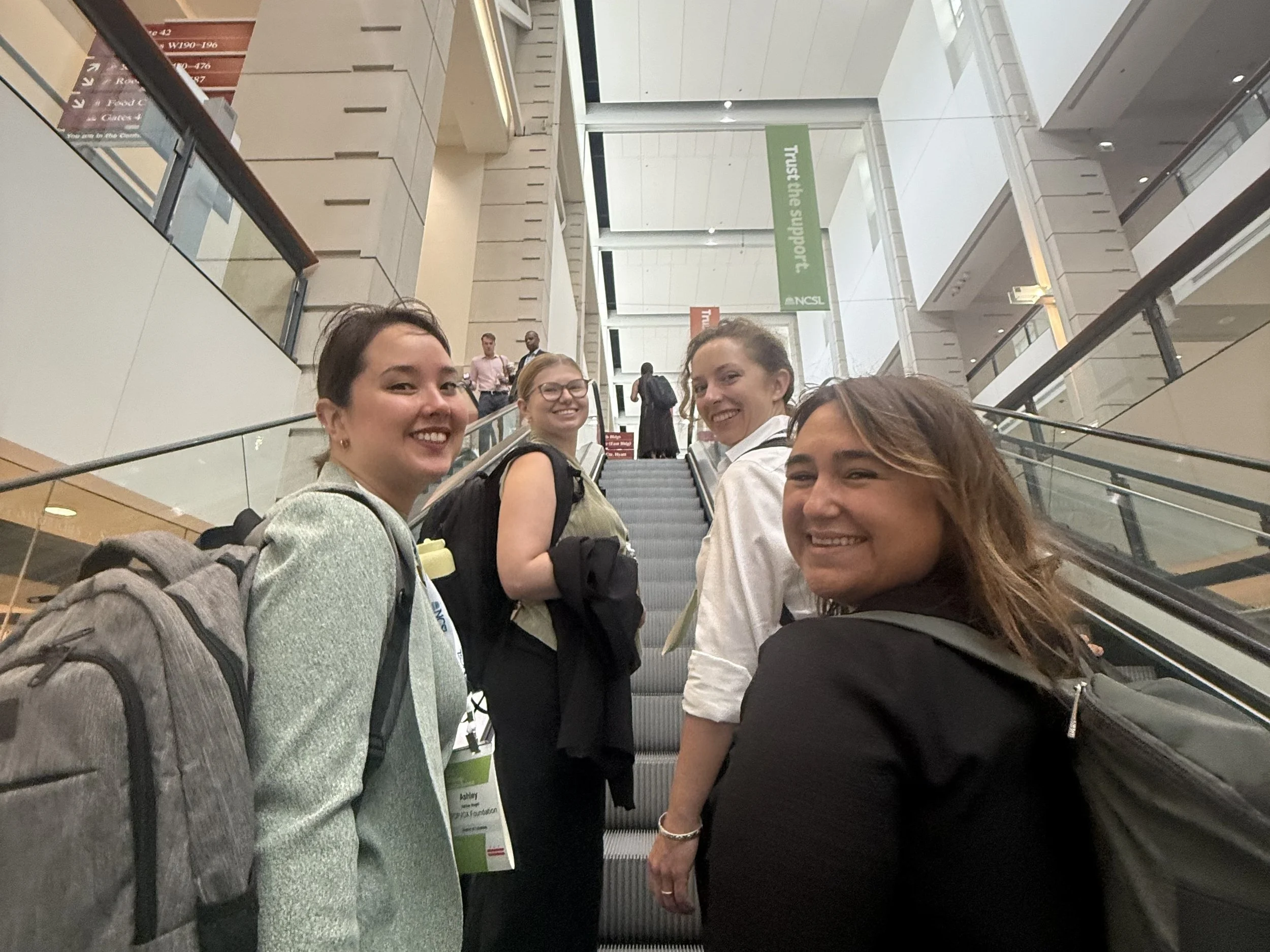
The POPVOX Foundation team arriving at the 2026 NCSL Legislative Summit in Chicago
When AI Joins the Staff
Cofounder and Executive Director Marci Harris opened with the framing that runs through all of POPVOX Foundation's work: the pacing problem, or the growing gap between the speed of technology and the speed of governing institutions. The presentation drew in part on the recently released State Legislative Capacity in the AI Era, which is based on interviews with legislators and staff in 22 states.
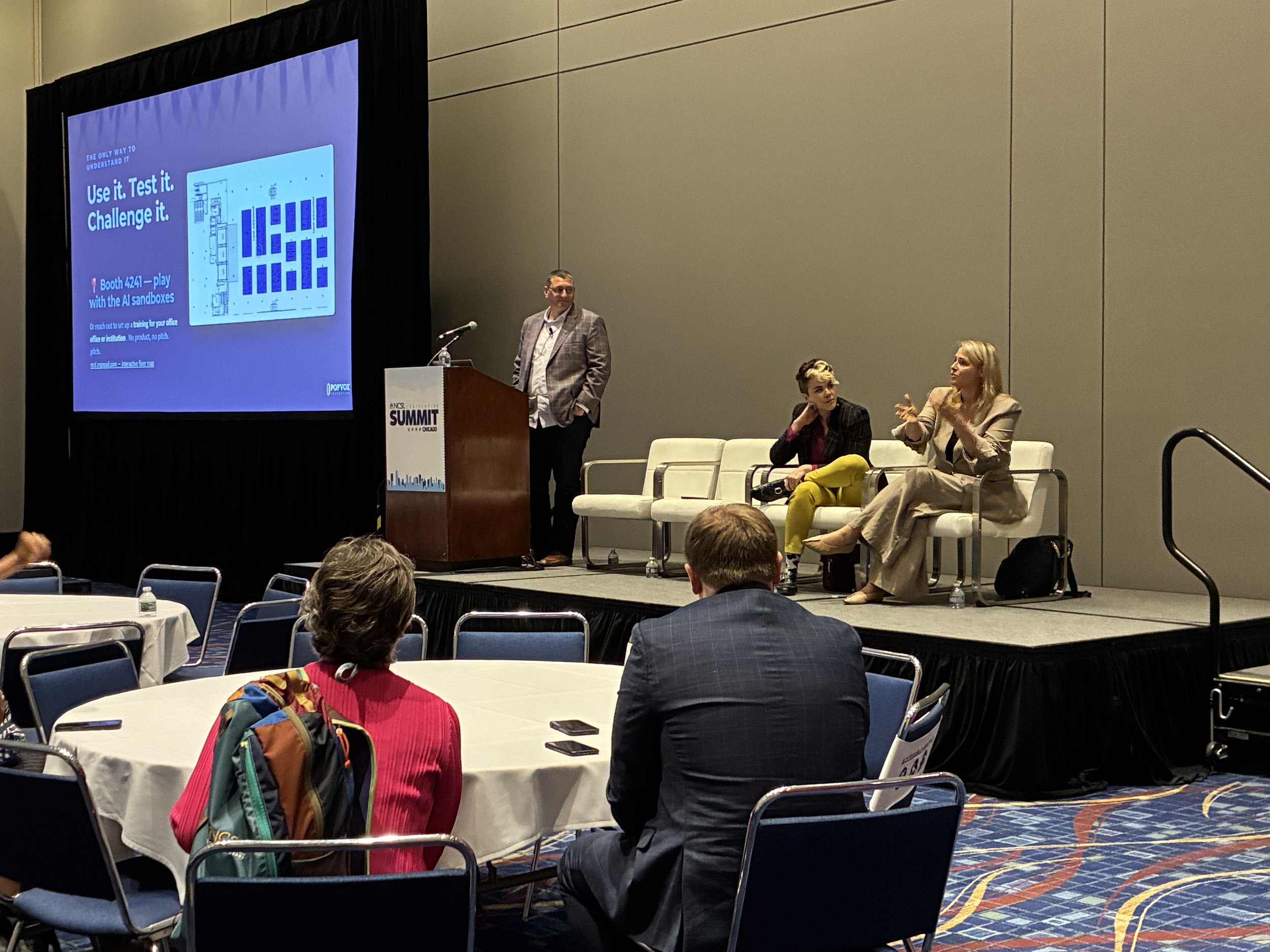
POPVOX Foundation Cofounder and Executive Director Marci Harris presents "When AI Joins the Staff" during an NCSL general session
For a state legislature, that gap shows up three ways:
Internally, in paper trails, session calendars, and institutional memory that lives only in people.
Across branches, where the agencies a legislature directs and oversees adopt AI faster than the legislature writing their mandates.
Externally, where constituents, industry, and now AI intermediaries engage the institution at machine speed.
NCSL surveys show the share of state legislative staff using generative AI for legislative work rising from 20% to 44% in a single year, which is happening whether or not institutions have decided how to respond.
The presentation also raised new stakes around model training data and institutional AI literacy: legislatures are not only AI users, they are AI sources. Constituents increasingly ask a language model what happened in their legislature rather than visiting a legislative website, and whatever the institution publishes is the answer they get. Harris walked through a case in which a search engine and an AI assistant both reported that a hearing had taken place. Every source they cited was official. The hearing had been postponed the evening before, and the notice went up as a button rather than a link.
The talk closed with six things any staffer or lawmaker can do before their next session day, at no cost, along with a challenge: take a report, hand it to an AI tool, and ask it to build a dashboard. Harris demonstrated one built from a 139-page housing statute, surfacing 208 trackable obligations with the agency, deadline, and citation attached to each.
What We Heard at our Booth
After the general session, the team hosted a booth in the massive NCSL Exhibition hall — alongside over a hundred other civil society organizations, vendors, advocates, trade industry groups, and more. For our team, this was an opportunity to make the recommendations in Marci’s talk concrete — especially with our AI Sandbox exhibit.
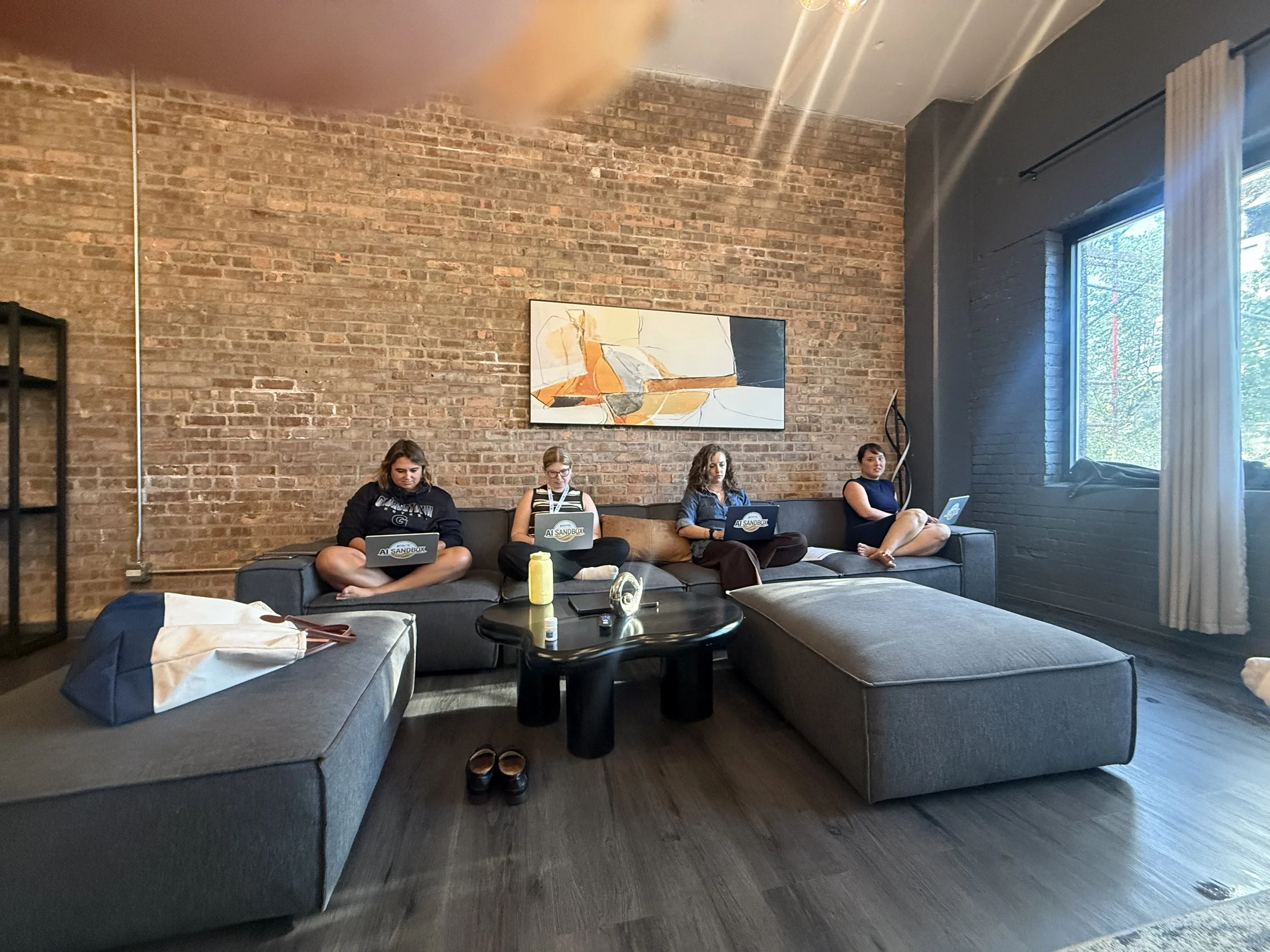
Building the sandboxes the night before the exhibit hall opened
An AI sandbox is a bounded, hands-on environment loaded with real legislative material, where a staffer can sit down and try something without a procurement process, a login, or an institutional policy conversation first. POPVOX Foundation has run sandboxes with parliamentary staff from Anguilla, Albania, North Macedonia, Serbia, Kosovo, Moldova, St. Maarten, and the US House of Representatives. NCSL was the first time they appeared in a US exhibit hall, open to anyone walking past.
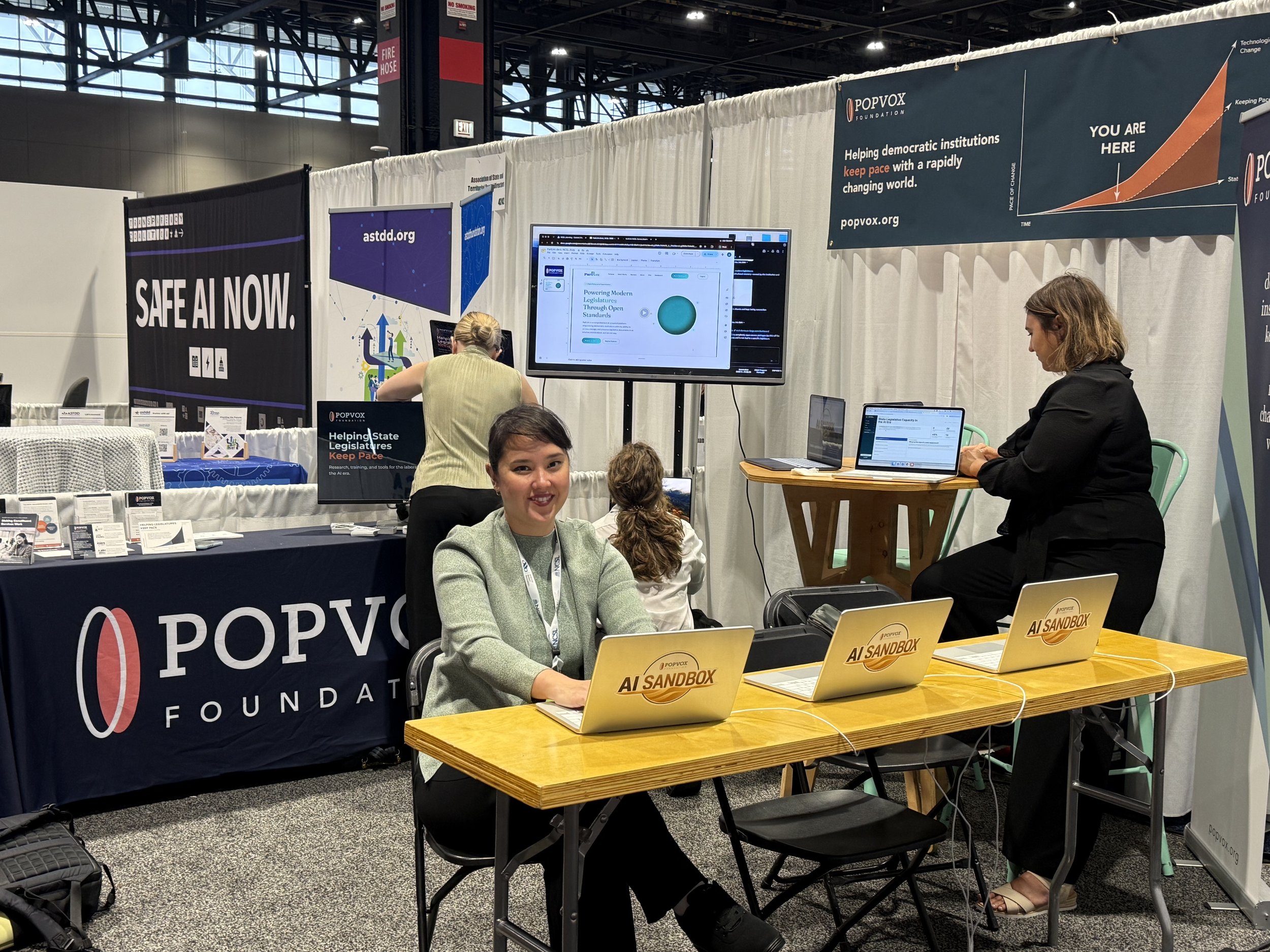
Booth 4241, set up so visitors could sit down and work rather than collect literature
A communications analyst from the Illinois House arrived with a problem, sat down at a sandbox, and built a working dashboard during the conversation. His only follow-up question was how to recreate it once he got home. Others ran the constituent test from the general session, asking a model what their own legislature had voted on that week and finding the gaps in their own public record. Institutional guidance, training programs, and phased rollouts all remain necessary, but hands-on demonstration moves people considerably faster than a brochure.
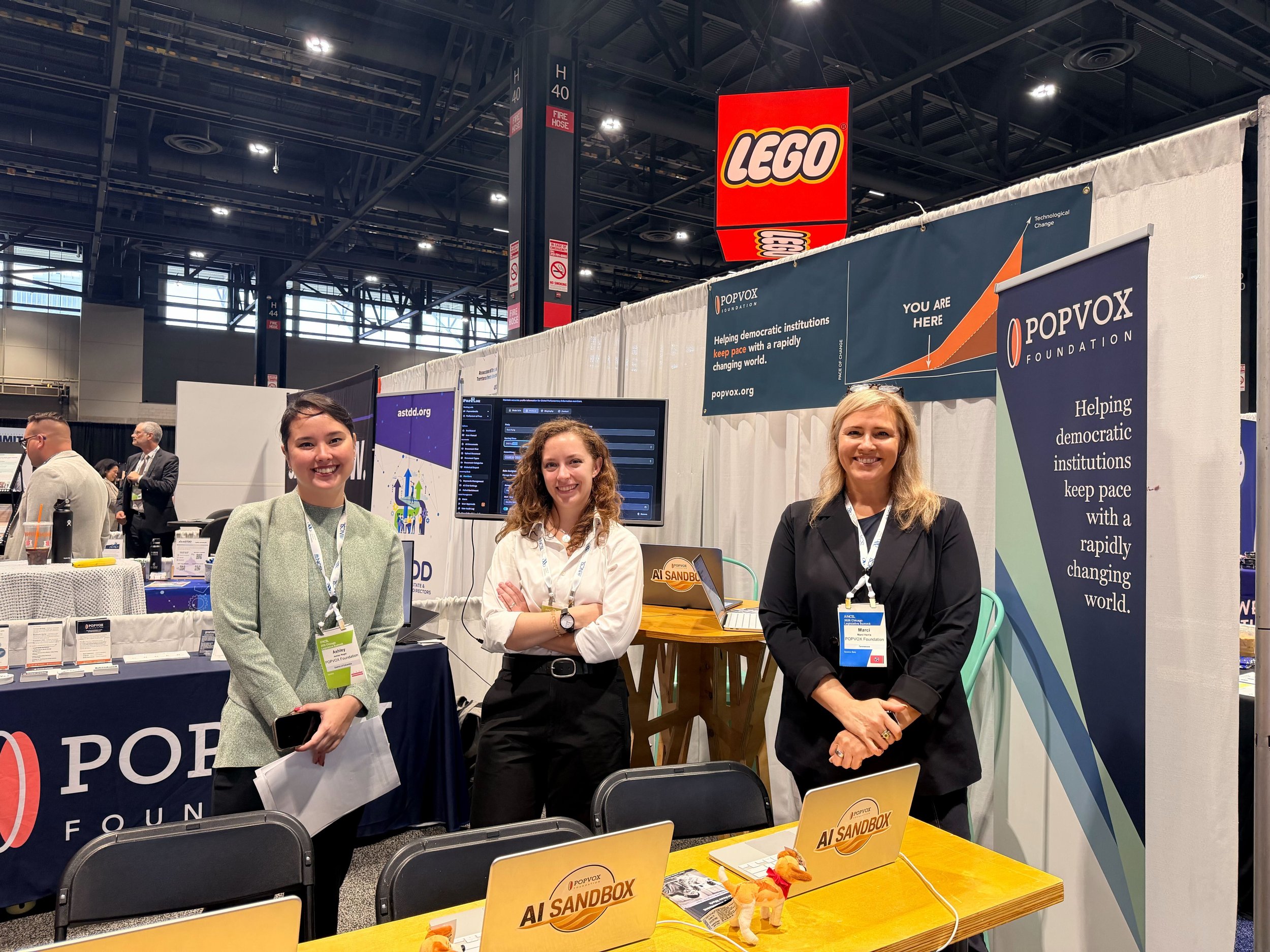
Three days of conversations with legislative staff from across the country
After the Exhibit Hall: Casework Capacity and Global Connections
Two evening events ran alongside the Summit, and both surfaced a version of the same problem: practical demand for capacity support running well ahead of the infrastructure that exists to meet it.
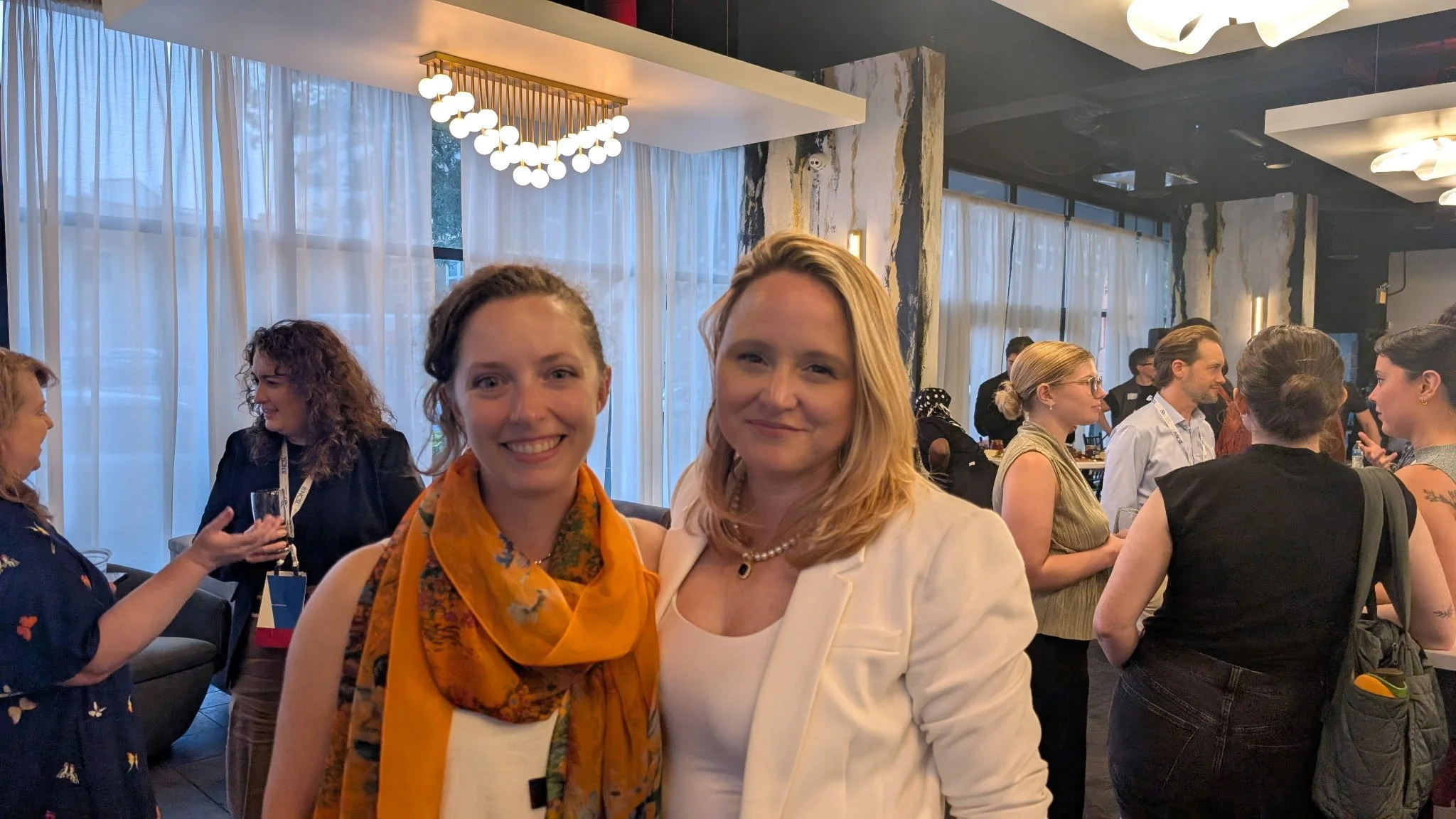
POPVOX Foundation Senior Advisor Anne Meeker and event panelist Dr. Megan Rickman Blackwood at the "Making Constituent Services Work" panel and happy hour, cohosted with Nava and TechCongress
Making Constituent Services Work
POPVOX Foundation cohosted an evening panel and happy hour with Nava and TechCongress, built around a strategic observation: constituent service or casework is one of the largest capacity drains on a legislative office, and one of the areas of legislative function most potentially impacted by AI. POPVOX Foundation’s research finds that constituent service accounts for 15% to 20% of staff allocations in Congressional Member offices, and it functions as street-level oversight, as the earliest warning an office gets that a program is failing, and often as the most durable trust an office builds. Little of that investment is connected. Offices duplicate one another's work and rarely aggregate what casework is telling them.
Megan Rickman-Blackwood of Civic presented findings from interviews with caseworkers at the federal and state level in Maryland, framing casework through the emerging concept of administrative representation, and described trials in Virginia and Nevada that flipped casework from reactive to proactive. The most important question an office can ask of its casework data, she argued, is who is not in it.
Martelle Esposito of Nava Labs presented pilot results from AI casework tools in frontline agency and nonprofit settings, organized around a question worth borrowing: not only does it work, but is it worth it? An assistive chatbot produced a 40% improvement in real-time caseworker accuracy. A referral generator cut administrative burden for external referrals by 14% among Goodwill caseworkers, and expanded what they could offer: someone arriving for job training could also leave with information on the local food bank, diapers, and child care. A form-filling assistant cut application completion time by up to 73%. Usage and trust varied widely, adoption required training and repetition rather than a launch, and offices should ask where a tool's source data comes from and what guardrails keep it accurate. The theme throughout was AI working in the background, handling mechanical load so caseworkers could focus on the human interaction.
POPVOX Foundation has published guidance on constituent services for state legislative offices, as well as a broader resource bank and hands-on trainings covering capacity building across legislative work.
Global Parliamentary Engagement
People don't usually think of NCSL as a place for global engagement, but it's there: in the international sessions, the booths, and the delegates who show up each year. POPVOX Foundation attended the Summit to give those delegates a look at our global work.
One delegate found us at our booth and made a memorable impression engaging with our AI Sandboxes. This parliamentary staffer from Kenya built a working tool live: a tracking website for local bills, solving a gap in her own parliament's information access.
On the sidelines of the Summit, POPVOX Foundation also hosted Building Digital Parliaments, an evening reception for international parliamentarians and legislative staff. The evening covered the global pacing problem, an overview of the Digital Parliaments Project, a live demo of ParlLink, and open peer exchange on modernization and AI in democratic institutions.
These moments capture what the Digital Parliaments Project is built on: legislative staff don't need to wait for permission or resources to start building. They need the room, the tools, and peers working through the same problems. We look forward to continuing building with them.
What is Next
The general session ended on a line that held up across three days on the floor: you do not get to decide whether AI is on the team. It is. You do get to decide whether it reports to you.
Subscribe to State of the Art, our newsletter on legislative capacity and modernization in the states, and ModParl for legislative modernization worldwide.
Browse the state resource bank of starter kits, skills guides, and templates.
Schedule a hands-on AI training or a sandbox session for your office.
If you work in a state legislature and want to connect or share what your office is navigating, reach out to Caitlin McNally at caitlin@popvox.org. For international and Digital Parliaments Project inquiries, contact Chloe Ladd at chloe@popvox.org.