
Dr. Maya Kornberg has interviewed hundreds of members of Congress across five decades — and she’s back on Gavel In for season two. The Brennan Center senior fellow and author of Stuck joins host Aubrey Wilson to talk mentorship, money, social media, political violence, and what it really takes to survive — and make change — as a freshman Member.
Featured Guest

Dr. Maya Kornberg is a senior research fellow and manager in the Brennan Center’s Elections and Government Program, where she leads work related to legislative reform, government capacity, and political violence. She has worked on democratic governance issues at nonprofits, international organizations, think tanks, and academic institutions. She previously held positions at the Inter-Parliamentary Union (IPU), the United Nations Development Program (UNDP), NYU GovLab, and Public Agenda. Most recently, she led research for a UNDP and IPU project examining civic engagement in the work of over 80 parliaments around the world. She is lead author of the resulting Global Parliamentary Report.
Kornberg has taught undergraduate and graduate political science courses at NYU, Georgetown University, and American University. Her commentary has appeared in the Washington Post, NPR, BBC, Scientific American, CSPAN, Newsweek, the Hill, and Slate, and her work has been cited in outlets including the New York Times, Bloomberg, the Saturday Evening Post, and Ms. Magazine. She is also the author of Inside Congressional Committees: Function and Dysfunction in Lawmaking (Columbia University Press, 2023) and the forthcoming book Stuck: How Money, Media, and Violence Prevent Change in Congress (Johns Hopkins University Press, 2026). Kornberg has experience speaking to a wide range of audiences, including at the 92Y, the New York Academy of Sciences, in Congress, and in international parliaments.
Kornberg holds a BA from Stanford University, an MPA from Columbia University, and a PhD in politics from Oxford University.
Highlighted and Additional Resources
Inside Congressional Committees: Function and Dysfunction in the Legislative Process
Stuck: How Money, Media, and Violence Prevent Change in Congress
Further Listening
About the Host
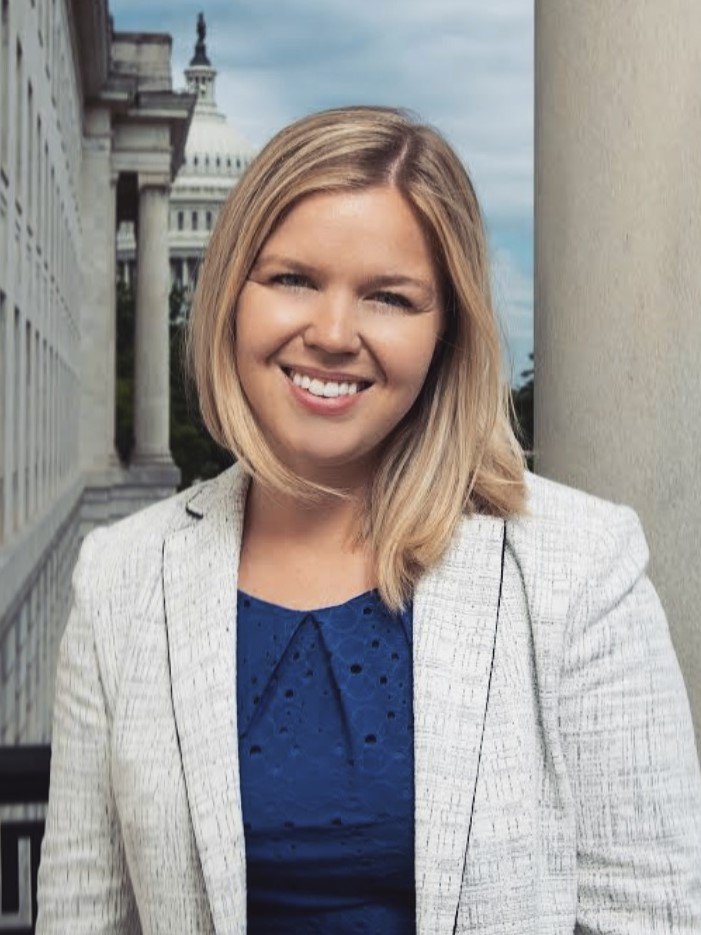
Aubrey Wilson served as former Deputy Staff Director for the Committee on House Administration (CHA) in the 118th Congress under Chairman Bryan Steil. In this role, she coordinated efforts to make the House work more effectively, including overseeing the inaugural session of CHA’s bipartisan Subcommittee on Modernization. Prior, Aubrey served as Director of Oversight and Modernization for CHA under Ranking Member Rodney Davis during the 117th Congress. She is a former House legislative assistant and member of the R Street Institute Governance Policy and federal affairs team. Aubrey’s work remains focused on supporting Congress’ and other parliaments’ internal operations and innovation.
About the Podcast
“Gavel In” is a limited-run explainer podcast series to mentor new Members Elect of the incoming Congress, their staff, and families, to help them prepare for the whirlwind of establishing their new offices, teams and roles in our nation’s capital.
It augments the House of Representatives’ official New Member Orientation and breaks down complex topics in short, easy-to-understand lessons on House Floor operations, office structure and hiring, budgeting, technology, security, ethics, and also the intricacies of parliamentary procedure, rules, and how a bill becomes a law.
Cohosted by POPVOX Foundation’s Managing Director Aubrey Wilson, “Gavel In” is a nonpartisan resource to demystify the experience of working in Congress.
About POPVOX Foundation
POPVOX Foundation is a nonpartisan nonprofit organization with a mission to help democratic institutions keep pace with a rapidly changing world. Through publications, events, prototypes, and technical assistance, the organization helps public servants and elected officials better serve their constituents and make better policy.
Transcript
Season 2 Ep. 5: In Session with Dr. Maya Kornberg
Aubrey Wilson: Welcome to Gavel In. I'm your host, Aubrey Wilson, managing director at POPVOX Foundation, prior House staffer, and to this day, a Congressional modernizer. Working in Congress, whether as a Member or staffer, is not easy. And arguably, life on the job is more demanding than it has ever been. For this episode, I'm joined by Dr. Maya Kornberg, a senior research fellow and manager in the Brennan Center for Justice, Elections and Government Program. She is also the author of two books on Congress that we will actually touch on quite a bit during this conversation. The first is titled Stuck: How Party, Media, and Violence Prevent Change in Congress. And the second is titled Inside Congressional Committees: The Function and Dysfunction in Lawmaking. Maya and I dig into tips for staying energized, finding mentorship, and driving change as freshmen Members. All of this, while also sharing insights into the realities of how hard serving in Congress is, and how thankful we are for those who have the drive and courage to serve our country in this way. Let's gavel in. Maya, I am so excited to have you back on Gavel In for season two. Out of all of the episodes that we did for season one, one of the ones that I truly enjoyed the most was when we actually did a deep dive on committee functions, because as a staffer who had worked in a personal office and on committee and had even been on the Hill for multiple years before working on a committee, I had never understood all of the history of dynamics, of committee strengths and weaknesses over time. And I came across your book when it was published a couple of years ago, where you literally wrote the book on committees. And so for season one, we had dug into that. I wanted to have you back for season two, because you have another book that actually came out in 2026 on just Congressional reform in general, and like why Congress seems to be stuck. And so I'm so excited to have you here today to kind of just talk more broadly about Congressional capacity. So thank you for coming back to join me for Gavel In.
Dr. Maya Kornberg: Thank you so much for having me again. I really enjoyed season one and I'm looking forward to season two.
Aubrey Wilson: Okay, so right off the bat when we're talking to incoming freshmen Members, their families and their staff, obviously it's not a, you know, a surprise across America that Congress is somewhat dysfunctional in the inside and is kind of struggling with your most recent book that you publish. You kind of go through the history of Congressional capacity. Can you say, like from your perspective, you know, kind of thinking about being in the shoes of a freshman, what these people should expect coming into Congress and how is maybe different than even the freshmen who came in just two years ago?
Dr. Maya Kornberg: Certainly. So. So for my most recent book, Stuck, I interviewed Members, current and former, who served in the last 50 years. And one of the things that I consistently heard from them, which I think will probably be the case most likely this coming January as well, is that they were surprised. Just like how little onboarding, how little hand-holding there is when they got to Congress. And that's everything from former Member Malinowski telling me that he, you know, didn't understand the minutia and the ins and outs of like, things like financial disclosures and other things that they have to submit to. Now, Senator, then Congressman Andy Kim saying that he didn't have a lot of, a lot of experience with like media training and things like that. And then there's certainly a lot of Members who are saying, well, you know, beyond those elements, there's no one just teaching you how to be a lawmaker. And particularly for the many, many Members who don't have experience in state houses or city councils. You know, just the ins and outs of doing the job is something that there isn't a lot of formal training for in Congress. And so I would urge new Members to not necessarily be surprised by that, but to be ready for that and figure out and maybe we can talk about this during the podcast. Like, what are other ways that you can fill this gap that you might encounter when you get there?
Aubrey Wilson: One, it really does like hit you like a steam train. Like, I mean, like it's one of those things where people say all the time that coming into Congress is like drinking from a fire hose. But it also doesn't stop, like between how quickly policy develops, how quickly new things come on the Congressional calendar that you've never experienced before. Like Congress is always a challenging place to work, not only because of the internal dynamics, but also obviously the politics of it. But it also isn't a place that has kind of any steady, you know, steady elements. And so you were making the comment about finding ways to, like you said, to kind of like continually learn outside of that kind of initial orientation period. What are some of the best practices that maybe those Members shared with you about how they have survived that fire hose experience and how they've continued to not just, like, make up things new for the first time, not reinvent the wheel, but actually maybe learn from their peers.
Dr. Maya Kornberg: Certainly. And I'm glad that you brought up the drinking out of the fire hose metaphor, because that's one that was used often when I spoke to to different Members about just like, what was it like to be a freshman and to get here for the first time? One of the things that I've seen effective Members do is to find a mentor, right? Because that's someone who's there who can teach you and show you the ropes. And it's also particularly important in a increasingly and increasingly centralized, House of Representatives, because so much is driven by senior Members and leadership that, you know, it's kind of a two birds with one stone approach where you're having someone who can teach you, but also someone who's maybe in a position to help you really push forward your agenda in a body where currently and we can get into some of the structural changes that have led us to this point. But currently, rank and file Members don't have as many opportunities to actually shape legislation just on their own, particularly as freshmen is maybe they did a few decades ago. And so whether that be Lauren Underwood coming in in 2018 and teaming up with Alma Adams to create the Black Maternal Health Caucus, because that was a core policy priority for her, particularly coming in as a trained nurse and health professional. Or whether that be folks like Angie Craig or others who told me that, you know, even the certain caucuses, like she talked about the Congressional Women's Caucus. But, you know, there's other caucus groups where you can learn from Members. And I think particularly for groups that are could continue to be marginalized and underrepresented in Congress, like, like women and people of color and other groups that have different caucus representation. That can be particularly a really powerful community and space for mentorship.
Aubrey Wilson: Another one that I feel like I hear pretty often actually comes down to like the staff, that Member hire, too. You know, in so many ways, Congress doesn't have like actual institutional knowledge that stays with the institution. I would say that if it did, that exists in, you know, offices like clerk, parliamentarian, you know, Congressional Research Service, Government Accountability Office, it's kind of external to the Member offices themselves because the staff and Member turnover is so high that when a Member leaves, their staff leaves or they scatter. And so when you're coming into a new seat and you're hiring all new staff, you really lose the perspective and knowledge of that whole staff and Member who sat in that seat before you, which is crazy that there's not really an institutional knowledge there that continues with the seat, especially if that seat is in a district that's constantly flipping parties. And so there's a debate I hear from new Members all the time where I think a lot of new Members expected to come to DC and think, I'm going to hire staff, and everyone's going to be from my state because we're representing my state. Can you talk a little bit about maybe like the approach of staff also being like a resource for some of this learning?
Dr. Maya Kornberg: Certainly one of the major takeaways in the conversations that I had with Members of different generations is that hiring staff is also key, right? Alongside finding a mentor, and particularly Members who did not have Hill experience or maybe even legislative experience at all at any level. They told me, you know, there's a quote from a Member of the class of 1994 on this, you know, it's hard to navigate an institution when I, where I was never even an intern, he told me. You know, so so you want to hire people who know how to navigate the institution, right? Just like when you're going into any other workplace. So I think particularly for folks who don't have that experience, hiring someone who does have that experience. Matters a lot. And I think that that's especially true. I think, you know, in this current dynamic, where there's so many obstacles and roadblocks that are getting in your way, and so hiring someone who has that real in-depth expertise and lived experience on the Hill is going to be really critical for for a freshman. And then again, particularly for freshmen who maybe don't have that Hill experience or even even state or local legislative experience, at all. Obviously, every Member makes a different decision about how to use their budget and what kind of balance of district staff or policy staff to hire. But I would strongly recommend, based on conversations and advice from former Members and current Members, that that particularly freshmen think a lot about just hiring people who know how that place works, because you're going to need to know how to navigate it.
Aubrey Wilson: So I want to dig into kind of the tension of how there's so many people who are obviously running for Congress as they want to serve their communities, make the country better, and believe that they can do a better job in that seat than their predecessor. With that dynamic, it's like we want to come in to Congress and do things differently. And so when you hire somebody kind of knows how it works. What's kind of that what's that tension there between a new Member who can potentially lead some change versus like knowing where the bathrooms are or knowing how kind of House rules work, right?
Dr. Maya Kornberg: I mean, I, you know, it's interesting because I'm thinking back to a conversation that I had with a recently retired Member where he told me that, you know, he got to Congress over a decade ago and he sat down with, I think, his legislative director, some senior staff that he had hired. And it was like, these are all the things that I want to do. And then the staff member, you know, went down the list. He was like, well, maybe we could do like 1 or 2 of these things and like, maybe in a little bit after we've, you know, gotten the committee assignments and, you know, done, done some of this work. So, I think and he, he was talking about the experience is kind of, you know, taking the wind out of his sails and kind of disheartening. But I do think level setting and having realistic expectations is important. And that's something that staff can help you do. So yes, to reform energy. But I think reform happens when you go about it in a strategic and savvy way. And so skilled staff like the staff and that Member ended up being a very, very effective reformer. You know, so skilled staff can help you just understand what's manageable, what's doable, what it looks like to move things in the House as it looks right now. And I think that that kind of collective effort can, can can, can make a real impact. The other thing I would say is that right now, you know, it looks like there's going to be a wave in the House. We don't know how big the wave will be. And, you know, we're I guess we'll timestamp the conversation that we're talking before the election. So I'm not prophesying anything, but but it looks like it's going to be a wave. And when there's a wave, it's not just one Member hiring a staff, one new Member hiring a staff member. It's like, you know, that times dozens and dozens of Members. And so I think that the other thing that I would advise it would be important in a wave class is for there to be some kind of collective effort and as much communication as possible on strategy, because that's where you can really start to move things, is when you're building a broad coalition and you're coalesced around, you know, some key reform agenda items. And I think that that goes beyond an individual Member talking to their staff or the Members and the staff have to talk to each other in this incoming class.
Aubrey Wilson: Yeah, 1,000%. And so you have this dynamic, like you said, where we might have this huge influx. So no matter what, we're going to have a huge influx of freshman Members just because of the amount of, you know, retirements that have been announced, individuals who've gone over other seats, individuals who left Congress for a variety of reasons. So this huge influx of new Members trying to figure the place out, you have the ability for a lot of them to kind of caucus together, to kind of drive some major change. If they do see that the way that the place doesn't function inside, you know, should have a new approach. You made the comment that there was that dynamic of that Member and that staffer where the staffer was kind of setting realistic expectations, and the Member had the kind of the wind taken out of their sail. I feel like as a staffer, you who works in, you know, in Congress kind of over multiple sessions, you see this cycle happen where you see all these like hopeful Members and staff at the beginning of January, February, March, April, May, June of like a new Congressional session. And then it's almost like, you know, people get pessimistic or they get jaded over time for lots of different reasons. Can you talk about what your research and all your conversations have shown are just about how much harder it is to be a freshman Member and new staff on the Hill than it ever has been.
Dr. Maya Kornberg: So, you know, some of the stuff, you know, with the, with the kind of preface that some of the stuff that I just talked about is universal, right. For generations Members have had to come in and learn the ropes. And that was true in the 70s and that's true today. I think what's different today. There's from the 1970s and I would just list a few factors is like a my book starts in 1974 with the the post-Watergate class right of reformers again coming in to fix Washington. You know, especially with anger at, an overly powerful and abusive executive branch and a lot of other things going on. What what then happened shortly thereafter was Supreme Court decisions like Buckley in 1976 and then later Citizens United in 2010 made it so that money became a much, much more central part of the conversation than it ever was before. So Members today, unlike Members in the 70s and, you know, even the 80s, have to come in. And if they want to move through the ranks, the way things work right now, there is an expectation that they will pay what's called dues to the party, that they will start what's called a leadership PAC, which is a vehicle that allows them to donate money to other Members in order to, build, you know, alliances and clout in the chamber. That kind of thing means that not only did you have to fundraise to win your election, but you have to continuously fundraise and you have to think strategically about, you know, dues to the party and donations from your leadership PAC in order to get your reform agenda across the finish line or get that seat on that key committee and things like that. That's a dynamic that is relatively new in the in the historical sense. It puts a lot more pressure on Members right now who may not realize that their fundraising didn't end with their campaign to be spending a lot of time thinking about that strategically, as well as dialing for dollars. The other thing that has changed is that, and I mentioned this a little bit earlier. It used to be the case that, you know, Members could come in and, and through subcommittees and through committees have more power to, to actually shape legislation than they do now. What's happened in the last few decades as a result of, you know, rules, changes and, and other changes over the course of the last few decades is that, frequently bills are, you know, not not passed in the kind of regular order. Schoolhouse Rock, how a bill becomes a law version of things that we all learned in school. Frequently what you'll see is leadership. And, you know, maybe with the help of few lobbyists, drafting legislation, pushing it down in different ways, bypassing the committee process. And so what that means for incoming Members is that there are fewer kind of traditional opportunities to then shape the legislation than you would if you had a regular order process. What I would urge Members to do, between November and January, when they have to vote on it, is to understand what the rules package that they're going to have to vote on in day one means understand what it means for their power. Because some of the stuff that I just talked about like that, you know, allocation of power between committees and leadership, a lot of that gets hashed out in different ways in the rules package. And Members too often have to vote on that before understanding what what what what is happening. So I do think that that dynamic overall, historically, just zooming out has led to less power for for individual Members. I do think that there's going to be a new rules package in January, with some opportunity to shape that and encourage Members to to to really understand what's in the rules package before January, when I'll have to vote on it.
Aubrey Wilson: Yeah, I feel like that that dynamic of, you get to Washington and you end up spending so much time fundraising that you weren't expecting to. You come with all these hopes of this legislative agenda based on all these campaign promises and like, you know, your drive and passion for while you're running for your seat in general, and you come in and you realize that so much of the legislative process is relatively out of your control outside of drafting, introducing that legislation, beginning to move and having to be part of some of these big packages might be very challenging as a freshman Member, especially if you are in a minority seat. The other element to that, I feel like has probably changed for modern Congresses versus even just a couple of decades ago. It's just social media. Can you talk about how much that has also changed? Like not only Member time and attention, but just like the dynamics in the chamber.
Dr. Maya Kornberg: So there's a chapter in my most recent book, Stuck, called Kings and Prophets. And it's an analogy. It's an analogy that, Member Sean Casten gave in an interview that I did with him. And there's different versions of this analogy that I've heard before, but his was that you can be a king who governs or queen, or you can be a prophet with a megaphone. And those are symbolic of two different kinds of power that Members can have. Now, what we've seen with social media is that it's shifted the incentive structure right around that dynamic. This, in a way, didn't start with social media. I would argue that it started the 1980s when television cameras were introduced into Congress, and folks like Newt Gingrich were known to make speeches to to the empty floor because they knew that someone was watching. So that was that was new at the time. And they understood that that mattered, that public visibility mattered. Now social media has just supercharged this dynamic. And what you have now is a Congress and which Members are coming in. And they realize in many, in many instances, real quickly, as I mentioned, maybe when they sit down with a senior staffer and they explain to them how difficult it's going to be to move the legislative agenda, they realize that it might be even more worth leaning into the prophetic power, the social media power. And how do you gain prominence on social media? Well, frequently it's like the most salacious or dramatic sound bite moments. And I think that this has led to a Congress where there's all of these sound bite moments and committee hearings. Members are doing that because they're specifically wanting to clip that later. And it, I think it also has to be seen in the context of a fundraising landscape where, you know, increasingly, fundraising has become nationalized. Increasingly, fundraising is done online. And so in the book, I give the example of Joe Wilson screaming, you lie in the middle of then President Barack Obama's joint address to Congress, and using that clip both to gain prominence and to fundraise. So right now, there's an incentive, I think, for so many Members, that Member Lauren Underwood, who I interviewed, called an incentive for eyeballs and acclaim rather than substantive policy making. Right. Because on social media, you can you can have a lot of power and gain prominence and raise public awareness about things without ever having to touch legislation that you might not have a chance to touch otherwise. You can raise money and you can really elevate your public profile. So I think there's a lot of incentives for that. There are still Members who choose to be kind of more kings and queens who govern. But but I think it's a choice. And I think it's a dynamic that increasingly makes it so that, it's very attractive for Members to lean into the social media power.
Aubrey Wilson: Well, that nationalization of fundraising is something that I just have even struggled with because as a Congressional staffer, so often we are serving your Member, everything comes back down to serving the district. You know, this is not only obviously your duty, but it's also who will ensure your boss gets reelected. Everything goes okay. So, you know, how do we send this back home? And social media was the one thing that broke that equation every single time. Because social media is for the full public. And it's not even domestic. It's international. It's everybody. And so what would even sell to your district might be different than what sells for like those big international, you know you know eyeballs and acclaim right. And so that dynamic is something that I do think like you said, you find some Members who who lean into it and then others who are so quiet. You know, there to this day, there's so many Members of Congress I've never even heard of, but it's because they're taking a totally different approach to governing. I'm sure their district and their constituents a part of them. But, you know, as somebody who doesn't live in that area, I haven't. And that's just like a totally different approach. And you do see, you know, you everyone can think of a couple names of people who serve in Congress because they've taken the opposite road. Right. So can we talk about to how that kind of parallels with, like, the violence we're seeing in our system and how much that's also kind of changed what it's like serving in Congress, right?
Dr. Maya Kornberg: Yeah. And this is another thing that I point to in the book, is a major distortion that has really changed the job of of lawmaking over the past two decades. Of course, a political violence is not new in this country. It's as old as the country itself. If not older. In, in the United States. And, and so the argument is not that it's suddenly new in the last few decades, but it does look different. And I would argue that in the last few decades, because social media has become a major vector for abuse, and that came up a lot in interviews and conversations I had with Members for, for this book, for, for other work that I've done. Just the kind of hesitation to even engage on social media when Members face such high levels of harassments and threats and abuse and hate speech on social media. So that's changed things. I think changes in gun ownership legislation and patterns have have shifted. The, the kind of situation on the ground when it comes to political violence in this country. And Congress has become increasingly diverse over the last few decades in a country in which violence has always not only existed, but also been gendered and racialized. And so I think all of this together has created the dynamic that we see now where, according to US Capitol Police, just in the kind of five year period that they were tracking ahead of 2023, the number of threats and attacks against Members doubled. And then it's continued to rise in 2024 and in their 2025 report. And I think that this has different ramifications for lawmaking. First of all, I've spoken to many Members who are more hesitant for this reason to engage with their constituents. Right. And so you're seeing a lot of Members cancel town halls or move them online or have to rethink, you know, things like where their office is. Representative Scanlon told me, you know, how could we not think about what happened to Gabby Giffords when we do what Congress on Your Corner event, right. The 2011 shooting of Gabby Giffords was at a Congress on Your Corner event, at a civic engagement event. So I think that we as a society, have to think about how we can do this in a safe way because we live in a representative democracy, and that relies on Members' ability to engage with constituents. But I also think it's just important to keep in mind for incoming Members. Incoming Members should know that as a result of a concerted effort, there is now, you know, relative to a few years ago, more resources, there are now more resources for them to tap into. They have security stipends that they didn't have a few years ago, monthly security stipends. There's a kind of, resources for residential security for them. There is more than there was a few years ago. But I think understanding the dynamic, being strategic about how you use those security resources and just understanding what works for you is really important. That's just the landscape that that Members are operating in. The other thing that I would point to is that, or I guess two more things that that, you know, might might affect Members who are coming in now. I hope that they don't. But many Members, you know, spoke about at every level, because I've done this research also in a state and local level attrition issues. Right. The Members get tired out. Similarly with the fundraising, it's also a reason a lot of them are retiring. And so I think that just an awareness of the situation coming in is something that I would encourage Members to have. And hopefully this isn't something, that that has to shape political ambitions in the way that we've seen it shape it up until now. And, you know, there's Members who have said that they have not been able to vote their conscience because of violence. There's very public examples of that with recent impeachment, efforts. And there's there's many others. And so I think it takes a lot of courage to be a Member right now who's out there facing what Members are facing. And one of the points that I make often, I speak to public audiences, given the high levels of distrust in Congress right now, is that it takes so much courage to be a Member of Congress right now and such resilience and strength. And so that's another thing I would want to just say to incoming Members now, like, just to kind of strengthen them and thank them for the service that they're providing for this country and this really, frankly, obscene reality that we're living in with political violence.
Aubrey Wilson: Yeah. I can't reiterate that enough. And and just to kind of double tap on a couple of things that you said, Maya, you know, I think that in so many ways the political violence has just been felt so much more materially and so broadly across offices on the Hill and in districts. And that's been another really hard thing is, is just the the fact that Congress isn't just one building or one campus, you know, put, you know, Congressional staff and Members are all over their districts and in their communities all the time. There's travel all over the country for various reasons. And the US Capitol Police force, which is the essentially the police security force for Congress. It's one of the largest police forces in the in the entire country. It's huge. And the amount of threats that are directed at Members is something that, you know, the forces really had a hard time keeping up with it just because they just come in on every sides. And to your point, I think that there has been a big appreciation for what those threats are. And the Legislative Branch appropriations bills, like you said, have created more resources for Members and their families and their staff to just be more proactive about training, about putting in security systems, about really working with district offices and residences to make sure that things are super safer, even when, you know, families, Congressional families are thinking about moving to DC, you know, there's a lot of thought that goes into if you're going to rent or buy in the DC area for your family or for you to stay in, making sure that that, you know, location is known to Capitol Police that they can keep an eye out on on that, you know, location is is so important. And so for Members and staff and family coming in, just recognizing that those resources are there. And to always go to the, you know, the Capitol Police or the Sergeant at Arms, ask for them, because a lot of those resources are actually untapped by the majority of Members, which is mind blowing to me.
Dr. Maya Kornberg: Right? And I think that with this and with other resources, again, going back to that onboarding point, I think so often Members don't even realize the different kinds of resources that are available to them. So I think hitting the ground running with that knowledge is super important, you know, and also to your point about Members in the district, Members, told me that they feel most vulnerable in the district many times. Right, because that's where especially depending on your relationship with local law enforcement, you could be really exposed. And, you know, and you're in a spot where US Capitol Police is not as able to protect you as they are in the Capitol. So I think for particularly for Members who are not thinking about moving their families to Washington or moving full time to Washington, you know, thinking also about ways that local law enforcement can protect you and your district staff and your family is obviously something that folks are already thinking about. But it's something that matters a lot.
Aubrey Wilson: And obviously this is such a, you know, a bummer of a conversation. This is kind of the dark side of the street smarts of coming into Congress. Right? This is the stuff that's so hard to kind of grapple with it. This is the reality is, like you said, if this absolutely obscene time that we're living in, and you made a comment earlier about how and we've seen this because we're in the, you know, Congressional reform space. And so we're we're always looking at why Members are leaving Congress, especially Members that we think are kind of those kings and queens is like institutionalist. Why they're why they decide to retire, why they don't decide to get reelected. And you talked about how a lot of them, they're just worn down. You know, I think at the beginning of the conversation, we talked a little bit about mentorship. And I think that that's not only with like learning, finding a mentor in the institution who knows about the legislative process, but also just finding people who are going through this wild career change with you because nobody knows what it's like to be a Member of Congress except for another Member of Congress.
Dr. Maya Kornberg: Yes. I think that that camaraderie can be super helpful. And it's helpful not just in helping you get through things, but it's also helpful in actually passing legislation. I think that some of those just personal conversations at the gym or, you know, in a trip outside of Washington, are so important to building those relationships that can help you build the broad coalition in many instances that you need to to get something across the finish line. So I really think that it's helpful and in so many different ways, particularly for new Members who don't necessarily have those kinds of personal relationships yet.
Aubrey Wilson: I would say the same thing for actually spouses, too. I think that spouses are, you know, the you are on the front lines with your family member who is, you know, running in Congress in this public eye. You know, when you've got threats coming in to your to your spouse or to your partner and to your family, you know, you're also dealing with that. And I feel like oftentimes spouses don't have the networks that they should have with each other to be that community to. And that's another thing that can really help. Just kind of forge, once again, like kind of community and support was such a challenging thing to take on as a family.
Dr. Maya Kornberg: that's particularly true in the context in which, you know, historically before the 90s, a lot of families used to move to DC and get to know each other because Members lived in DC so their families got to know each other because their kids went to the same school, or they went to the same block party in the neighborhood. And now there's not that kind of organic opportunity. So Members might have to be even more proactive, and spouses and families even more proactive about creating that community. If you're not, you know, moving to the to to the DC area with with your spouse.
Aubrey Wilson: Okay. So I want to switch gears a little bit. We've obviously talked a lot about kind of the current dynamics of coming in, what freshmen can expect. One of the reasons why I so deeply loved your most recent book, Stuck, was because it really talked about not only problems, but also potential solutions. Can we talk about why now? And I think we all feel it, but why, in your opinion, now is a particular time where maybe it's right for some Congressional reform.
Dr. Maya Kornberg: So when I wrote Stuck, I wanted to write a book about change making in Congress. And, it immediately became clear to me that I would need to anchor that narrative as I did in wave elections. So the book is anchored in the classes, the experiences of the classes of 1974, 1994, and 2018, because those are three of the largest groups of freshman that have come to the House of Representatives over the past 50 years. And the reason why I did that was because I believe that Congress is perhaps at its most changeable when there is a, you know, an influx of new blood that comes to shake things up. Congress. You know, I always make the point to people that it's a lot more malleable than people realize. You know, it's not ossified and it's not just stuck in its ways, but it can be tricky when there's existing power structures that are sticky to move things around. But there is a collective power of like majority maker, as they're called wave classes, where they can come and use their collective power to shake things up. So you saw that in the 1970s, where the class of 74 came in and they changed rules and procedures in Congress, and they also, you know, were very impactful in policy and in, you know, checking the executive and other things that happened in the 70s, in the 90s, obviously, the Republican revolution also dramatically changed, you know, what Congress looked like as an institution in different ways. And and then, you know, there have been more recent wave elections in 2010 and in 2018 where you see that the incoming class has an outsized amount of power in kind of being given ownership over key pieces of legislation, or other things and committee assignments. One of the things that Members of the class of 2018, many of whom are still there, told me, is that when they got elected, Nancy Pelosi knew that she needed their votes for speaker, and so they could use that and leverage that to to get some of those committee assignments or some of those priorities that they needed. And that will definitely be true of this new class if they play their cards right. The other thing that I would that that I think has made some wave of classes more effective than others is when they're able to come around to congeal around a reform agenda, right? So whether that be the Contract with America in the 90s or the reform agenda, you know, of the Democratic caucus in the 70s, which was a lot about institutional reform. I think that coming, you know, coming in with a shared vision matters. So in the class of 2018, over 100 Members from that class signed a letter even before they were elected as candidates, saying that they wanted a democratic reform bill to be one, to be the first bill that Congress took up. That bill did not make it into to law, but it was a major part of the Democratic priority. The class did have a huge part in shaping that. So, you know, not speaking as a political strategist, but just speaking as an observer who reads the newspaper. It seems like corruption is a big issue in this election and that anti-corruption agenda and government reform agenda that goes with it could be a great unifying agenda for the freshman class to get behind.
Aubrey Wilson: What are some other reform efforts that you think new reformers can learn from?
Dr. Maya Kornberg: So, you know, just to go back to the 1970s effort, what happened there was that there were so they what they did was they changed the allocation of power that between committees and leadership. As I mentioned, the way in which people are assigned to committees, all of these things that might seem mundane but matter in terms of power in the chamber and the way that they, they they at the time were about a quarter of the Democratic caucus when they came in. So they provided the votes. But I think what they did skillfully was that they weren't the ones to come up with all these reform ideas. So they were able to work in coalition with existing reformers who were there to get stuff across the finish line. I think.
Aubrey Wilson: I was going to jump in. I think that's so interesting because when I have talked about rules reform in particular with so many people in DC who are so frustrated with kind of the lock down structure of Congress and saying, oh my gosh, rules reform is needed. But to have a big wave election, have freshmen come in and pitch rules reform ideas when they might not even know what the rules package is, or they don't know how they actually operate in context? How are they supposed to know? And that is an issue, right? And that is one of the reasons why I think we're in the situation we're in today. And so yeah, that tip like just to go back, that tip that you just said about not trying to reinvent the wheel yourself, finding ideas, I think that's so important.
Dr. Maya Kornberg: Yeah. And I think that it's a delicate balance, right, to strike because you don't want to just be, you know, the the mouthpiece for leaders who are there, who want to get and are taking advantage sometimes of your naivete, as I would argued, happened, you know, in, in the 90s and in other wave elections. But you also, as I mentioned, mentorship is important. Working with senior leaders is important. Working with people who know and have already laid the groundwork for reform is important in my vision of reform. And I think this is true for for you and so, so many other folks in the government reform space. It doesn't always happen overnight, and a lot of it is laying the groundwork and slowly working towards capitalizing on that moment when you can get something across the finish line. And so some of the groundwork has already been laid, and Members are not going to have to start from scratch. So, you know, so, so I think that knowing that can actually be empowering. But obviously, you know, as I mentioned, they also need to to leverage. You know, their own ability, especially their collective ability to really be the ones shaping the policy priorities in the conversation, particularly as a majority maker class.
Aubrey Wilson: Okay. So when it comes to it seems to be major themes and tips for freshmen Member-elects coming in, their staff, their spouses and family. Mentorship is a huge one. Taking the time to really understand that the actual institution is more changeable and malleable than you think it might be. What are the other tips or biggest kind of highlight themes or advice that you have to new people who are going to be joining us on The Hill in January?
Dr. Maya Kornberg: So I think, yeah, beyond beyond what we talked about, about staffing and, you know, in community building and mentorship and understanding the rules. You know, I would also, again, just to kind of, focus on on the positive of the freshman experience, I would just say, don't don't be afraid to also own the fact that you're new and your newness is an asset. I think we've talked a lot about how newness can be something that's taken advantage of or can be a hindrance to getting things done. But also, you know, in my experience talking to to Members and studying these wave classes, it also brings in a whole bunch of new lived experiences and kinds of expertise that Congress learns from, and whether that be the expertise of folks who were business leaders or public servants or foreign policy experts or parents or, you know, or farmers or academics or whatever it might be. Congress needs a diversity of perspectives. There's a quote from Lauren Underwood that I always come back to where she says something like, you know, that Americans frequently think that Congress works on just the issues that are most important, but Congress will work on the issues that Members raise. And so there is going to be a new crop of Members, and there is a new crop of issues that matter to them. And leaning in to to that difference and to that newness is important. And, you know, I also think that with that comes kind of the sense of freshness and or, and energy, you know, and I told that story about the Member who came in and the staffer kind of level set expectations. That I think is important. But I think also not losing your sense of energy and of momentum and of awe for the institution that you just spent all this time running for is also important because, you know, you people do get kind of locked in their ways and there is some institutional inertia. So, so, so I think that that's that might be true of Members have been there for a while, but it's not true of new Members. So again, it's a delicate needle to thread with some of these things. But it's important. And I think it should be a source of pride for Members that they're new.
Aubrey Wilson: Well, Maya, I just can't thank you enough for being part of Gavel In today. And in the episode notes, I will not only obviously link your your most recent book, Stuck, but also your prior one on committees, because that is also one that I think is just essential reading for new people. Who are new to Congress, understanding the history of committee and committee dynamics and such a great primer for potential future House rules reform that empower committees and subcommittees again. And so, so truly. Thank you for your time, your extra expertise, and also just all your brain power that goes into making Congress work better.
Dr. Maya Kornberg: Thank you so much for for doing this podcast and for shedding light on this. I think really, really important, important source of, of information for for Members who, as I mentioned so often, don't don't have a lot of sources of information when they get there. So I think it's a real asset that you all are providing. And I'm just really grateful to to you for doing this.