
Rep. Jeff Hurd [R, CO] joins Gavel In to share what he's learned in his first year on the Hill: from managing a fragmented schedule and building a cohesive team, to redefining what success in Congress actually looks like. Spoiler: it's a lot more than how many bills you pass (although as a Freshman, Rep. Hurd has been successful according to that metric regardless).
Featured Guest
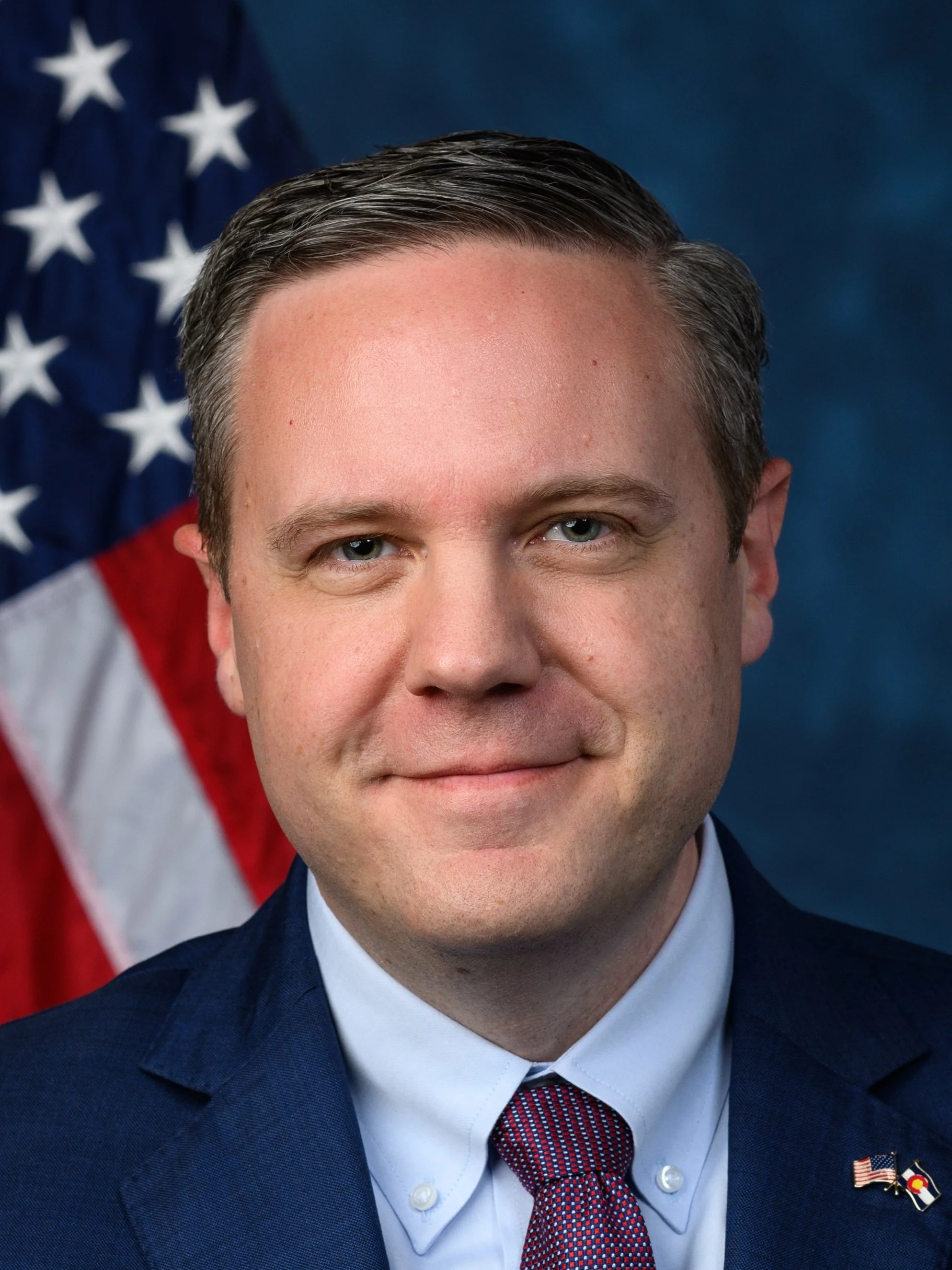
Rep. Jeff Hurd [R, CO] is a proud Colorado native who grew up in Grand Junction. His first job was bagging groceries at a local store, a formative experience that shaped his appreciation for hard work and community. After graduating from the University of Notre Dame, Jeff earned law degrees from the University of Denver and Columbia Law School. He clerked for federal appeals court judge Timothy M. Tymkovich before practicing law at Sullivan & Cromwell in New York City.
Jeff and his wife, Barbora, returned to western Colorado to raise their family more than a decade ago. He built a successful law practice serving rural communities, focusing primarily on rural electric cooperatives.
Now, as a US Congressman, Jeff is honored to represent Colorado’s Third District. Jeff serves on three key House committees: Natural Resources, Transportation & Infrastructure, and Science, Space & Technology.
Notable Quotes
On managing time and priorities
“The scarce resource in Congress isn't votes, it's attention. You can do anything, but you can't do everything. And the job is learning what not to do in many ways and where you can actually make a difference.”
On boundaries and discipline
“Learn how to say no because by saying no, you're saying yes to the things that really matter. Delivering for your district, representing your constituents, and most importantly, making sure that you're taking care of your family.”
On persistence and setbacks
“When water hits an obstacle, it either goes around it or it wears it down slowly over time. And that's the attitude and perspective that I bring.”
On what makes an effective Member of Congress
“Try to be that Member that talks less about themselves and talks less just generally. And who asks smart questions. That to me is a signal that you're here, you're serious and that you're somebody that can actually get stuff done.”
Highlighted and Additional Resources
Hurd in the House podcast, hosted by Rep. Jeff Hurd
About the Host
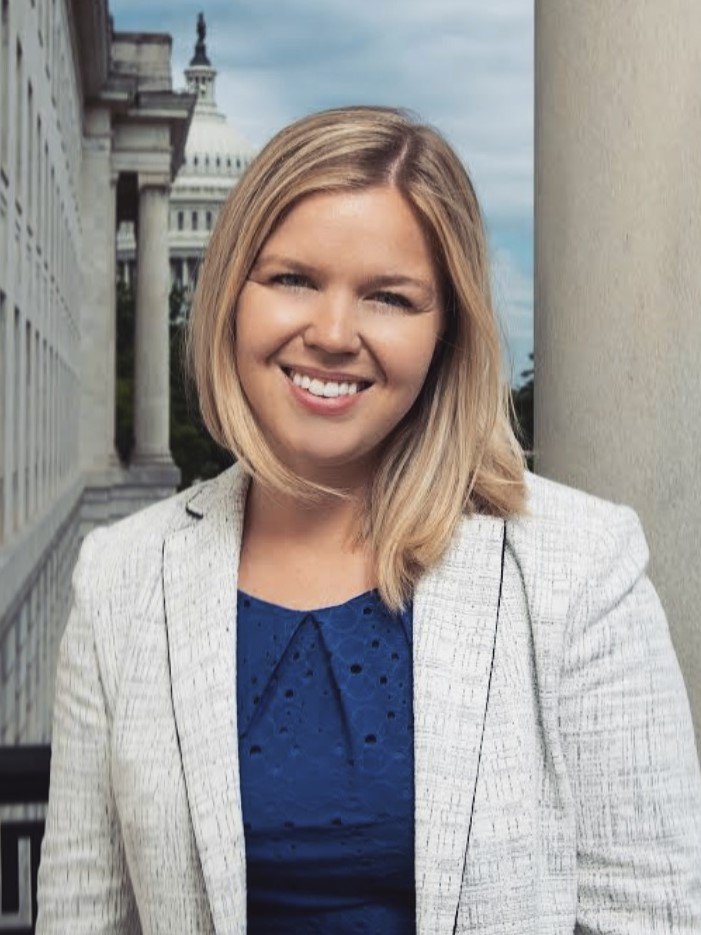
Aubrey Wilson served as former Deputy Staff Director for the Committee on House Administration (CHA) in the 118th Congress under Chairman Bryan Steil. In this role, she coordinated efforts to make the House work more effectively, including overseeing the inaugural session of CHA’s bipartisan Subcommittee on Modernization. Prior, Aubrey served as Director of Oversight and Modernization for CHA under Ranking Member Rodney Davis during the 117th Congress. She is a former House legislative assistant and member of the R Street Institute Governance Policy and federal affairs team. Aubrey’s work remains focused on supporting Congress’ and other parliaments’ internal operations and innovation.
About the Podcast
“Gavel In” is a limited-run explainer podcast series to mentor new Members Elect of the incoming Congress, their staff, and families, to help them prepare for the whirlwind of establishing their new offices, teams and roles in our nation’s capital.
It augments the House of Representatives’ official New Member Orientation and breaks down complex topics in short, easy-to-understand lessons on House Floor operations, office structure and hiring, budgeting, technology, security, ethics, and also the intricacies of parliamentary procedure, rules, and how a bill becomes a law.
Cohosted by POPVOX Foundation’s Managing Director Aubrey Wilson, “Gavel In” is a nonpartisan resource to demystify the experience of working in Congress.
About POPVOX Foundation
POPVOX Foundation is a nonpartisan nonprofit organization with a mission to help democratic institutions keep pace with a rapidly changing world. Through publications, events, prototypes, and technical assistance, the organization helps public servants and elected officials better serve their constituents and make better policy.
Transcript
Season 2 Ep. 1: In Session with Rep. Jeff Hurd
Aubrey Wilson: Welcome to Gavel In season two. I can’t believe that it has been two years since we first launched this podcast. There is so much that has changed, but also a lot that has stayed the same, which I feel like encapsulates life in Congress. But hey, that is why we are back for season two of Gavel In to continue to support Member-elects and their staff who are joining Congress for the 120th. Just like season one, this podcast is for the incredible individuals who have ran for Congress and are getting prepared to be sworn in on January 3rd to hit the ground running. It’s also for their families and their staff, who are looking for insights on what life in Congress is really like. Just like season one, I’ll be joined for some episodes by Taylor Swift, who was my co-host throughout our last collection of episodes. But for the majority of the season, you and I will be in it together if I haven’t yet had the chance to meet you. My name is Aubrey Wilson and I’m managing director at POPVOX Foundation. We’re a nonpartisan nonprofit that is made up of a bunch of prior Congressional staffers who are so passionate about improving Congressional capacity. It’s all we talk about. My path has led me here after a decade of working on and off the Hill on Congressional modernization. My first job in DC was in a personal office. That’s the legislative correspondent and then as a legislative assistant. And my last job on the Hill was as deputy staff director of the and director of oversight on the Committee on House Administration. Since joining POPVOX Foundation, I’ve led our Congressional modernization and AI adoption training, programming and a number of other initiatives, all of which can be found on our website at popvox.org. It won’t take long listening to the show to learn that we are big fans of Congress and believe that its best years are ahead. This season of Gavel In builds on season one, as we make the case for a strong Congress and talk about the tools and lessons learned from those who came before you. We’ll hear from recent freshmen of the 119th Congress who were recently in your shoes. Departing Members who have incredible knowledge to share about the inner workings of the institution and how has changed over the years. And friends of the show who are Congressional experts, with inspiring and exciting insights on how to get the place to work better from the inside out. With that, let me say a sincere thank you to you and your family for serving in Congress. Our first branch is essential to our democracy and as part of it, you are vital piece of that institution that so many of us are cheering on and supporting. Gavel In is here for you and we hope it is just the start of empowering you, your family and your staff to make a difference. With that, let’s get the season rolling for the first episode. Taylor and I are joined by Congressman Jeff Hurd from Colorado’s third district. We’re going to dig into what it’s like to manage a busy schedule, how to connect with actually what’s happening in DC to the district back home, and really talk about what success means in Washington beyond the bill count. Well, Congressman Hurd, thank you so much for joining us on the Gavel In podcast. Now, Taylor and I have both worked in the House. And we both know that from the inside, looking out and from the outside looking in, Congress definitely seems to be a cast of characters. But you actually ran on the promise of being as exciting as a bread sandwich that is no doubt underselling your career and your path to Congress. So please tell us about how you came to be a Member of the House of Representatives.
Rep. Jeff Hurd: Well, first, thank you, Aubrey and Taylor, for hosting me on this. It's great to be here. I never would have dreamed that I'd be a Member of Congress. I grew up in western Colorado in Grand Junction, my hometown, which is where I'm living now with my wife and five kids and never would have imagined that I'd be serving this district in Congress. Career path started off college at Notre Dame and then went to law school. Ended up practicing back east for a number of years before returning to my senses and coming back home to Western Colorado in 2014, and developed a law practice that was focused on rural Colorado, western and southern Colorado businesses, small businesses, rural electric cooperatives were a big part of my law practice, and through that work, I came to see the challenges that rural Colorado was facing, but also the opportunities. And and I saw an opportunity to serve as a Member of Congress would be a great way to help create economic vitality in my district. One of the things I always say is one of our best exports in rural Colorado are our kids. They grow up and they leave and they don't come back. And my fundamental why for running for Congress is to create economic opportunities for families so that they can, if they want, stay and live and thrive in rural Colorado. And so I'm working hard here in Congress to serve my district, to deliver results and to create opportunities for success and and prosperity for for families in, in this amazing district that I'm privileged to represent.
Taylor J. Swift: That's such a great answer. And you know that that part about public service we find so important. It's one of the main reasons that makes America so wonderful. And and you're such a testimony to that. That being said, you know what DC the House of Representatives is extremely different than back home and in your district. So looking back at this first term in these first couple of months, in this first year, what's one thing about the inner workings, you know, the the process and procedure of the institution that you wish you had someone brief you on before you took the oath of office?
Rep. Jeff Hurd: I would say the scarce resource in Congress isn't votes, it's attention. You can do anything, but you can't do everything. And the job is learning what not to do in many ways and where you can actually make a difference. And so if I could have, if I could have started over and talked to myself on the first day, I would have reminded myself just how important it is to be intentional from day one about how you spend your time. You have a ton of demands, votes, meetings, travel, media and if you're not disciplined, you are going to find yourself reacting to things instead of leading. And that was the one thing I would say I would also, I would have also emphasized to my first day self just how much this institution rewards preparation. Were you you mentioned the joke about me campaigning on being as exciting as a bread sandwich. That is exactly right. I think we maybe need a little bit more. And that was actually a criticism that that some that a media outlet gave to me. And I actually embraced it. And I'm turning that into, into a strength saying, you know, maybe we need a little more bread sandwich in Congress, somebody that's not on cable news shouting and yelling at the other side, but somebody who's focused on getting results and delivering for his district. And yeah, that may not lead headlines and drive the media narrative, but it matters to the to the people that live in this district. And a part of being a bread sandwich and delivering for this district is being prepared. And the Members who are most effective are the ones who come in with a clear sense of their priorities, who know the committees that they want to be on, who build a strategy with a great team for how to deliver results for their district. And you don't figure that out on the fly. You need to come in with a plan. And that's something that I knew a little bit coming in. But my experience, a little more than a year now, being a Member of Congress just reinforces that.
Taylor J. Swift: That's such a great way to kind of humanize that. And I want to I want to build on that a little more. Congressman, you know, you talk a little bit about your experience, the the grueling travel, how difficult that can be. The the committee marathons, the markup marathons, the the fundraising aspect of this, when when you think about how your lifestyle has changed your day to day lifestyle, can you talk about how that has fundamentally changed since being elected as a Member of Congress?
Rep. Jeff Hurd: Yes. Your life is fragmented and it has a super fast pace. You move from a policy briefing to a vote to a constituent meeting, a constituent meeting, to a news interview, what we call what they call in Washington, DC, a media hit which I'd never heard that term before. But that's one of the ways that folks here talk about being interviewed on television, often within the span of an hour. And it requires constant adjustment. And in being flexible in your approach to managing those things and balancing those things is really important. I will tell you, it's a very different way of, of of operating than it was when I was a lawyer. A lot of what I did before, I never very rarely did I ever go into a meeting where I wasn't completely prepared 100% and knew the ins and outs of everything that I was talking about here in Congress. A lot of it is knowing where to direct your attention and how to balance those things from a bandwidth perspective. What you need to know a lot about what you can rely on others for. Again, it's learning how to say no to things. That is one of the greatest skills that I would tell you. Tell a brand new Member of Congress is learn how to say no. Make sure that your staff also knows how to say no. And because by saying no to certain things that aren't your priorities and you're saying yes to the things that are your priorities, obviously one of those priorities needs to be family. And so you need to say no to the the request and sometimes demands on your time. One of the other pieces of advice that I would give to new Members is you never have to give anyone a reason for declining an invitation to do something. You know, you'll get. A lot of people say, I just need 20 minutes for something. We once added up, if you took all 700,000 of my constituents and just gave them 20 minutes or how long that would take, and it was like well over a year, something that was it was quite long. You don't have to explain why you're not able to attend an event or participate in something. Just say, I'm honored to be asked, but I'm sorry I can't make it. You owe no one an explanation. And when you start giving explanations, then people will come back for justifications for why you can make it the next time. Or, well, you told so-and-so that this is the reason you could make it. Don't give an explanation, particularly when it comes to things that are interfering with family time, or that are going to prevent you from spending time with your family. Just say I'm honored to be invited. Sorry I can't make it and just leave it at that and have your staff do the same thing, particularly when it comes to carving out family time. For me, one of my priorities is being home with my family on Sundays. I'm able to do that almost every Sunday. We go to church together. We have family time together. Holding those things as priorities is what is going to make you be a more effective legislator and and representative for your district the other six days of the week or whatever, whatever balance you find. And so that fragmentation, that balance in that willingness to say no, particularly for people-pleasers. Members of Congress want to be people-pleasers. They always want to say yes. And it's a struggle that I have to. I always want to say yes to things. Resist that temptation. Learn how to say no because by saying no, you're saying yes to the things that really matter. Delivering for your district, representing your constituents, and most importantly, making sure that you're taking care of your family. Also.
Aubrey Wilson: I think that anyone who's worked in Congress for any amount of time really gets that. The understanding that it does take a village. I think, you know, the Member of Congress is obviously the face of the team and is somebody whose schedule is so incredibly demanding. But I think that there's a really key difference that happens when Members really start to understand how to utilize their team to promote their strategy and stay on the same. Like, I guess, like all rowing in one direction is like something that I think once you have teams that figure that out, it really does kind of seem to unlock that ability, like you said, to to have staff understand when it's okay to say no or when to step forward, even if you're not able to make a commitment. Can you talk a little bit about like, how building your team has gone, how you have found the sweet spot of having your team support you and take some of the pressure off of you as the Member, but still be able to progress your agenda, even if you're not the one in the room.
Rep. Jeff Hurd: Sure, you need to think about two things people and priorities. You need a strong team that's going to take ownership, and you need to have clarity about what matters to you. Otherwise, this job is going to pull you and your staff in too many directions. So from my office, we focused early on building a strong disciplined team that had clear roles and also accountability. Communication within the office is critical. I always tell my staff that, you know, responding to requests, even if the answer is no or even we need more time to get back to you. Just acknowledging receipt of a message is something that is really important. So it comes down to little things like that, but also the the bigger issues of everyone knowing what the priorities are and how their work is contributing to them. And, you know, like I said, we put a strong emphasis on follow through. If it's constituent services, if it's legislative work, it's meetings. The difference between a good office, in my view, and a great office comes down to execution and responsiveness. And even if the answer again is no to whatever the request is, being responsive, being engaged, giving clear answers is important. I also focus on making sure that the district is connected with the office here in Washington, DC. I've heard, I heard coming into this role that oftentimes that disconnect could lead to tension and and difficulties in the way that your office functions. Overall, I'm very proud to say that I've kept a very conscious eye on the relationship between the district staff and the staff here in Washington, DC, and I'm very happy with the way that the team is working together. In fact, right now we have someone from the district that is here in Washington DC this week doing constituent service training, just to make sure, again, that's one of the fundamental parts of this job is taking care of constituents service issues. But it's also so she's learning that, but also connecting with the staff here in DC, being able to place names with faces, having that interconnectivity that is so essential to making sure that we have a cohesive office that's running. So having the right people in place, having the right priorities and making sure that the district office and the DC office work well together are things that I found have been an important part of the success of our office as well.
Aubrey Wilson: Yeah, I feel like that was something too in our first season of Gavel In, and we spent a lot of time talking about that district DC relationship, because they're just like a loss in translation that happens between the business happening in the Capitol and what's taking place back in the district. And having those two teams mesh really well does seem to be something that, like you said, a lot of offices struggle with. And so having people come in with the intentionality of building teams that have that cohesion is, is something that is so important. And so I'm really thankful you you brought that up. And actually talking about kind of the lack of communication or the misconceptions that have happened between how people think the law making process is in the district and how it actually happens in DC with your legal background. I'm so interested to hear about, like, what your perspective is on how the sausage actually gets made, of what you thought the law making process was going to be like. Having come from that legal background to now being a legislator, what has surprised you the most about kind of the actual crafting of the law process that you've experienced as a Member of Congress since being sworn in at the beginning of last year?
Rep. Jeff Hurd: I would say that the biggest surprise that I've had is, well, a lot of folks back home, the people that I'm privileged represent will sometimes assume that I'm maybe watching cable TV or news during the day, and they'll be expecting me to respond to things in, in real time on social media or what have you, based on whatever is going on television. Whereas the reality is, I am in committee hearings talking about things that are more along the lines of what you'd expect from a bread sandwich level of excitement, but they're really essential water infrastructure, roads, bridges, the things that I've learned. One of my frustrations is how slow things can pass through things that you think would have brought bipartisan support, how difficult it can sometimes be getting those things to the finish line. We we have what can be a slow process. And this is one of the things that I kind of knew about. But we can have a slow process on issues. Even where there is broad agreement, you can have a clear problem, you can have a practical solution, but you're still going to face delays because of process or politics or competing priorities and and learning how to navigate that without losing momentum is an essential part of this job. And so that's probably been one of the things that surprised me the most, is seeing that we have a clear problem that I think we can solve that, but for whatever reasons, we're not able to get there. And trying to navigate that without getting discouraged is definitely something that I try to to keep in mind every day. There's a lot of good people here, a lot of great colleagues that I have on the Republican side, on the Democratic side, who are committed to doing good things for their districts and for our country. But there's a lot of sort of crazy pieces that prevent us sometimes from doing that. And and some of them are good, some of them are institutional. Some of them have built up over time, others are are not so great. And we're incentivized to not necessarily govern as effectively as we could. And in dealing with those things is something that I take seriously. And and I want to get better at it. And listening and learning also don't come in necessarily and have all the answers. Be willing to step back and look at how things work is something that I'm trying to do as well. That's a little bit of a rambling answer there, but we have clear problems. We should be able to solve them. It's frustrating that we're not able to do so, but I'm not going to give up. And there's a better way. We just need to get there.
Taylor J. Swift: No, we you're spot on. We hear this a lot from Members. We heard this a lot last season around timing, institutional friction, incentives from people on the inside, from rank and file Members, from committees, from leadership, from the media, from social media. You're hitting a lot of the themes that I think is is a good and a bad thing. And honestly, like the beauty in the dysfunction and chaos. And so I wanted to kind of dive in a little more on some of those moments for you over the past, you know, year, year and a half. Could you point to maybe one time that the friction felt frustrating, but then something got over the finish line and it felt extremely good, or you felt very accomplished, that the system is working in your favor. And then or you can start on the opposite side of, oh my gosh, like this piece is, I'm really passionate about this. I really want to get this done for my district. I really want to get this done on a personal level, but the institutional minutia is just not allowing me to do so. So I have to stay hypervigilant and focus and work with my colleagues. Either or would be great. Sure.
Rep. Jeff Hurd: I'll give you a very specific example. Earlier this year, we passed legislation out of the House unanimously that was passed out of the Senate unanimously as well. That would have brought a clean drinking water project to my district. It's actually the continuation of financing for the construction of a clean water, clean drinking water project called the Arkansas Valley Conduit, and the president unfortunately vetoed that bill. It was even though it was unanimously passed out of both chambers. And that was deeply disappointing. And so one of the things that I did on the House side when the bill came back was to work hard to try and override that veto. And that was a very interesting process. And in the end, we got a majority of votes, but we didn't get the two thirds necessary to override a presidential veto. But I will tell you, that process taught me a lot, Taylor, about how this institution works, how individual Members are willing to take votes, what they will support, what they want, how the dynamics of outside political forces can influence what's happening here. And I will tell you, in the end of the day, we came up short on the veto override, but I had a number of key committee chairs, chairmen that were supporting the veto override. I got a lot of positive. It allowed me to develop and build relationships in ways that I never anticipated I'd be able to build. I got to show my the way I respond to pressure and under fire in a way that ultimately long term, I believe will lead to good results for this district, the project we're working on, other ways that we can get it done, get it across the finish line. And the analogy that I give Taylor is it's appropriate that this is a water project, because this is a water analogy that I give when we when I see obstacles here in Congress, we need to be like water. When water hits an obstacle, it either goes around it and it wears it down slowly over time. And that's the attitude and perspective that I bring. And so this particular issue of a veto and then our work to to override that veto on the surface it did not look successful. But I will tell you long term, it's going to lead to even greater results that I've been able to use to develop into greater relationships with committee chairs and colleagues on both sides of the aisle that are going to benefit my district in our country. So that's the one example that comes to mind on the surface of a big obstacle that that we're dealing with and that I'm confident in the intermediate term and certainly the long term we're going to surmount. And it along the way led to a lot of good things that are going to benefit to my district, in our state, in ways that I never anticipated.
Aubrey Wilson: I think that that ability to reflect on, on those challenges and understand the good that can come from it really leads to a dynamic that I'm always thinking about, which is the idea that, like, success in Congress is measured in such a different way if you work inside the building than what the public perception is. I know that a lot of outside individuals believe that it's all about the scorecard, the number of bills you actually get passed into law. But in reality, it's so much more than that. And I think that the public perception of what makes a successful Member of Congress can sometimes throw people off when they actually get into the building and realize that it's a different it's not like it's a different game, but it's just a different playing field completely about what success is like and really bringing things back to your district. Now that you've been in the seat and in the shoes and you look at all of your colleagues around you. What do you think really defines a successful Member of Congress? And like, what would you write as that job description for somebody coming in to be prepared with the mindset to be successful in that job.
Rep. Jeff Hurd: Be prepared, be good at listening, work hard to hone communication skills and ensure that, and recognize that a huge part of your success here in Congress is being emotionally intelligent, trying to be emotionally intelligent, growing in your emotional intelligence, seeing how what you're doing, the actions you're taking, the votes that you're taking, the statements that you're putting out in the way that you're interacting with colleagues, either build your reputation or diminish it. And you're exactly right that the effectiveness and the measures of effectiveness on the outside, certainly, I will tell you, bills getting passed, legislation passed, bills that are heard in committee. That is one measure of effectiveness. I take that very seriously. I'm proud to say that we passed four bills out of the House, that I've been the prime sponsor on and many, many others that I've been a co-sponsor on. But I've also had a bill that's been signed by the president into law as well. I that is one measure of effectiveness is your ability to to pass laws and get bills, you know, through the, the, the chamber, you know, out of committee and onto the floor and voted on. But other ways that I would say you can measure effectiveness are community project funding that you return to your district, how you navigate difficult constituent case issues. Those are not going to get front page. They're not going to even appear in the newspaper. But just know that those are so important for your constituents. And and that's one of the measures of success also is I have a dashboard every single week that staff, that staff shows me of the number of cases that we have outstanding, the issues, the agencies, how long they've been waiting. And and we are focused on making sure that we reduce the number of days that we have between the time that the problem comes in or the need comes in. And when we solve it, obviously some cases are tougher than others. Those to me are, you know, how how you know, the relationship that we have with leadership, what happens when you take a tough vote? That's another way you can measure how successful you are. Is is the response when you know you're not necessarily when your district or your your core views cause you to go in a different way than, than many others in your conference. That's another way that you can show that you're being successful, is you still have the support and respect of your colleagues, even though you don't agree on 100% of the issues. So yes, there are the top line issues that you mentioned. Aubrey, how many bills have you passed out of committee? How many passed out of House? How many been passed out of both houses? Both chambers, I should say. How many have been signed by the president? How many amendments have you made, or how many of the bills that you've introduced have been, have been encapsulated in other pieces of legislation that ultimately move forward? But then there's also the relationship piece, the constituent services piece. And, you know, one other thing I would say, if this is if you're a new Member of Congress, another piece of advice and I'm violating it by how long and rambling I am this answer. But here's another piece of advice that I would give you. You're going to be in rooms with lots of Members of Congress, where you will hear lots of Members of Congress that have heard themselves talk a lot, and they like hearing themselves talk. And there'll be a question that they ask that's sort of like kind of at the end of two minutes of talking about how how themselves try to be the Member that asks occasionally, that occasionally asks very smart questions in a very short amount of time, with not a lot of lead up that just shows insightful and and clarity of thought when you're in meetings. When I hear Members that ask questions that are smart and that don't have a lot of puffing themselves up, those are the Members that I think, okay, this is somebody that's serious, that's here to do good work and that I want to work with. So try to be that Member that talks less about themselves and talks less just generally and, and ask smart questions. That to me is a signal that you're here, you're serious and that you're somebody that can actually get stuff done.
Taylor J. Swift: It is such a fantastic answer. Like truly not thinking of oneself, but representing in the truest sense. I know we have you for a couple more minutes. I just wanted to make sure we made some time to talk about your podcast, Hurd on the Hill. Wanted to briefly plug that to our listeners as well, and have you take a couple of minutes to talk about why you started that podcast and why you think it's important.
Rep. Jeff Hurd: Well, thanks, Taylor, for that question. Yes, Hurd on the Hill, it is it is one of the initiatives that we're doing to get the word out about what's happening here in Congress. It's a podcast that has me interviewing mostly other Members of Congress so far, but we have some constituents and others, and we're going to be branching out going forward. The idea there is to make something interesting and engaging a little bit, maybe nerdy, talking about policy issues, but also going beyond just the typical superficial issues of a podcast. There's a economist who I really like, Tyler Cowen who has a maybe I should get him on the podcast someday, who has a podcast called Conversations with Tyler, where he is really smart and engaging and ask questions from angles that individuals might not always expect. And that's something that I try to do in this podcast, is I talk with the chairman of appropriations, but we talk about not just the bills that we're working on, but also incentives in big picture, structural things. Looking at it sometimes, like in an economist like Tyler would, from an incentives sort of perspective, ask a little bit about personal history. I try to keep it in and quick with with the questions and trying to make a podcast. I would say for somebody that's genuinely, generally interested in what's happening in Washington and who the players are and what makes them interesting and what makes them tick, that's kind of the the angle that we're taking with that podcast, and I love doing it. It's great. I've never done a podcast. I'm very decidedly a middle aged guy. And so my, my, my social media and social engagement hadn't been so great when I was before I came to Congress. But I've got thankfully, I've got a great staff that's helping me build on my strengths and minimize my weaknesses, of which there are many to build a podcast that is interesting, engaging and informative on on both thinkers here in leadership and in House of Representatives, but also policy influencers in the district and beyond. So yes, Hurd on the Hill. It's available on Spotify, Apple Podcasts, Stitcher, all of the all the places that you get your podcast, please, please like and subscribe it. And and I'd love to help get the word out. I promise it won't. It won't be boring.
Taylor J. Swift: That is that is fantastic. And I will. I will say shamelessly, you have a fantastic podcast podcast voice. It really, really is easy. It's just such an easy listening.
Rep. Jeff Hurd: Thank you to that is a lie I can live with. I appreciate that.
Aubrey Wilson: I'm going to actually echo Taylor there and say that even as two individuals who kind of live relatively in the Beltway and listen to a lot of political podcasts Hurd on the Hill, is one of my want to quickly become one of my favorites. Just because you actually do sit down and talk about what's really happening, and you get to know the Members so much, well, so much better in addition to yourself. And so with that, thank you so much for letting us turn the tables on you and having you be part of our podcast. We loved having you on Gavel In. And Congressman Hurd, thank you so much for your service in Congress.
Rep. Jeff Hurd: Thank you. Aubrey. Thank you Taylor. Happy to join you.