
Rep. Dave Min [D, CA] brings a mix of perspectives to Capitol Hill as a former SEC attorney, US Senate staffer, think tank scholar, and law professor. In this episode, he opens up about the frenetic pace of Congress, balancing family life across time zones, building bipartisan relationships, and what it has been like for him to pursue his policy agenda while serving in the minority.
Featured Guest

Rep. Dave Min was elected in 2024 to represent California’s 47th Congressional District.
Rep. Min is the child of Korean immigrants and grew up attending California public schools. Prior to joining Congress, he served as a California State Senator from 2020-2024 and was a law professor at UC Irvine. As an expert on banking and housing policy, Rep. Min testified six times before Congress before deciding to run for a seat. He began his career prosecuting Wall Street fraud at the Securities and Exchange Commission, where he served as an Enforcement Attorney.
Rep. Min is a proud alumnus of the University of Pennsylvania and Harvard Law School. Today, he lives in Irvine with his wife, Jane, and their three children.
Notable Quotes
On the frenetic pace of Congress
“It's like every 15 minutes I'm going to something else. And by the end of the day, I can't even remember what I started my day doing. Typically it's like 8 or 9 in the morning all the way to like 8 or 9 at night.”
On the work of Congressional staff
“Once you're there as the principal and you see the staff and how hard they work, it's like, holy shit, you guys are like busting your asses. You're on it. You're doing stuff that I don't even see, and you're getting underpaid tremendously in the process.”
On building bipartisan relationships
“My litmus test and what I've said to the Republicans that I'm talking to is like, I don't care about your issues, just like finding people that are not assholes because, like, let's be honest, there are people on both sides of the aisle that are assholes.”
On what it really takes to connect with voters
“To be good at the political side. You have to have a natural empathy and ability to put yourself in the shoes of the people that you're trying to represent, to be able to authentically try to relate to them, that you understand what they're going through, what their concerns are, and that you are able to then try to translate that into policy.”
On sacrifice, family, and purpose
“If you're doing this just for like, you know, the perceived fame or glory, like, I don't know that it's going to be a great thing. I mean, it's not a great thing for your kids. And, you know, one of the reasons that we have justified it to ourselves is just the urgency of the moment and of being in Washington trying to affect change at this very important time in our country's history.”
Highlighted and Additional Resources
Hurd in the House podcast, hosted by Rep. Jeff Hurd
About the Host
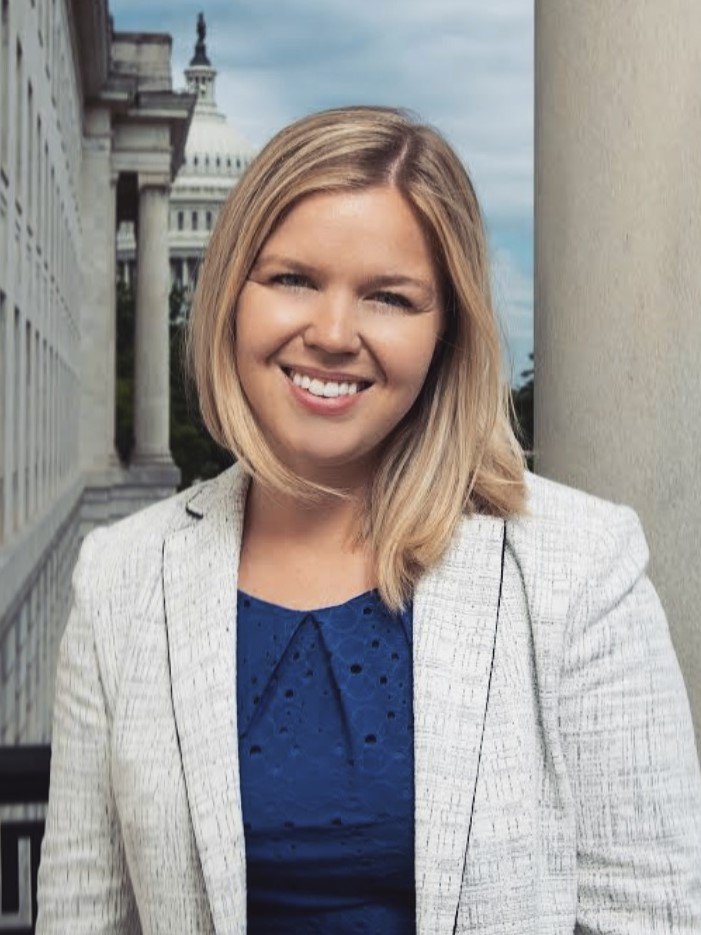
Aubrey Wilson served as former Deputy Staff Director for the Committee on House Administration (CHA) in the 118th Congress under Chairman Bryan Steil. In this role, she coordinated efforts to make the House work more effectively, including overseeing the inaugural session of CHA’s bipartisan Subcommittee on Modernization. Prior, Aubrey served as Director of Oversight and Modernization for CHA under Ranking Member Rodney Davis during the 117th Congress. She is a former House legislative assistant and member of the R Street Institute Governance Policy and federal affairs team. Aubrey’s work remains focused on supporting Congress’ and other parliaments’ internal operations and innovation.
About the Podcast
“Gavel In” is a limited-run explainer podcast series to mentor new Members Elect of the incoming Congress, their staff, and families, to help them prepare for the whirlwind of establishing their new offices, teams and roles in our nation’s capital.
It augments the House of Representatives’ official New Member Orientation and breaks down complex topics in short, easy-to-understand lessons on House Floor operations, office structure and hiring, budgeting, technology, security, ethics, and also the intricacies of parliamentary procedure, rules, and how a bill becomes a law.
Cohosted by POPVOX Foundation’s Managing Director Aubrey Wilson, “Gavel In” is a nonpartisan resource to demystify the experience of working in Congress.
About POPVOX Foundation
POPVOX Foundation is a nonpartisan nonprofit organization with a mission to help democratic institutions keep pace with a rapidly changing world. Through publications, events, prototypes, and technical assistance, the organization helps public servants and elected officials better serve their constituents and make better policy.
Transcript
Season 2 Ep. 2: In Session with Rep. Dave Min
Aubrey Wilson: Congressman Min, thank you so much for joining us on the Gavel In podcast. We have been looking forward to this conversation because I think that you're one of the few Members of Congress who can actually say that you visited the halls before being elected because you actually testified in front of Congress many times. You were very familiar with policy before you came in to actually serve the state of California. So please, let's kick off with actually learning about your path to Congress.
Rep. Dave Min: Yeah. So I was one of these lawyers that couldn't figure out exactly what I wanted to do. So I was at the SEC to start my career, and then my wife took a job at Georgetown, actually as a fellow and later became a law professor. And they have a fantastic program for clinical aspiring clinical law professor. So she has gone on to do great work in domestic violence. And she actually is a leading expert and advocate in this space. And more on that in a bit. But I moved to DC and I was I was told that, hey, like having a couple of years with law firms, not a bad idea just to get a sense of, is that something you want to do in the future? I was not someone who particularly enjoyed the law firm life. I was in DC trying to figure out what to do with my career. I thought I had a pretty good resume at that point, but it was suggested to me maybe the Hill might be interesting. And I was very interested in policy. I did, at that point, SEC work. And so I remember talking to a friend of mine who, you know, I came in later in life, I didn't intern, I didn't like, you know, I didn't come in as a junior staffer. I was looking for something at a very senior level at that point, and I had a couple friends who had done it, and they all told me the same thing. It's a long process because you don't have the background. Some of us have to take a chance on you. It might take you a year or two. And I was like, oh, I'll be fine. So I went on that process. It actually took me almost a year to get a job with Senator Schumer. And I happened to land there right around the time of the subprime mortgage crisis. I was his counsel on the Joint Economic Committee of Congress, which he chaired, by the way, which I now serve on, which is kind of fun. So some of the staff and I actually used to work together, which is really kind of a weird thing, but very fun. And then I went on to Center for American Progress in those roles. And then later I became a law professor at UC Irvine. In those roles, I was asked to come back and testify on financial regulatory issues around housing finance, around corporate governance, which were the areas I was writing in at UC Irvine. So I was able to testify before Senate Banking, before House Financial Services, before House Judiciary a few times. So that was like a very fun experience to come back. I did not honestly think I'd ever be on the political side because, you know, you're in the policy lane and you guys know not everyone appreciates that. But when you're in the policy lane, you know, it's a very firmly policy. Lane and I had seen Chuck Schumer do call time. And I was like, that's the last thing I ever want to do with my life. And I tell this story sometimes on the trail, like I was so bad at, like selling anything as a kid, as a younger person, I couldn't sell you. Those magazines were supposed to sell for the PTA we ended up doing. I was my first job in life was to sell Cutco knives because my parents thought I should have some responsibility. And I don't know if you've ever had those, you know, they're like, kind of like they hire people. You get a commission. I only sold two sets. They're great knives, by the way, but I sold two sets to my parents and their friends because I just like, did not have I was raised like to not ask people for money. And so like I found my motivation. Long story short, after the 2016 elections, you know, and once you start, you know, aggressively asking people for money won. A lot of your friends stop returning your phone calls. But to, you know, you either realize you're good at it or not. And it turns out like, I'm not bad at asking people for money, but it was just something I never tried really doing. And and so I didn't think I'd be on the political side. I really thought, I mean, the policy side. And of course it was a lot of fun coming to Congress. It was always something that we would put on my resume. We're very proud of that fact.
Taylor J. Swift: Wow. That is that is so unique. I love hearing all of those stories. When when you started to realize that this was something you actually were taking seriously and you wanted to do and you wanted to do for your district and your country, can you talk to us a little bit about that adjustment? Right. Working as a staffer and then working at a think tank and advocacy and testifying before Congress and then switching gears and actually wanting to be a representative, like, what were your thoughts to make that final decision? And then what was the biggest adjustment once you became a representative?
Rep. Dave Min: Yeah, and I was probably I mean, I think some people that saw me early on in my political career will note how bad I was back then, because, you know, when you're in policy, you're thinking about what is the best solution to a problem, right? And of course, as a staffer on the Hill, you're also thinking about some of the political angles, but you're not really thinking about the messaging, right? You're thinking about politics in a different way. Like, can I get enough votes by pushing this? How do I whip enough votes to make this happen? But you're not thinking about the home districts, the constituents that people now in my position have to rely on. So that's just it's a very different way of thinking. It requires people, smart people, to like basically, I wouldn't say talk dumb, but to simplify what they're talking about, to talk in values. And sometimes I think politicians get like too clichéd in talking about values. Like, you know, you all see people who are told talking values and it comes off as fake and canned. So I think there's a real, you know, you have to, I think, to be good at the political side. You have to have a natural empathy and ability to put yourself in the shoes of the people that you're trying to represent, to be able to authentically try to relate to them, that you understand what they're going through, what their concerns are, and that you are able to then try to translate that into policy. So I often think of Bill Clinton and Hillary Clinton like this, because I actually think Hillary would have been a much better president than Bill, because she was very smart in the policy details. She really knew the mechanisms of the federal government. She basically spent her whole life training to be an excellent president, but she just wasn't. I mean, my my view, not everyone agrees with this, but my view is that maybe she wasn't as strong as a candidate, and Bill was able to really, authentically connect with people as to the point where he really was able to win in a huge, I think was a huge upset back in 92 before my time. But but, you know, he had that ability to connect with people in a really authentic way. And so to me there's like a real bifurcation there that you can see with that couple of like someone who's very good at the political side and the messaging side and someone who's maybe very good at the governance side. And there's really two parts to this, because you have to get elected to have any chance of governing. But then when you're in power, you have a responsibility to try to govern well. And if you don't govern well, by the way, you're going to lose your job. So that's what I tell people in Congress. I have a job interview every two years. And if you don't like, you know, if my bosses don't like me, they can fire me very easily.
Aubrey Wilson: So actually, on that note, I actually reminds me a lot about some conversations that Taylor and I had with Members and some of our other guests during season one of Gavel In, and where we talked a lot about how there really isn't a good job description for a Member of Congress, because, as you said, this kind of all of these different facets to it, there's, you know, there's the being the bridge of explaining and translating policy back to the district, but then there's actually being the lawmaker. But then there's obviously the fundraising and campaign side, like it's it's such a more complicated and diverse role. And I think a lot of people have appreciation for until you're actually in those shoes or in that seat. So what has surprised you the most about being a Member of Congress? You know, you have all these different perspectives. You were a staffer. You were on the think tank side talking, coming in and talking to the Members. I'm sure you had some idea of what it would be like to actually wear the pin. But now that you have worn the pin, like what has been kind of the most surprising part of your role that you weren't expecting.
Rep. Dave Min: So I was sort of, I think the best preparation I had was serving in the California State Senate for four years, because the California legislature is a full time legislature, and we're in session seven months a year. And unlike Congress, during those session weeks, we don't take any weeks off. Or we might have like a week off for spring break, but it's seven months pretty continuously. So going back and forth to Sacramento, I had a place up in Sacramento. I was there Monday through through Thursday or Monday through Friday, just like in Congress. And so I thought that'd be a good preparation for this. But it's very, very different. And I think that the things I'll give you three things I know you asked for one, but you know, rule of three one is just the frenetic pace. Like, I kind of thought the state Senate in California is busy. We have like a lobbying corps, all that. And I just the pace is so boom, boom, boom. It's like every 15 minutes I'm going to something else. And by the end of the day, I can't even remember what I started my day doing. Typically it's like 8 or 9 in the morning all the way to like 8 or 9 at night. But it's just so much like you might be giving three speeches, taking some meetings, doing some fundraising. It's just all of the above. And so I think that surprised me, and it was just challenging to deal with that. And just the sheer volume of people that I meet on a daily basis to and I, I'm bad with names, I'm pretty good with faces. But at this point I'm kind of overwhelmed on faces. And so like, it's tough. And I say that I think all of us feel that it's challenging. And I'm as a frontline Member or someone who came in and one of the closest elections in the country, you know, I had to really like travel around the country fundraising, meeting people, doing Zooms to try to raise money. And so we spent a lot of my time doing that. But of course, in this administration, we're also spending a lot of time on the official side. So that pace is probably maybe more aggressive than historically has been the case, particularly for someone in a frontline position. So I think the frenetic pace is definitely something that I'm not sure I'll ever get used to, but it just it's just something that took me a little bit by surprise. The second thing that kind of took me by surprise is how hard the staff works, and I knew that as a staffer. But like I said, I try to like lean out a little bit, so I try not to email or text my staff. On Sundays, I use schedule send a lot, and on Saturday and Friday night, same deal. Trying not to like, you know, because I realize they're on call all the time and it's like it's just tough. And I know staff is really important for my success. You know, I had some good and bad experiences in Sacramento and I had just like amazing staff in DC but they worked their asses off. And that's true of every staffer in DC and once you're there as the principal and you see the staff and how hard they work, it's like, holy shit, you guys are like busting your asses. You're on it. You're doing stuff that I don't even see, and you're getting underpaid tremendously in the process. So, you know, we know those challenges. But but, you know, I knew theoretically they worked hard, but it was just it was challenging. And the third thing I'd say that really took me by surprise. I had run a couple races before I'd been in the state Senate. I'd spent millions of dollars as a Senate candidate, and I kind of thought I knew what the process was going to be like as far as, you know, notoriety in the district. So, you know, in the past, you have a campaign, you're on TV, you're on people's mail, mailboxes and screens, and you get recognized when you're out in public. But then the campaign's over and then you remember people's memories start to fade, and then you're anonymous again. So you can go back to the grocery store or the restaurant. Nobody knows who the hell you are. Which is great, right? And that has not been the case in Congress at all. And that is not something I had really thought about. But, you know, just it just means that you're more of a public figure. So, like, I like to call myself like an F-list celebrity. I like have all of the negative side of public figure, but none of the positives, like we're not rich or anything like that. But you know, that's just takes some getting used to for me and for the family. So one of the things this year that we're doing in our paid communications is we're not. I made an intentional decision to not put my kids into any of our paid comms just because, you know, they have to deal with it at school. But also like as a security thing, you know, you start to realize, hey, we're we're like public figures. And like, I don't want to create unnecessary risk for, for my family. So just thinking about those trade offs. But yeah. Yeah, it's like weird. And it's just it's weird to think that as long as I'm in Congress, my, like, notoriety will probably grow over time. And, you know, just like being recognized all around. And so far, my response has been overwhelmingly positive in the district. I've only had one person to date say anything negative to me, and everybody else that comes up to me says something positive. That may just be because my district's very polite, but, you know, it's been a positive experience, but it's still just weird going out, you know, realizing like, hey, people are going to anywhere I go. It's very likely someone will know who I am. And they may not say anything, but, you know, you know, I've just kind of never have a bad day. Never, like, you know, never, never be surly with anybody. You just have to be on your best behavior. And of course, we all should be that way all the time. But it's just it makes sometimes going out in public a little stressful.
Aubrey Wilson: Wow. There was there was so much there. And I know that Taylor and I have so many follow up questions for you on those three points. I noticed one of the themes that really kind of ran through was you talking about the adjustment of, like, your personal life to suddenly being this public figure. And, and you know, you mentioned your, your children. I think that the effect on family life, that being a Member of Congress causes is something that catches a lot of individuals off guard, and you in particular must like, feel that to even an extreme degree, because your district is just so far away from the capital, and so you spend so much time on planes. What has it been like balancing family life as a Member of Congress? Like what has ended up working for you and your wife and your children? How have you struck that balance? You know, what kind of tips could you pass on to somebody else who's considering running for Congress, or who has won an election, who has kids and needs to figure out how to still be there for their family.
Rep. Dave Min: Yeah, that's a great question. And I spent four years in the state Senate, which is a similar schedule. But, you know, I was only an hour away from home so I could fly back any time if an emergency popped up. We are in the same time zone, so we could FaceTime more easily. One of the challenging things right now is just finding times to FaceTime, because I might pop out of like a caucus meeting or a meeting at like 9:30 East Coast time to try to catch my kids before they go to school. And then in the evenings I will call them typically before I go to bed. So like 10, 11 try to catch them, but they might be doing activities, might be out at dinner. And so I don't always catch them all the time. And that's, that's like a little part of my day that, that like gives me a little joy that that's not always there, but it is what it is. You know, there's there's no secret sauce. I mean, I think if you go into this, you go into it knowing that you're going to miss a big part of your kids lives. I'm not here on the weekdays. I just visited my oldest son's Boy Scout Court of Honor last night, and I showed up late because I had an event I had to run from. And, you know, I know some of the parents, but I'm just not there enough participating in the scouts. And I used to be like a soccer dad, like I used to coach referee, like I was involved in Cub Scouts, but I just can't on a regular basis participate in these things. And so it's like a weird vibe when you know, you show up and you don't, you know, you're not. You're like this weird figure because everyone in that room knows who I am. But and I've done official side stuff with the scouts, so like I've given some of them awards and things like that. But I'm not like a present parent. My wife is, and it's just challenging. So I would say you can't. It's very difficult. I know some people have done this as single parents, including my predecessor, but I think it's very hard to do in a meaningful way unless you either are willing to move your kids to DC, which some people do. Adam Schiff did that. I think there's others who I won't mention who have moved their kids from California or elsewhere on the West coast to DC, or you're going to you need. I think it's helpful to have a strong partner that is willing to pick up the slack that's invested in it, and if you as a family are not invested in why you're doing this, if you're doing this just for like, you know, the perceived fame or glory, like, I don't know that it's going to be a great thing. I mean, it's not a great thing for your kids. And, you know, one of the reasons that we have justified it to ourselves is just the urgency of the moment and of being in Washington trying to affect change at this very important time in our country's history. But even so, like, that's that's words. And I'm not always sure my kids get it as far as like practical advice, I try to FaceTime every day, try to carve out time for that. Sundays are my day where I tell my team, unless there's something really, really important, that's my day with my family. And we don't always schedule. Sometimes we schedule stuff. Sometimes it's just like we go to church and just hang out and, you know, like I grill in the afternoon and we might invite some friends over like nothing. You know, just having that time with your kids playing board games, you know, it's just trying to be present in your kids lives a little bit. And, you know, when I'm home, you know, I'm not always good at this, but I try to, like, make sure that I'm picking up the slack. I'm trying to take my kids more to school. And when I'm not, my wife lets me know. But, you know, just just trying to be more, more conscious. And it's hard because you're tired. You know, when I'm in the district, I'm doing a lot of work. It's not like I'm just hanging out. I wish that was the case. But, you know, my day to day is going to be packed. My day tomorrow will be packed. All our district days are packed. So I just say carve out. I carve out Sundays. I think that's a good, good thing to try to carve out one day a week for yourself. I think. Trying to, you know, be present with your kids at evening events. One thing that we started doing is having my wife just, like, block out important events and communicate with my scheduler just so that we like, if there is an important recital or dance thing or theater or whatever my kids are doing, like I am trying to make it and my wife flags it as a priority.
Aubrey Wilson: I, I think those are incredible tips, and I know that there's a couple of those that really have hit home with some of the other Members that we've had on, especially like that blocking off of that Sunday was one, and I wanted to actually return back to a comment you made earlier about how hard your staff work, because I think that's another misconception. Like Members are super busy, like they are by far the busiest individuals on the Hill. But as you know, like your entire staff is so busy and so that balancing family life with professional work life is something that even the staff struggle with. And so for new staff coming into Congress, it's also an important discussion to have. If you have a significant other and a family to figure out what those those times are that you're going to put down your second phone or you're going to have it be something where you're not going to be, you know, responding to emails on weekends because that work life balance is something that kind of affects staff all the way down the, you know, the ladder on the Hill.
Rep. Dave Min: Yeah, that's a great point. And I have a great chief of staff, a huge shout out to her because like, I couldn't do anything along the lines of what I do without her. But I know she cares deeply about junior staff. She works too hard. And so I'm constantly telling her, like, you need to take a day off, like she's getting married later this year. I'm like, you got to take care of your wedding stuff. Like, you know, I probably shouldn't say this because she'll get mad at me, but she hasn't put her registry together yet. And I'm like, you got to get your fucking registry going because you're leaving money on the table. And so we want to get you stuff. Your friends want to get you stuff, but you got to have a registry for that to happen. And if it means taking six hours or a day off from working with for my stuff, like you should do that. This is like a once in a lifetime thing, hopefully for you.
Taylor J. Swift: So that's right. That's right. And to kind of to bring back something you said earlier, you know, Hillary Clinton said it takes a village. And what you're telling us right now, both for your personal health, your relationship with your family, your relationship with your staff, and like your overall capacity as a Member of Congress to represent your constituents like it truly does take all of you. It takes it takes everybody's buy-in and understanding that to your point, it's a moment in history, in a moment in time for you that this is absolutely what it's for. And so just wanted to say, you know, that piece about that about Hillary, I want to switch gears really quickly and talk about relationships with other Members of Congress. And we've talked about your previous experience, especially your experience in the California State Senate in this hyper partisan federal environment where every day feels like it's a five alarm fire, for one thing or another, whether it is process, whether it is politics. Talk to us about how you've been able to get to know or honestly not get to know some of your colleagues, both in your caucus and across the aisle.
Rep. Dave Min: Yeah. That's a great question. And I should add, if you follow me, I'm very partisan in a lot of very public ways. I'm very vocal in standing up to Trump and calling out folks who don't. But at the same time, we've intentionally tried to do that. Like, I have a three track like approach when it comes to bills. We're trying to do very partisan stuff on rule of law, because I just think that's really important. Very partisan stuff on like aspirational issues that I care about. So like gun violence prevention, women's reproductive rights, LGBT rights, like we're we'll keep pushing those out there knowing they're not going anywhere. We're not getting Republican support in the hopes that maybe someday the window moves and we are able to then attract bipartisan support. And we've just kept pushing that out there. And you've seen examples that historically where somebody's been beating the same drum for a while and all of a sudden it's their time. And we know those bills aren't going anywhere now, but we'll keep pushing them out. But the third track is bipartisan stuff, right. And so we very intentionally were looking at bipartisan bills and, and wildfire coastal preservation around mental health. And so we've pushed out a few bills in this regard. I actually just got my first bipartisan bill passed out of the House last week, Brush Fires Act, which is great. And so we'll see if that gets signed into law. It went out as part of the some big, bigger package. I think it was the the defense or something like that. But and so we're always looking for folks to work with. Personally, I have tried to build relationships with Republicans, including ones that I met in the freshman class, ones that I've gotten to know through other activities. So, like I, I occasionally smoke cigars that's how I got to know Republicans in the state Senate, because actually there were no Democrats in the state Senate that smoke cigars. So if I ever wanted to hang out and have a cigar, it was always with the Republicans. So I got to know, like all of those guys pretty well, and that was great. And so I'm part of the cigar caucus, but we haven't done anything yet. I have embraced my inner jock. I was not a jock in high school, but I've kept somewhat in shape. And so I was one of only three Democrats to get a hit in the Congressional baseball game last year. Some folks asked me to play in the Congressional football game. This year, we lost badly to the Capitol Police. But, you know, they had me out there guarding guys that were way faster than me. It was fun. And so just trying to like, you know, that's a good place to meet Republicans as well. And so I've kind of I'm also trying to right now plan some dinners with Republicans and get small groups of us together, because I believe breaking bread is a good way to build ties. And we might disagree on 99% of things, but if there's 1% of things we can agree on, as I think has shown with Thomas Massie, you know, we maybe can find ways to work together. And my litmus test and what I've said to the Republicans that I'm talking to is like, I don't care about your issues, just like finding people that are not assholes because, like, let's be honest, there are people on both sides of the aisle that are assholes and like, okay, I don't want to like, have dinner with an asshole who's just going to like be an asshole to me. But, you know, if you're like a decent, you know, fun person, if we don't agree, we don't have to talk about what we don't agree about, but, like, let's let's just get to know each other because ultimately, we may want your vote. You may want my vote. We may want to work together on stuff. And I think that bipartisanship is really missing. I think I'm not a historian, but like, I think my sense is like Newt Gingrich kind of really tore apart some of the, the, the traditional ways in which people work together, whether it was the end of earmarks, whether it was some of the practices on like stopping the the bipartisan dinner gatherings and things like that. So trying to bring those back. And I know I'm not the only one in this regard, but I'm trying to build relationships. And with redistricting, hopefully I'll be around a little bit and get a chance to build stronger relationships with my Republican colleagues. Oh, and that's another thing. I went on a CODEL last year to Korea, got to know a few great Members on the other side, actually. What's his name? Tim Moore of North Carolina great guy. We had a funny guy he and I like hit it off great. And so again, we're not going to agree on issues. But he's a great guy. And so, you know I also got to know Jen Kiggans a little bit. And Ashley Hinson on that trip and a great trip. And as a frontline Member I couldn't take any other trips. But I'm looking forward to taking some maybe later this year, certainly next year if I should come back.
Taylor J. Swift: Yeah. That is that's so interesting to hear. We hear often both on the podcast and just in our in our jobs about how difficult it is, excuse me for Members to actually spend time and like quality time together that is not on the floor in a contentious vote or not in a contentious markup or hearing. Just your point about breaking bread and getting to know each other as as a human being, and maybe even getting to know their family a little bit. You mentioned the Newt Gingrich era. There was a point in the 70s and 80s and early 90s where the vast majority of Members of Congress and their family lived in DC, and that kind of changed after the Contract with America in the mid 90s. And, you know, you being a California Member flying back and forth, you mentioned it can be really difficult. My question is kind of around your time management again and Congress as a whole. So we've talked a lot about how the difficulties of the travel and the responsibility. But if you could wave a magic wand and change Congress to either make it more bipartisan or do something that you want to do or have more representation, what would you change about the institution after being there for about a year and a half?
Rep. Dave Min: That's a great question, and I'm not sure I'm like well equipped to answer it yet because it's only been a year, like 15 months in and I don't pretend to fully understand the institution. I will say, and I don't want to be partisan, but but I think right now we're in an unusual moment where the House Republicans have, for different reasons, all made the decision that they're going to go in with Trump. And so I like to say that that side of the aisle right now is a single issue bloc. And that single issue is, am I on Team Trump or not? And so for some of them, they're true believers. For some of them, I think they're scared the repercussions of what happens if they go against Trump. But that's not normal, right. It's Congress is supposed to be a independent body, as some of my more articulate colleagues like Jamie Raskin pointed out, Article I is the longest article. It's the first article for a reason Congress was supposed to be the most important, is supposed to be the most important of the three branches. And yet that's not what has happened under the leadership of Mike Johnson in this particular bloc. And so I'm hoping we can reassert our independence and reclaim vigorously some of our constitutionally granted authorities, whether it's appropriations, the right to declare war, the right to authorize military force, you know, taxation. I mean, you can go on and on and on. But we have seen over the last 15 months and unprecedented infringement, I would argue, very illegal. But, you know, in the president breaks the law and Congress does not act in response. There are no repercussions. And this feels like a very scary moment in some ways, kind of like when Caesar took over. Right? And like we are we now in an era of an imperial president. Like, what's the repercussion of this? I don't know, but I think that it's healthy to have a robust Congress, even if it's a little messy, even if we're slower or slower in, in, you know, creating policies either there's a reason that Congress has granted all these powers because we're we're the actual representatives of the people. So that would probably be my biggest thing. And I don't think we need a magic wand. I hope that'll happen soon. But just to reassert Congressional authority in Congress.
Aubrey Wilson: Okay, so I have a follow up question for that then. So you've obviously, like you said, you're serving in a really unique time where you're really struggling with kind of Article I authorities and you're obviously serving as a minority Member right now. And I think when you go home and you ran for Congress and you talk to your constituents, you know, there's all these promises made on the campaign trail. But then when you actually get into the Capitol building, you're one of 441 Members and delegates, and you're part of the minority during this very weird time where there's such a lock on what can actually get on the floor. How do you stay motivated? Like how do you judge success? How do you keep your team all rowing in the same direction when the scoreboard is really not showing necessarily the whole picture?
Rep. Dave Min: Yeah. And I'll just say that. So, you know, I represent Orange County, a very wealthy part of Orange County, very well educated. I like to tell my Republican colleagues, when you're very successful, I will see you in my district because you'll fundraise there, because, you know, they all come through Newport, right? Like, Newport Beach is like such a Republican fundraising hub. You know, Trump comes down here at least once a year, right? He'll be here later this year if he hasn't already. You know, Mike Johnson has already been down here a couple of times. So but it's also well educated. It is historically been one of these very fiscally conservative law and order Republican districts. But but it also is, you know, more socially moderate, very open to immigration and diversity, very supportive of science and higher education. So a lot of the policies of the last 15 months have, you know, on a practical level, harmed a lot of my constituents or been contrary to their values. At the same time, I think because we're really well educated, people are like super concerned about what they see as the rise of the authoritarian. And so I've been talking to a number of authoritarianism experts over the last eight months, and I had a chance to chat with Ruth Ben-Ghiat a few months back, who was at NYU, leading figure in this in this area. And she actually came to Newport Beach this past weekend for a book reading at the Newport Beach Public Library. And she mentioned that to me. So I went down and grabbed breakfast with her. A bunch of people I saw this week. I was at a number of different events, campaign and official side had been to that book. Reading knew about it like it is something that is on the top of minds of a lot of people I represent. So I think their metrics are my metrics of success, which is can we save our democracy? And I don't mean that in a hyperbolic way, but like if you're not paying attention to what's happening right now, troops in our streets, masked ICE agents, you know, clearly breaking the law with no accountability. You know, wars being started with no Congressional input or oversight, let alone declarations of war authorizations for use of military force, tariffs. And, you know, people are freaked out and I think they should be. And so I think folks want to see us take action. And so over the last 15 months, I think what we have seen emerges is a real strong demand from voters across the country and a lot of independents now to and some Republicans that we stand up and fight. And that is the number one thing we hear is fight, fight, fight. We don't want you to do business as usual. And I came in wanting to pass laws. I'd been in the state Senate and I passed 36 laws. Really cool stuff. And I'd hope to do stuff in a similar vein in Congress, and I hope we'll get there. But to do that, we have to reclaim our democracy. We have to reclaim our rule of law. We have a lot of stuff in front of us. And so that means, in my view, we have to make sure that our elections are safe and secure. And I think there may be stuff that and again, I don't want to get in partisan territory, but just what we've seen out of the president over the last 15 months is that he is willing to do whatever he wants, and that there are really not a lot of guardrails at this point left to stop him. And so we have to do all we can to, to make sure we have elections that are fair and free. And then should we take back the House? We have a lot of other work to do. But right now, I think the number one metric people want from us is stand up fight. Make sure we have elections to stop any slide into authoritarianism. And then win back my side of the House and the Senate and, and then I think there will be a different agenda after that.
Aubrey Wilson: Now that makes that makes total sense. And when that actually, I think when you look at your day to day and, you know, you made the comment earlier on in the discussion about how busy you are, there's so many different tools that are in Members of Congress toolbox for how to be effective, even when you're not a majority Member. I know that you are part of a number of caucuses. Like you said, you already have had legislation that has passed through the House floor and you've introduced a number of bills. You talk a little bit about what your experience has been like crafting policy so far. Like, is there anything about that policy creation process that has surprised you as a freshman? What were you expecting based on your state legislature experience? That's kind of compared to how Congress actually works when it comes to really making that sausage.
Rep. Dave Min: Yeah, that's a great question. And so I guess to go back to your last question as well, some of the tools we use, I mean, we even in the minority of a platform. Right. And you can propose legislation and that legislation can be performative, but it can it can be a good message to have. Right. And we've seen a lot of bills in that regard. I introduced the BAD DOGE Act back in February last year to End DOGE and bolstering American democracy and demanding oversight and government efficiency. I have something like that. But BAD DOGE. And we I think that was the first DOGE bill that was put out there. We saw, I think it was there were some other puns made after that bill that were also along the something-DOGE line. But, you know, so we can propose bills like that. We've done things like that around ICE around Iran. And in other regards, obviously, those bills don't pass because we're in the minority. As a Member of the oversight committee, we've been able to get a little bit of traction on the Epstein stuff, and that's through the super heroic efforts of colleagues like Robert Garcia and Summer Lee, who were able to push through a number of subpoenas of motions that were able to secure some of the release of some of the Epstein files and to get some people under oath before us. So there's tools we have. Discharge petitions have been something that the caucus has been able to do. And again, with such a small majority, there are a few Republicans who, on certain issues are going to come over and credit to Nancy Mace and Marjorie Taylor Greene and Lauren Boebert, because a lot of us sat before the Epstein survivors and promised them we would do what it takes to try to get them the files, the transparency and the justice that they deserve. And yet, like a lot of the people on the other side of the aisle have kind of looked the other way and not done that. But the three women I mentioned have stuck to their guns. And now Marjorie Taylor Greene is out of Congress, but the other two have voted for some of these things. So Nancy Mace just voted to subpoena Pam Bondi a few weeks back. I think she's going to be with us again on trying to make sure that subpoenas enforced. So so there is some way there are some ways to try to get legislation passed. But a big part, I think what we do is on is on the messaging side, right. That and we also have soft power, by the way, I think we have soft power, the ability to threaten what we might do if when we take back the majority. And so one example of that, I wrote a letter to the nine law firms that had settled with Trump last year. I think it was back in like May or June, and our letter was a little different than some of the other letters. It actually basically accused those law firms of bribery under federal and state anti-bribery statutes and asked a number of questions, and they all responded. By the way, they also said they hadn't committed bribery, there was no quid pro quo, etc., etc. but importantly, not a single additional law firm settled after we put out that letter. And I think that the the reason for that is that we gave the law firms that were considering settling a very serious reason to not settle with Trump, that the incentives at that point were all to settle with Trump. What we did was kind of say, hey, if you settle with Trump, there may be repercussions, there may be oversight hearings, you may be subject to criminal prosecution. And that's not to say anything that will happen, but just to kind of pose that threat. As a Member of Congress with other Members of Congress signing on to that letter, kind of it was a shot across the bow. And that's the type of thing we've tried to do a little bit more of as well. And so I've sent letters to the bar associations calling for investigations into potential misconduct by senior attorneys in the Trump administration. We have, like Elizabeth Warren and I sent a letter to the companies that had contributed to the White House ballroom. So there's there's kind of other ways to kind of use your your platform as a Member of Congress that aren't purely performative, that sometimes have results. But obviously a lot of what we do is messaging that messaging is also important.
Taylor J. Swift: Well, you have given numerous examples, both procedural tools, oversight tools, legislative tools, communication tools, humanizing a lot of these issues so that people in your district can also understand and also to your point about making sure that your constituents know that you're fighting for their interest and also for Congress. I think that that is extremely apparent based on what you've told us today. And so I want to ask one more question before we break. If you could prepare the incoming class with one piece of advice that would help them in their day to day and help Congress function better, what do you think that would be?
Rep. Dave Min: Hire great staff like chief of staff, district director and then build on down. But your chief is like your glue. I hope my chief will stay with me for as long as I'm in office. Like I hired a great chief. And every. You know, my entire staff is great. And. And we just, like, you can't get stuff done. And like, when I look, you know, I know there's been there have been some Members who have been successful in some metrics while having a lot of staff turnover. But I don't think you can be successful in a lot of ways, like there's people out there who you can be on TV, you can you can build a name for yourself with staff turnover, but it's hard to really make a mark in Congress to get the things done that you want without having staff that are willing, that are bought into your mission, bought into you, that are willing to like, put in those hours to be creative. And that's the other thing I'd say. Relatedly, ideally you want a staff that is not just following orders, but is thinking about things, producing ideas because you're a generalist. Like no matter your background, when you get to Congress, you're a total generalist, I only have time to get like this deep on anything. And I like to think I'm smart on policy. But at this point, even my knowledge of financial regulatory policy so dated, like if you were to ask me about some of the stuff happening now, I could not tell you I need staff to explain it to me because they're the ones with the time to dig deeper in the weeds. They're the ones with the ideas that will come out. If I say, hey, I want to do something in this space. Is has anyone done something like this? You know, and I have a great staffer who's able to say, well, that idea has been done, but but here's a history and here's some other ideas you can do off of that. Like that's what you want in staff. So they're the ones that are brainstorming with you on good legislative ideas. Good, good. You know, regulatory ideas. And that really starts at the top of your chief of staff is the person that is like your representative. When I'm traveling on a CODEL and I'm back in California, my chief is leading the charge. When I'm off doing things like this right now, she's hard at work, you know, whether on the campaign side, whether political, whether official, like just making everything run. And that is so, so important. So really think about who your chief will be. It doesn't have to be someone on the Hill. But I think having someone from the Hill does help a lot. You know, some people do bring their campaign managers over and and the advantage of that is they know you really well, they know the district really well, and that can have a lot of benefits. But if you want to get stuff done in DC, having having someone with some Hill experience is very important. But I cannot overemphasize like how much your your staff is key to your success as a Member.
Aubrey Wilson: Congressman, I feel like we could talk to you for a whole nother hour about your experience not only as a Member, but also just like the way that you figured out how to balance it with family life, with your prior professional experience of dealing with Congress from so many different perspectives. And I just want to thank you and your family for your service in Congress, and thank you for your time. joining us on Gavel In today. we look forward to seeing what the rest of your term, this in this Congress looks like and hopefully in future years in Congress as well.
Rep. Dave Min: Thank you. And I would just emphasize, I don't know what like, I know I like I would just I don't think any of us know what we're doing. Nancy Pelosi knows what she's doing. But like we're all figuring it out honestly. But thank you very much for having me.