
2. About This Paper and Methods
BY CAITLIN MCNALLY, ANNE MEEKER, AND AUBREY WILSON
This report draws on a research process involving original interviews, focus groups, and consultation with secondary sources. POPVOX Foundation designed the methodology to surface practitioner perspectives — those of current and former legislators, legislative staff, and civil society professionals who work with state legislatures — across a geographic and structural cross-section of US states.
POPVOX Foundation conducted interviews with current and former state legislators, current and former legislative staff at both the personal-office and institutional levels, and representatives of civil society organizations that work with state legislatures on policy, training, and capacity-building. Twenty-two states are represented in the research, with additional input from researchers and former staff with multi-state experience:
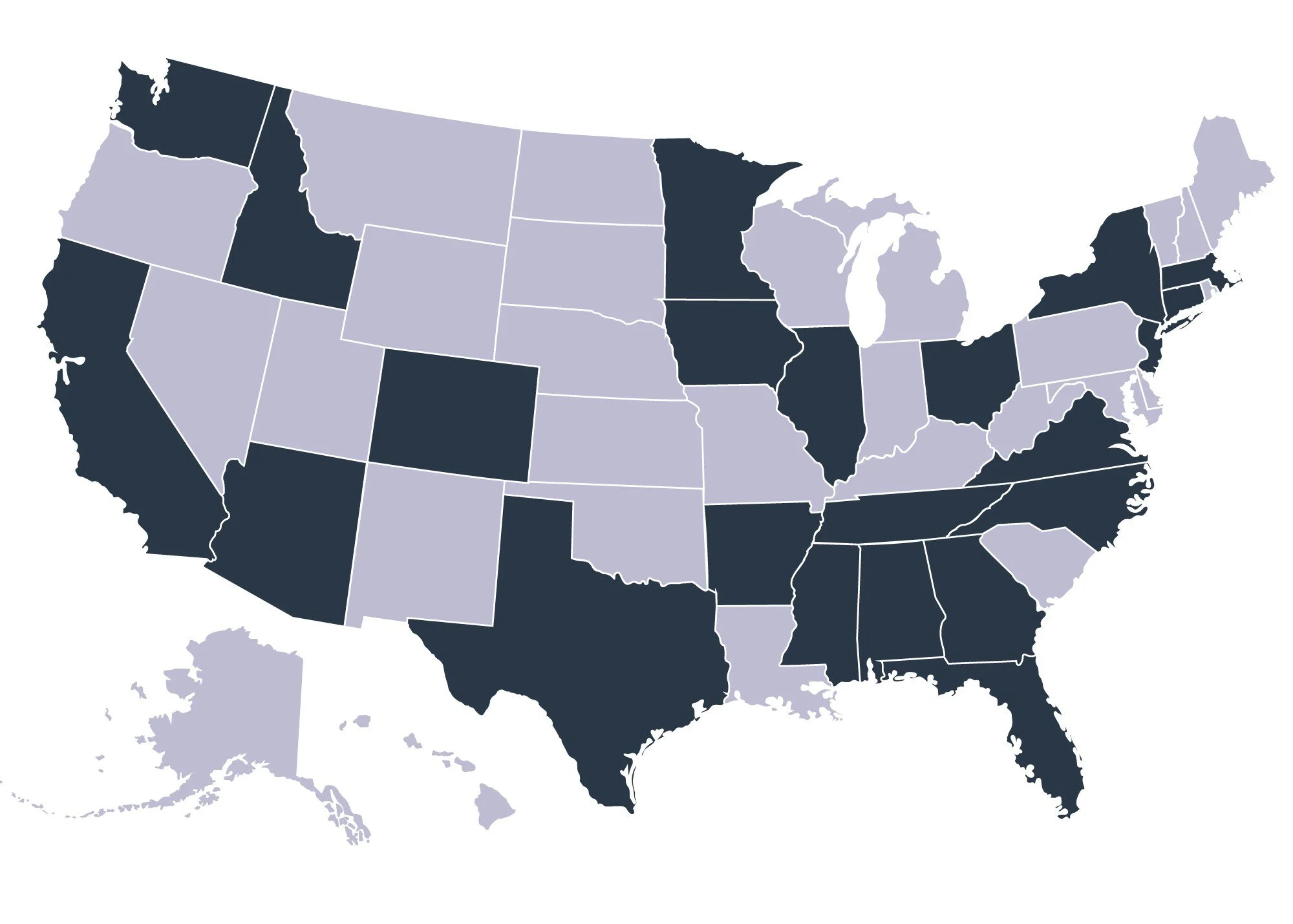
- Alabama
- Arkansas
- Arizona
- California
- Colorado
- Connecticut
- Florida
- Georgia
- Idaho
- Iowa
- Illinois
- Massachusetts
- Minnesota
- Mississippi
- New Jersey
- New York
- North Carolina
- Ohio
- Tennessee
- Texas
- Virginia
- Washington
Recruitment proceeded through three pathways: direct relationships built through POPVOX Foundation’s prior work in legislative modernization; friend-of-a-friend introductions through professional networks, including LinkedIn-based outreach; and cold outreach to legislative offices and institutional staff identified through public records and convenings. POPVOX Foundation also conducted two focus groups with state elected officials in partnership with Vote Run Lead Action’s (VRLA) fellowship program for early-career women legislators.¹⁵
Where interviewees consented to attribution, we identify them by name. We identify all other interview subjects by role and state only, and we calibrate the level of specificity to avoid identification where doing so would be inappropriate, including obscuring role descriptions that would themselves be identifying.
This research is exploratory rather than statistically representative. The cross-state variation documented in this report is too significant for any single set of interviews to characterize the full landscape, and subsequent volumes will extend the geographic and structural coverage. What this volume offers is a structured set of observations from across a substantial cross-section of US state legislatures, organized to surface patterns that recur across very different institutional contexts.
¹⁵ “Vote Run Lead Action,” Vote Run Lead Action (n.d.).