
Over the past two years, POPVOX Foundation has conducted more than 50 AI trainings for Congressional staff, Members, and teams. In nearly every session, we field questions from staff looking for trusted, practical advice about emerging technology. The questions are about AI use: how do these tools work? What can can do now? What can they do for the daily work of Congress?
Those questions kept pointing us toward a problem we could not solve with another slide deck.
The Gap Between Policy and Practice
House and Senate technology policies are built around risk mitigation. That is understandable. But the result is that some of the most rapidly advancing tools, the ones staff and Members are hearing about constantly in their policy work, are off-limits on official devices. Claude is still not approved for use in the Senate. Coding agents, file-aware assistants, and agentic workflows are largely inaccessible in official environments.
Member and staff are expected to understand and oversee technologies they are not permitted to touch.
Seeing Is Understanding
For many of these tools, briefings and demos are not enough. The only way to understand how AI technologies are advancing is to see it. Better still, to build with it; to type a prompt and watch something happen that reframes what you thought the technology could do.
That is where the POPVOX Foundation Sandbox comes in.
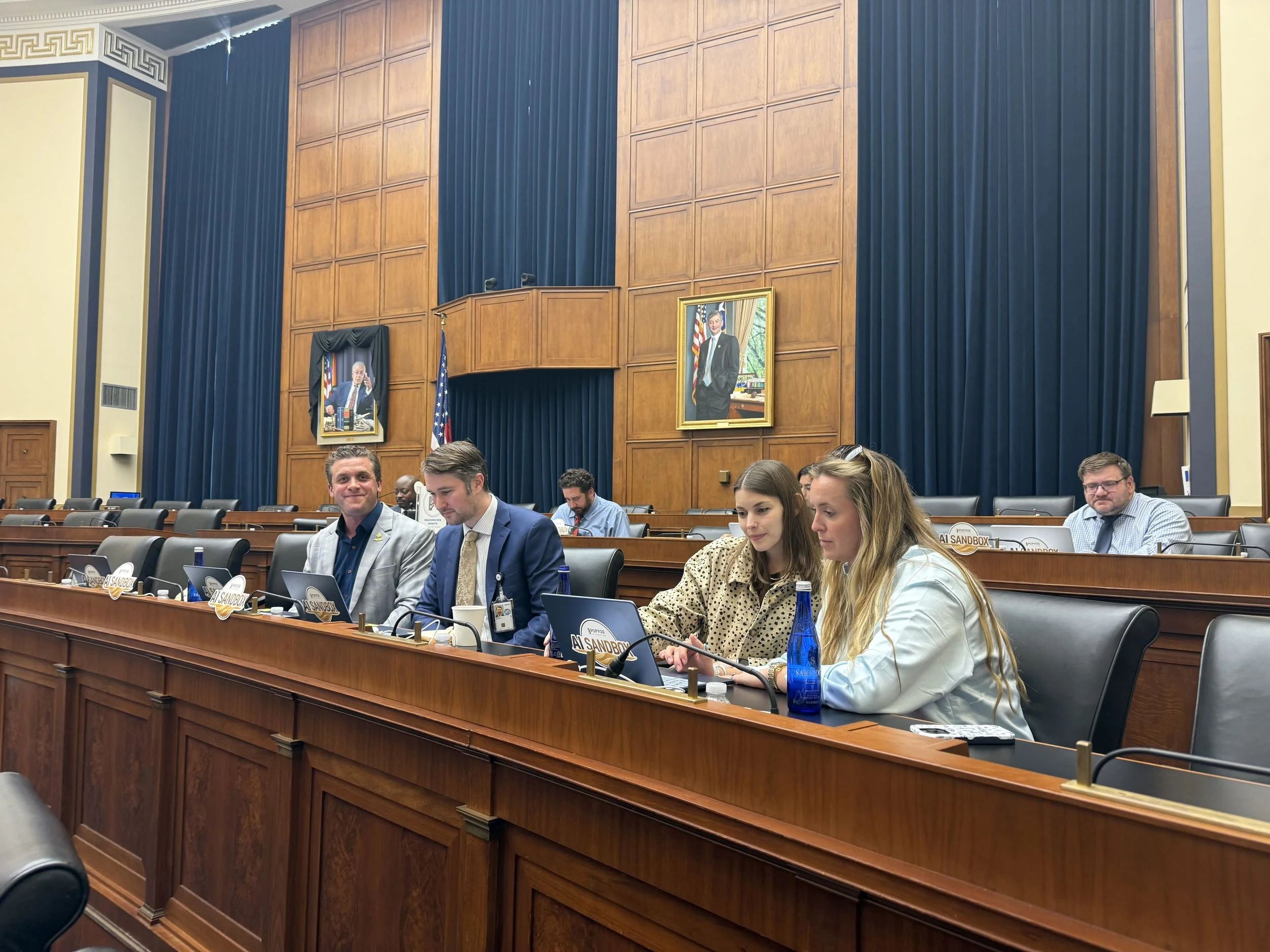
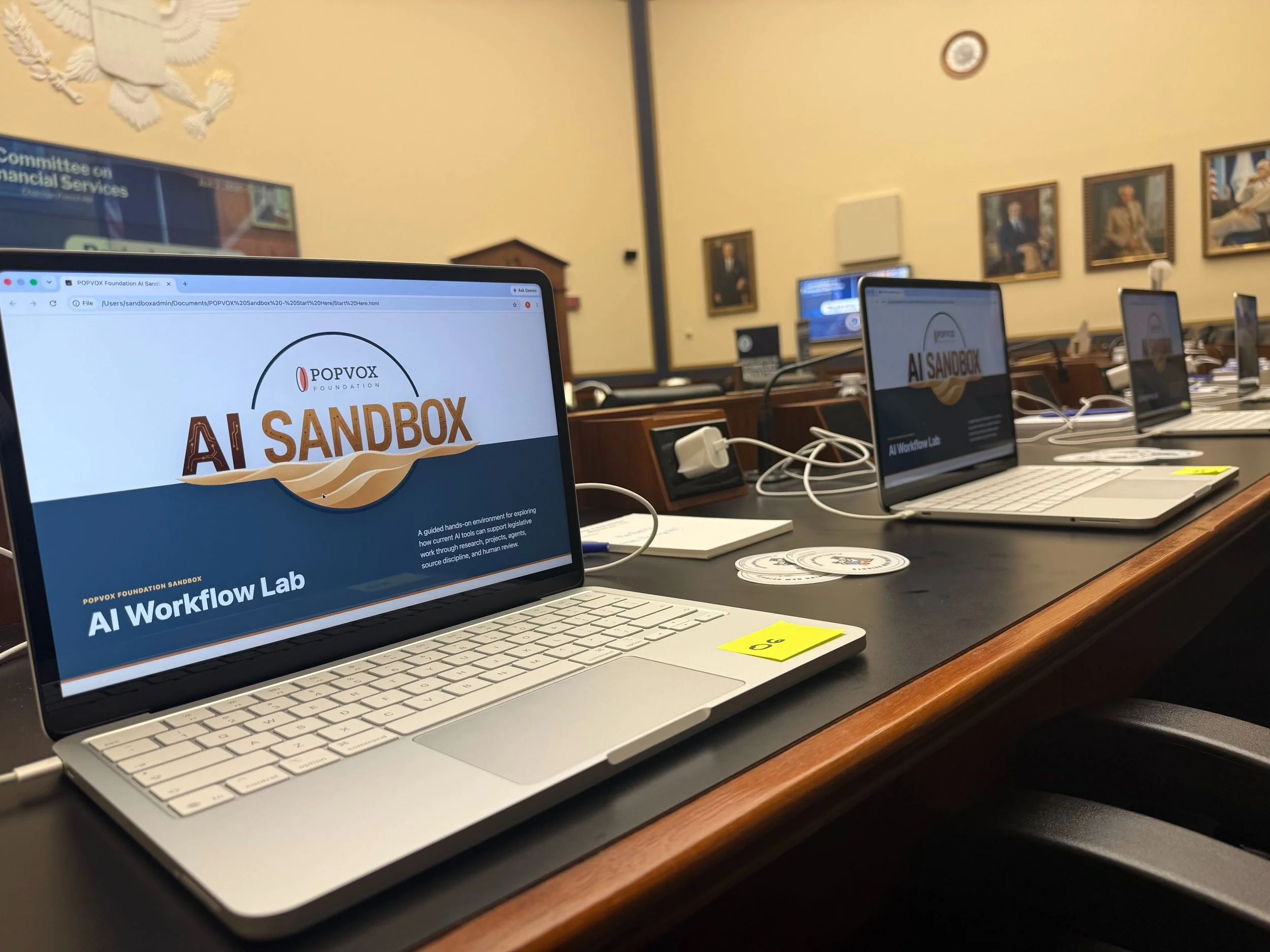
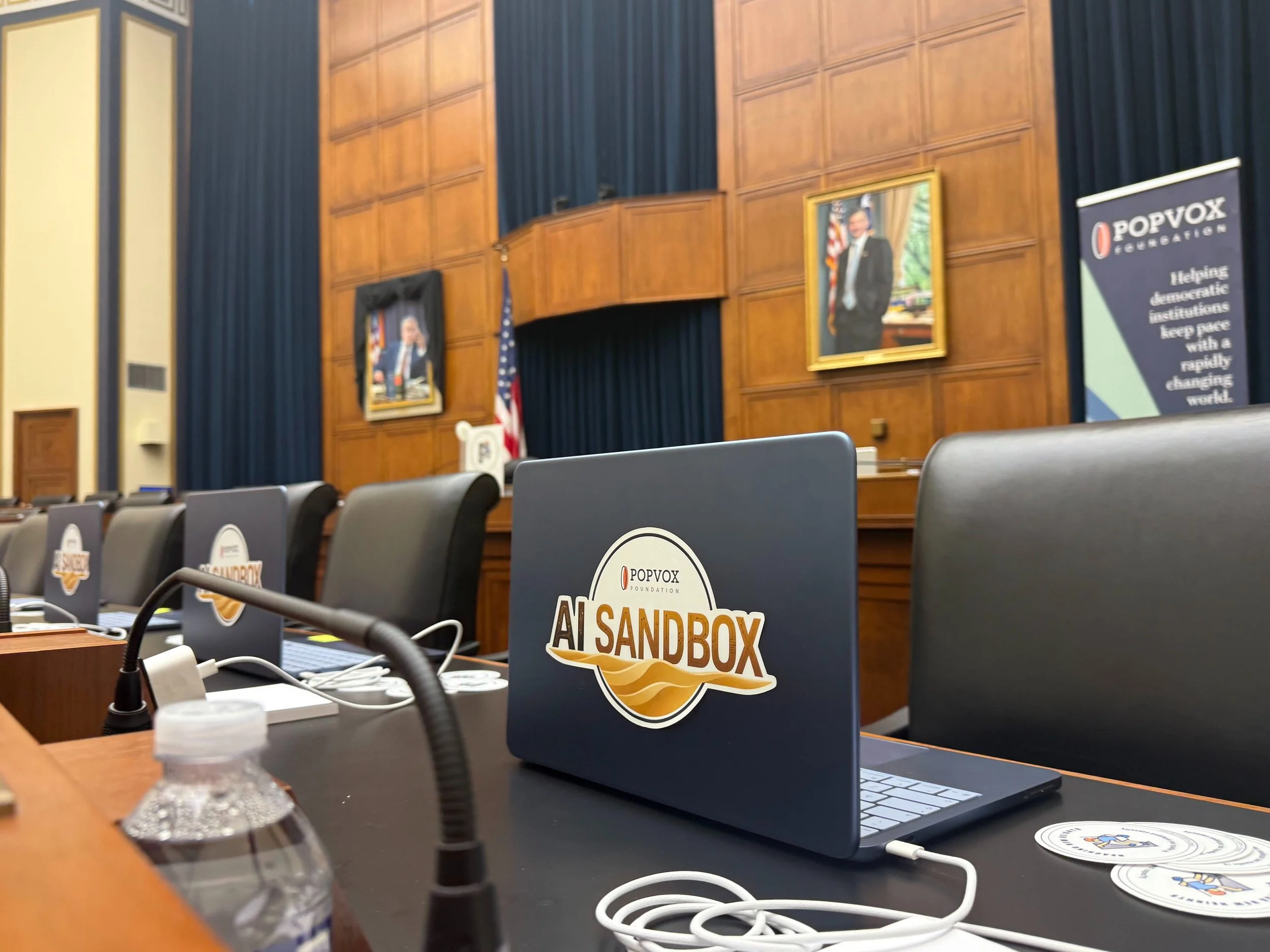
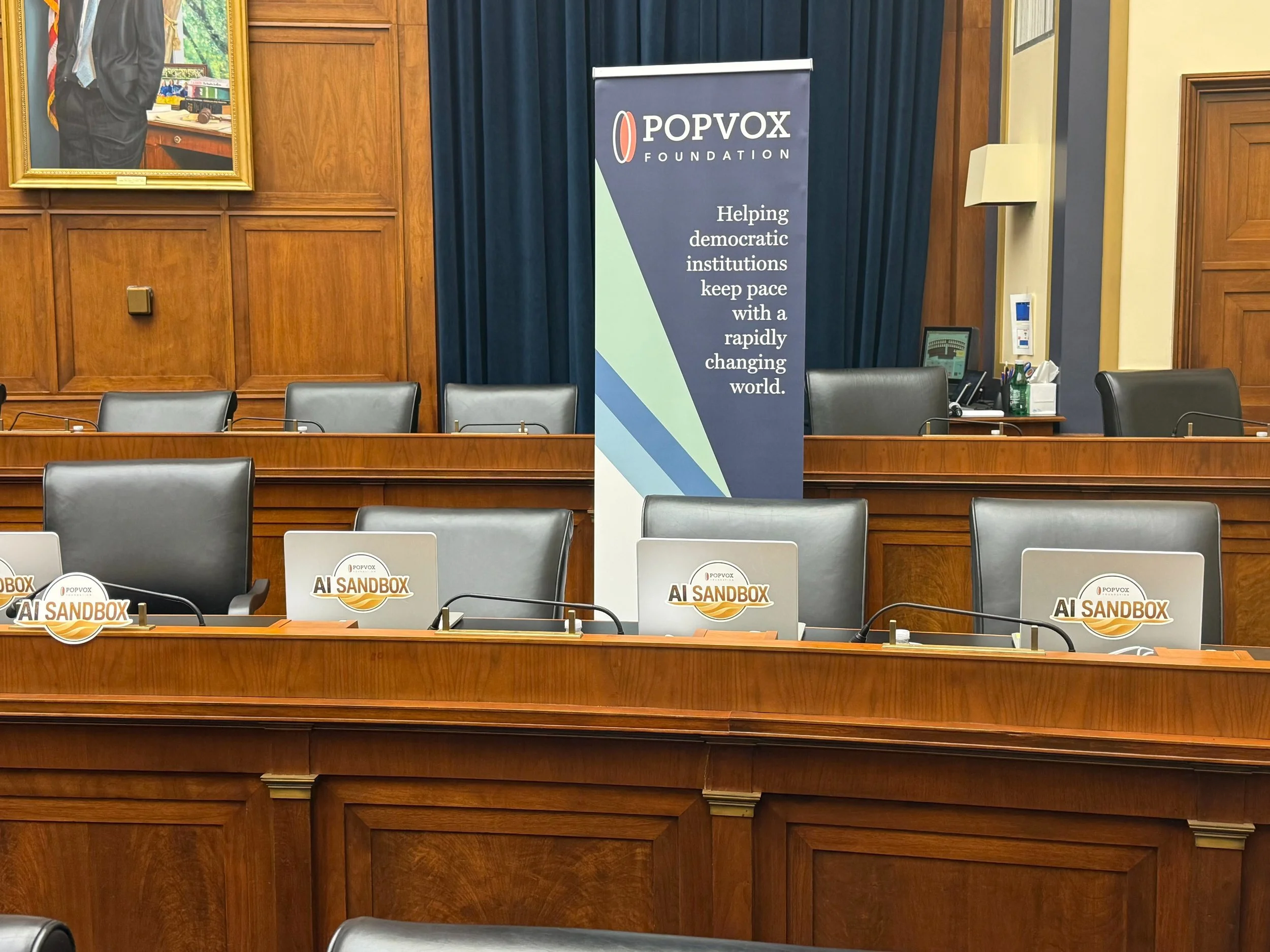
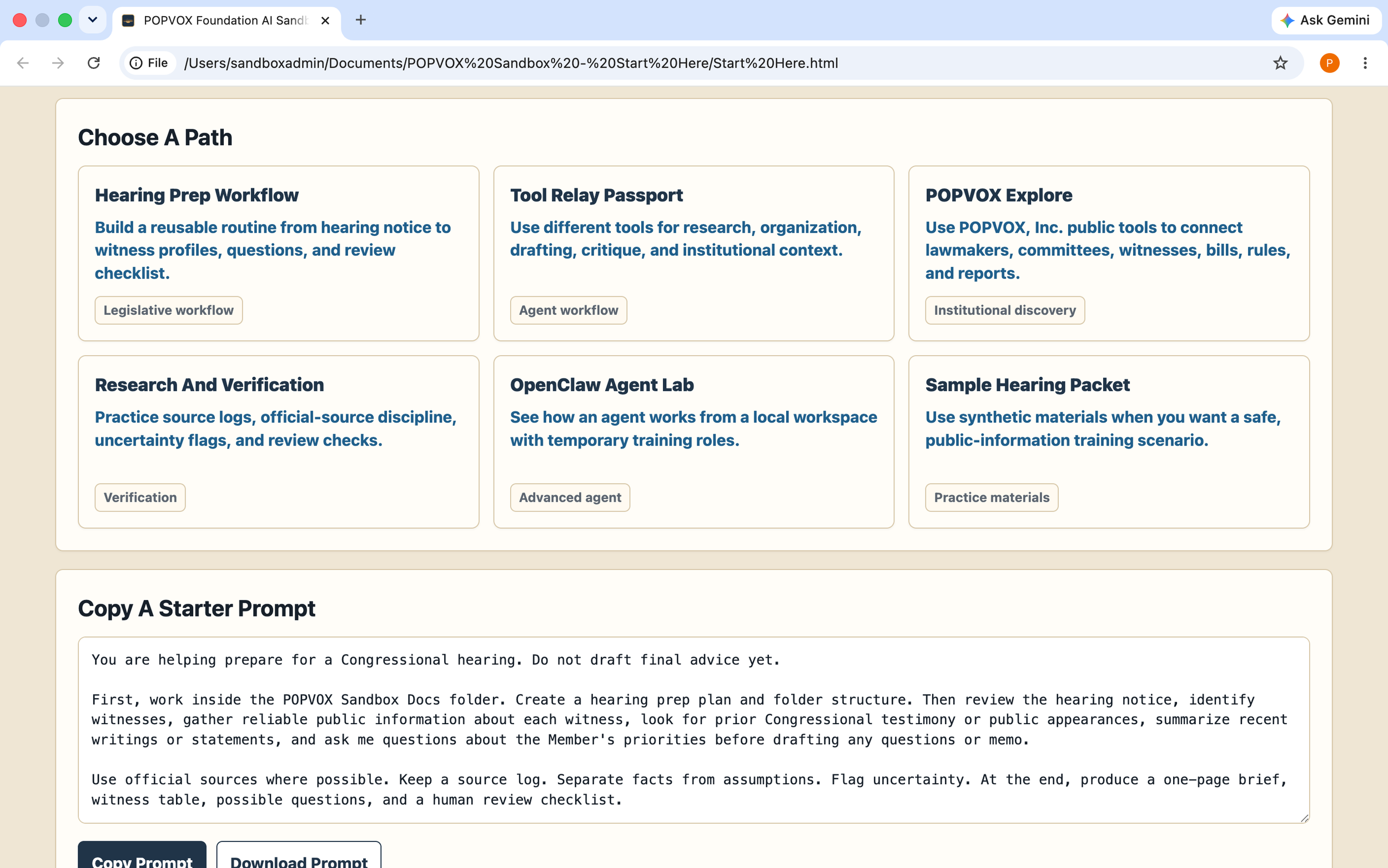
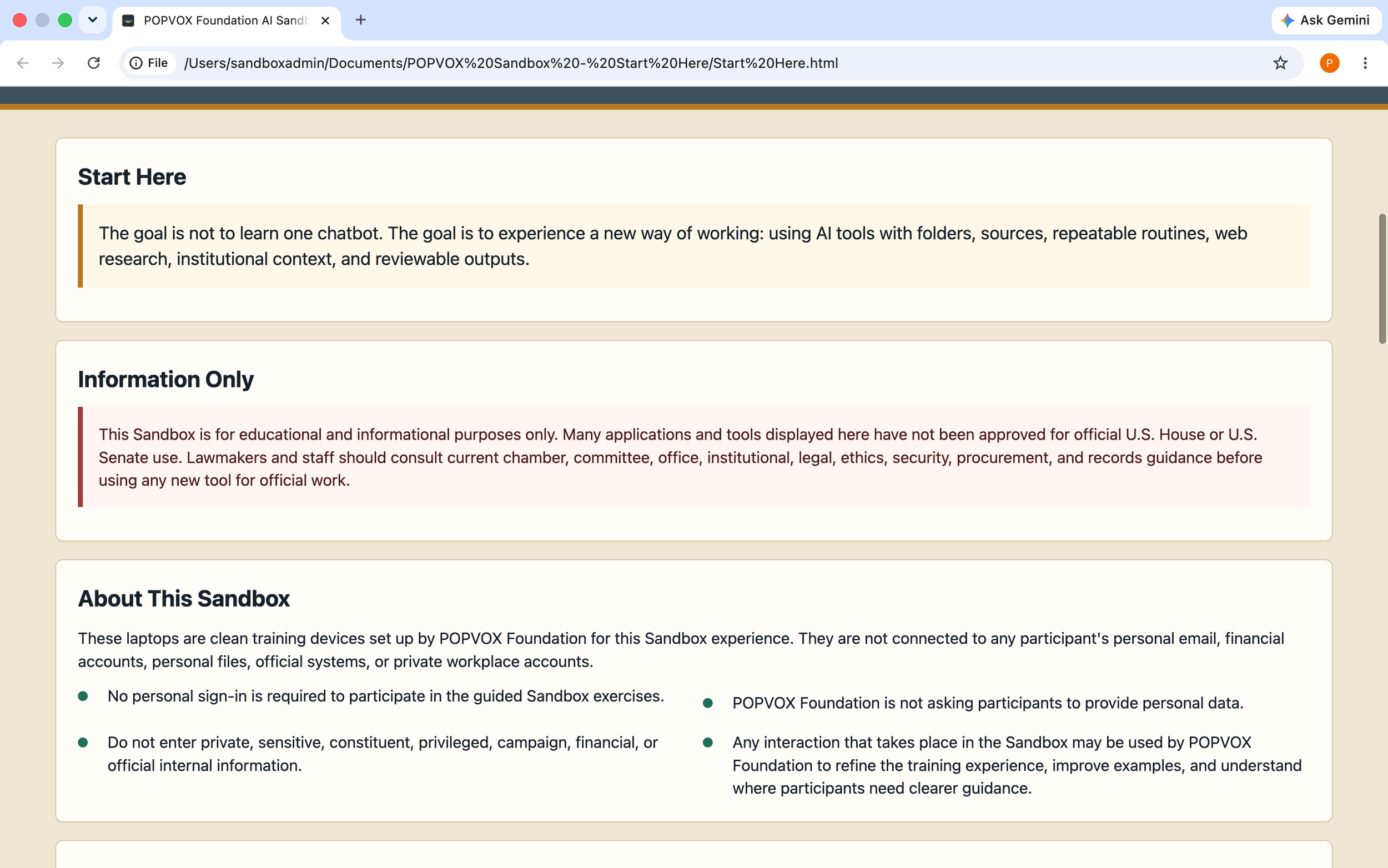
On June 2, we set up a hands-on environment where Congressional and public-sector staff could sit down with advanced AI tools, use real (public) data, and explore workflows that resemble their actual work in a secure environment. No sales pitch. No policy lecture. Just a workspace, a set of tools, and room to ask questions.
What We Saw
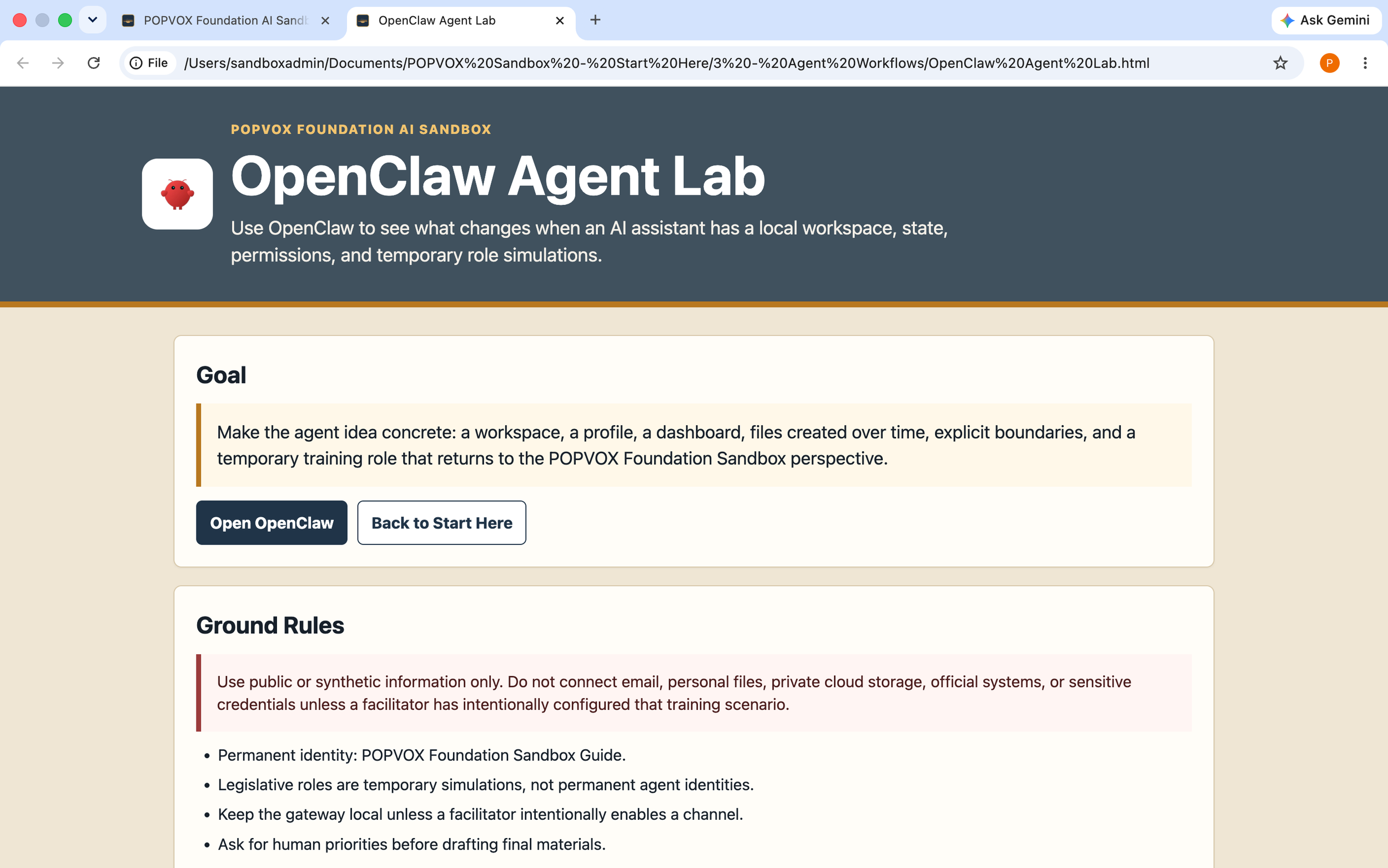
Some people sat down for ten minutes between meetings. Others stayed for more than an hour. Some had used ChatGPT, Claude, and Gemini before. None had ever seen OpenClaw. Most had never worked with a coding agent or a file-aware assistant inside a local workspace.
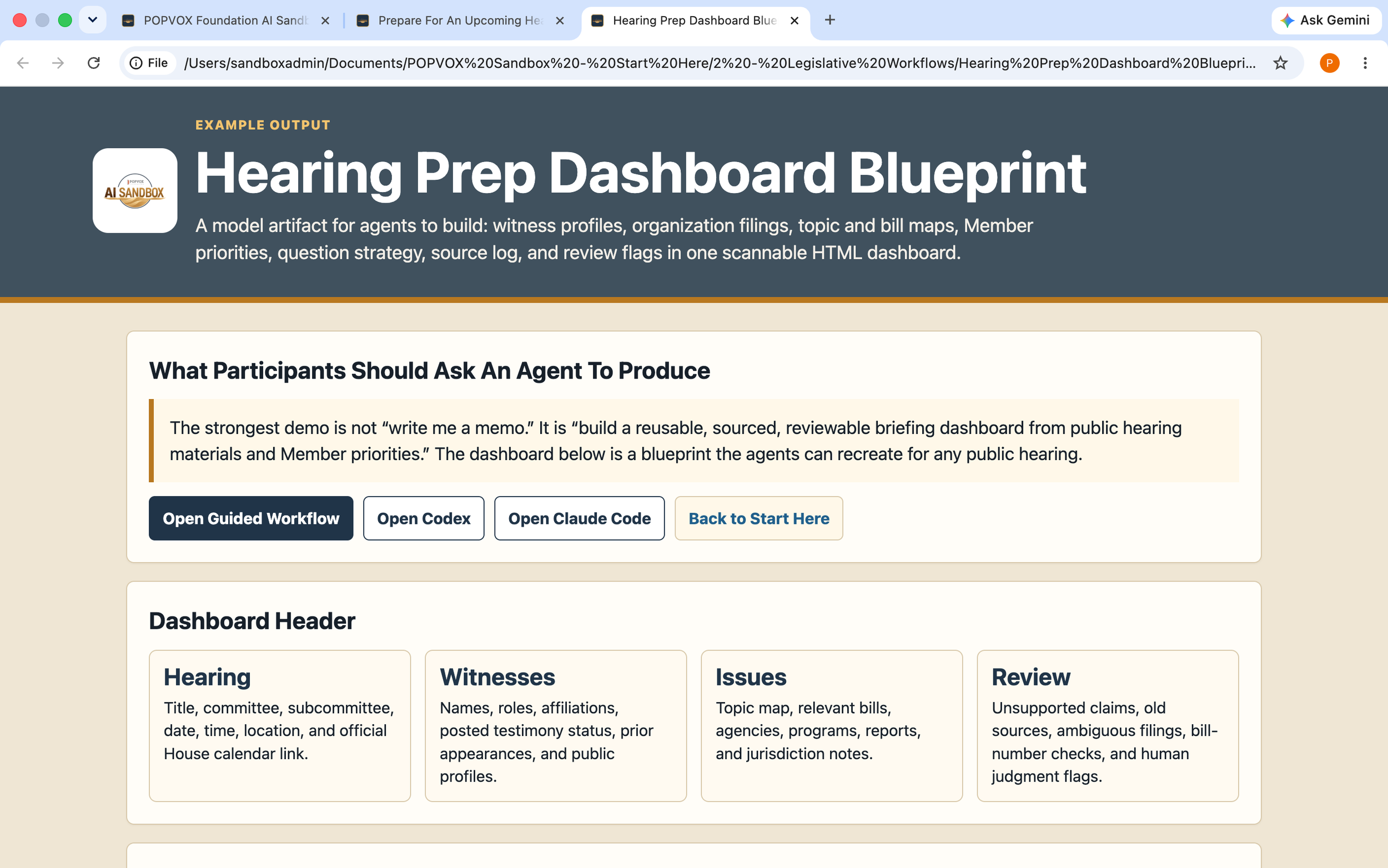
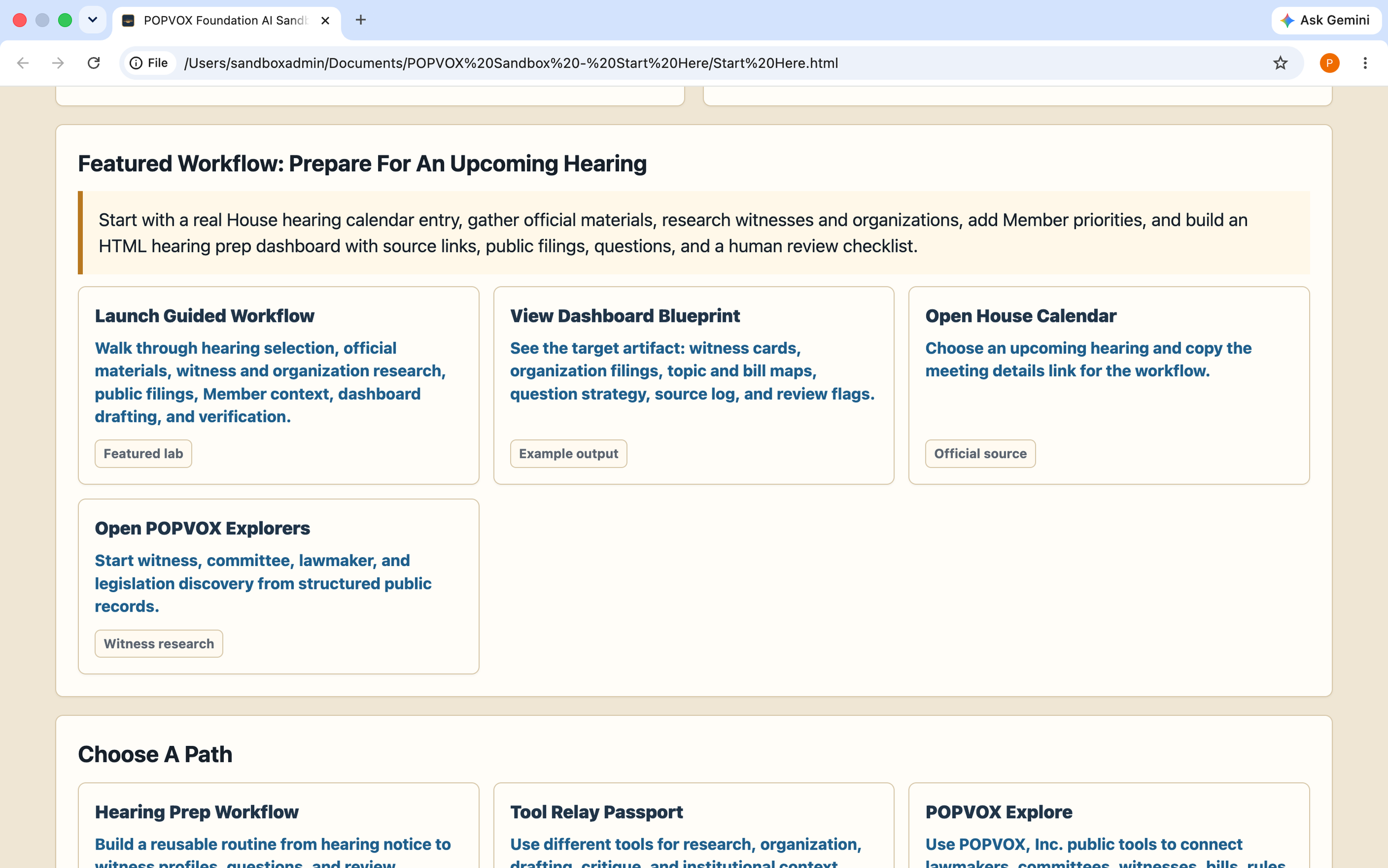
The moment that captured the day: a staffer watching, mouth literally open, as a coding agent assembled a hearing preparation website from a single prompt. It researched witnesses, created sample questions, steelmanned potential arguments from different positions, and organized everything into a navigable site. All in a few minutes, from one sentence of instruction.
A coding agent that builds a structured workspace from a single prompt is a fundamentally different kind of tool than a chatbot. And the gap between reading about it and watching it happen in front of you is enormous.
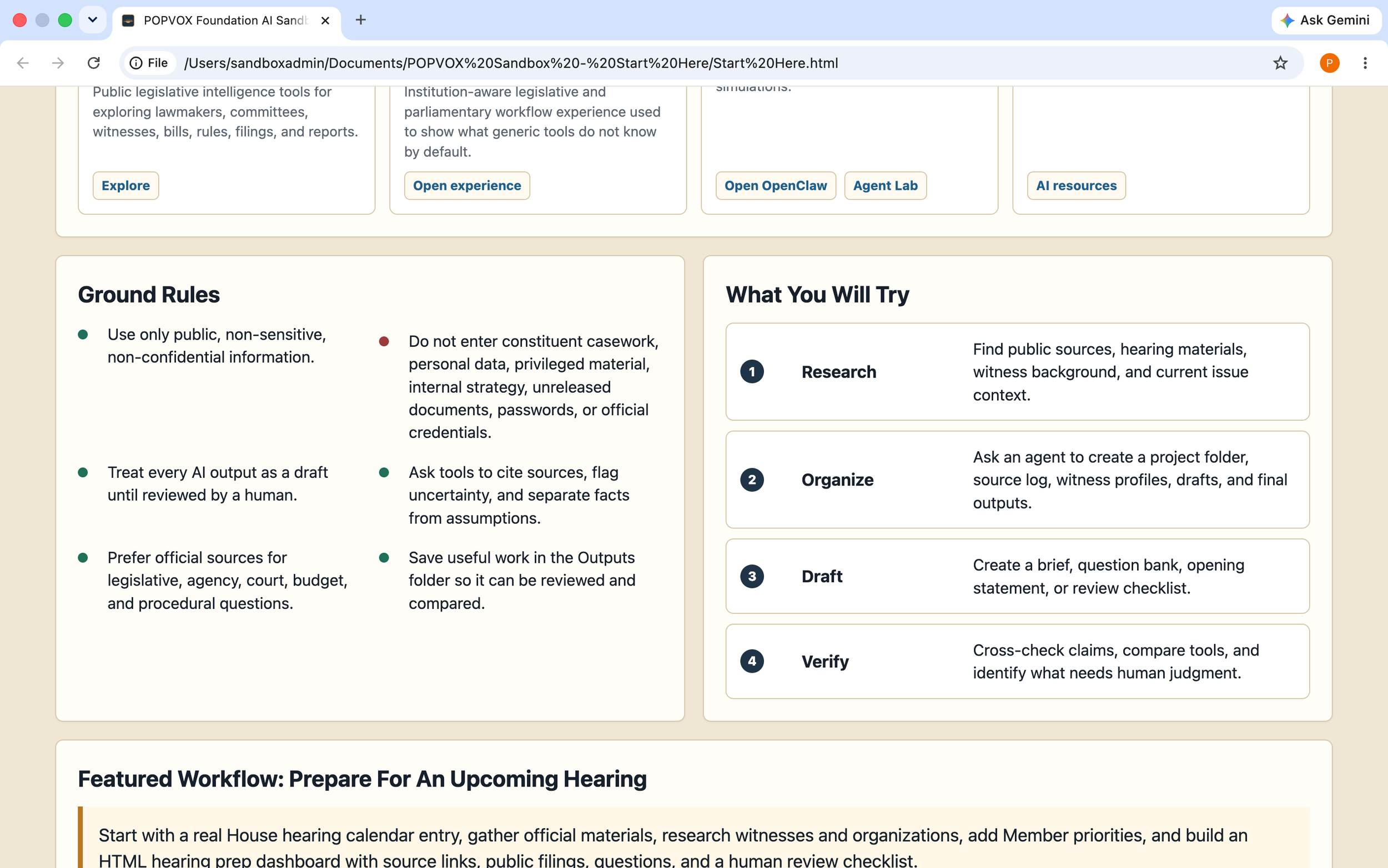
Across the session, participants built things that map directly to Congressional work: a hearing-prep dashboard assembled from public source materials, complete with witness summaries and question banks organized by issue theme. A Federal Register monitoring dashboard that tracked recent notices across energy, intellectual property, and communications policy, with links back to official sources. A legislative office bill tracker prototype. Briefing materials with source logs that preserved what was consulted, what each source supported, and what still needed human review.
For most participants, the real takeaway went well past text generation. They saw AI organize a workspace, preserve sources, build a reviewable product or tool, and surface what changed.
Why This Matters for Congress
Congressional staff are curious and capable, but they are also BUSY and are not always aware of the policies about what they can and cannot use on official devices. The institutional policies designed to protect Congress from risk are also slow to evolve and therefore shielding Members and staff from gaining first-hand experience with this emerging technology. When the people responsible for AI oversight cannot experiment with AI tools, the oversight itself suffers.
The Sandbox is designed to close that gap: a controlled, trust-aware environment where staff can build intuition about what these systems actually do, how fast they are moving, and what questions Congress should be asking.
What Comes Next
The June 2 session was a first step. We learned as much about how to run these sessions as participants learned about the tools. (We will share those lessons separately.) But the core finding is clear: Congressional staff are ready for serious, hands-on engagement with AI. They want to move past slide decks and into workspaces. They want to understand the technology at the level their jobs require.
We intend to keep building that opportunity.