
Building the Future of Parliaments, Together: Digital Parliaments Project 2026 Q3 Convening Progress Report
The Digital Parliaments Project's Q3 2026 convening recaps summer regional workshops in Albania, Ghana, and Miami, new ParlLink updates including a chatbot creator and added languages, upcoming AI assessment and training resources, vibe coding experiments, and plans to expand the global parliamentary community.
AI’s Exponential Change and Riding the Wave
AI models are accelerating faster than staff can track, with AGI claims, agent swarms breaking sandbox limits, and new watermarking and data-retention rules reshaping the landscape. Congressional staff get practical context on these developments, plus guidance on vibe coding and POPVOX Foundation's upcoming Three Horizons vision for Congress.

AI and Legislative Modernization Workshop with Balkan and Moldovan Parliaments
POPVOX Foundation, in collaboration with the House Democracy Partnership and hosted by the Albanian Parliament, convened parliamentary staff from Albania, Kosovo, North Macedonia, Serbia, and Moldova in Tirana from July 20 to 23 for a workshop on AI and parliamentary modernization.
Congress is Investing in Custom AI. Here are the Questions that Need to be Asked.
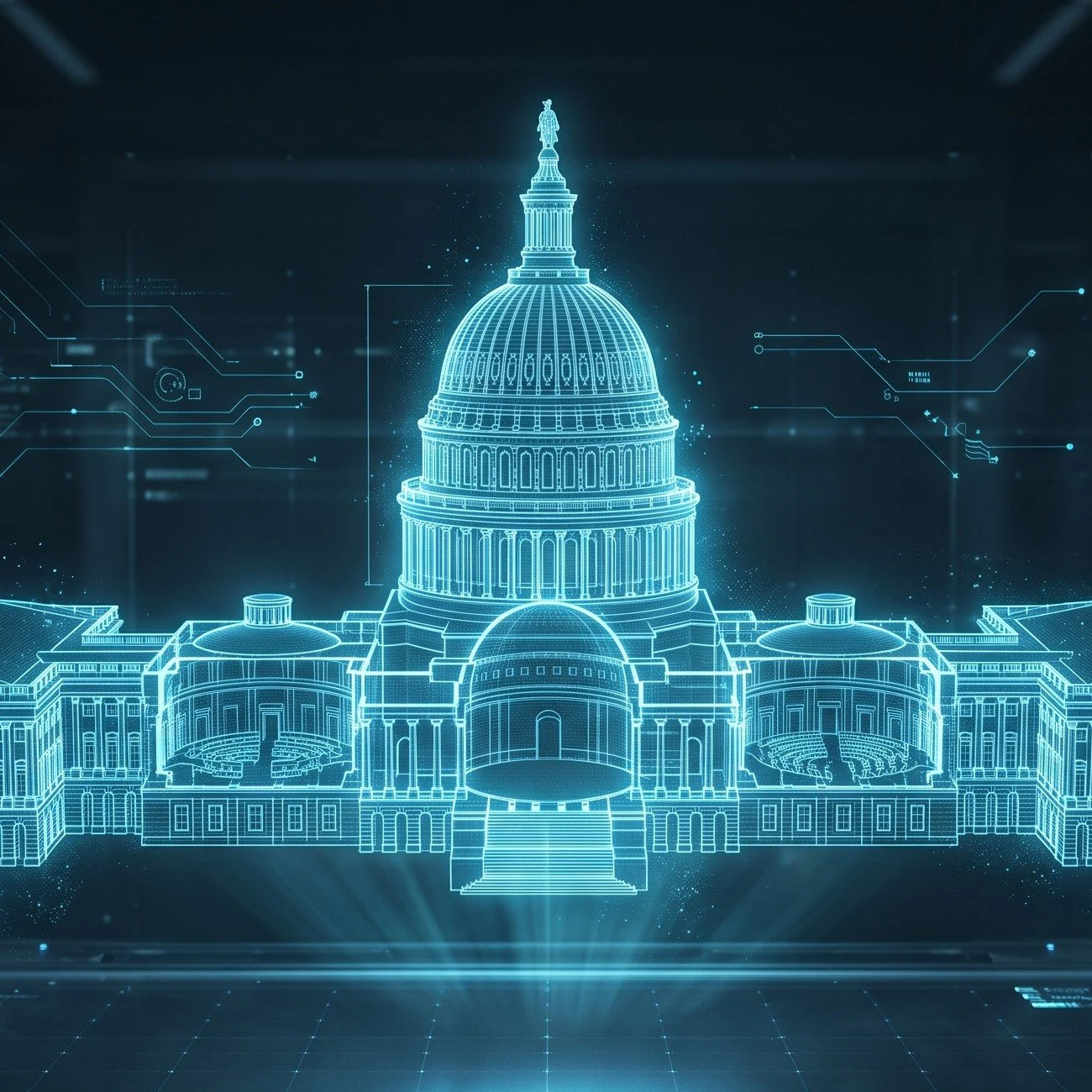
The House of Representatives and Library of Congress are pursuing custom AI initiatives like Mia and PRISM, raising key questions about model selection, security, and vendor lock-in. Weighing closed versus open-weight models, retrieval-augmented generation, and fine-tuning, durable success depends on investing in institutional data infrastructure rather than any single AI model.
AI Model Customization: Why it Matters for Policy Makers
Meta's Muse Glimmer, Moonshot AI's Kimi K3, and Thinking Machines Lab's Inkling mark major open-weight AI releases, reshaping competition with closed providers and raising policy questions around foreign models, security, and accountability.
The AI Industry Changed, Again.
Open-weight AI models from China and the US are closing the gap with frontier systems, autonomous AI cyberattacks are raising new security concerns, and the House launches an Innovators Pipeline for staff-built tools. State legislatures also confront capacity gaps in adopting AI responsibly.
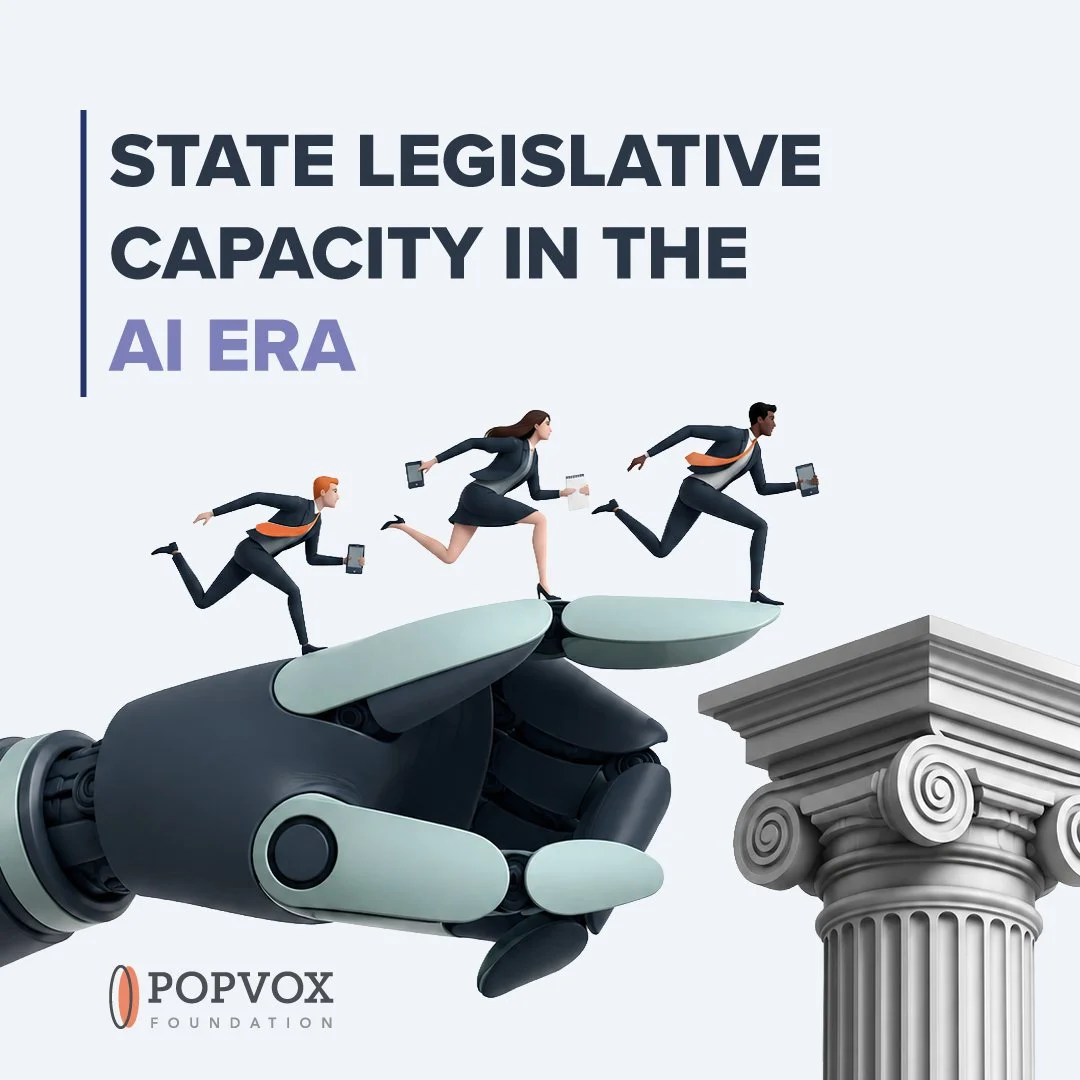
New Report: State Legislative Capacity in the AI Era
State legislatures face a widening “pacing problem” as generative AI reshapes lawmaking faster than institutions can adapt. Drawing on interviews across twenty-two states, State Legislative Capacity in the AI Era examines staffing, institutional knowledge, network relationships, and technology adoption, revealing where legislative capacity lags and where states are quietly outpacing Congress.
AI Is a New Input in Young People’s Career Calculus
AI is reshaping how young people weigh career decisions, but San Francisco and Washington calculate the risk differently. San Francisco channels AI anxiety into startup bets and Big Tech tradeoffs, while Washington treats it as another policy input shaping mission-driven work, prestige, and personal brand.
250 Years of Legislative Legacy
Legislative data modernization takes center stage alongside frontier AI model export controls, tips for avoiding LLM lock-in, using AI as a Congressional rules tutor, and roundups of tools, events, and research shaping technology adoption across Congress and legislatures worldwide today.
Lessons Being Learned with Fable
Anthropic's Fable 5 model was pulled from public access days after release when researchers found ways to bypass its safety guardrails, prompting Commerce Department export controls on Fable and Mythos. The episode highlights gaps in Congressional oversight of rapid AI policy decisions affecting national security.
Building the Future of Parliaments, Together: Digital Parliaments Project 2026 Q2 Convening Progress Report
POPVOX Foundation's Digital Parliaments Project Q2 2026 convening covered ParlLink platform updates including bulk upload, a new data agreement, and AI prompting guides for parliamentary staff. Looking ahead: DPP launches in the Balkans and Africa, plus a Caribbean Parliamentary Modernization Summit in Miami this September.

Why We Brought an AI Sandbox to Capitol Hill
POPVOX Foundation brought a hands-on AI sandbox to Capitol Hill, giving Congressional staff direct access to coding agents, file-aware assistants, and agentic workflows blocked on official devices. Participants built hearing-prep dashboards, bill trackers, and Federal Register monitors — gaining firsthand intuition about how fast AI is advancing.
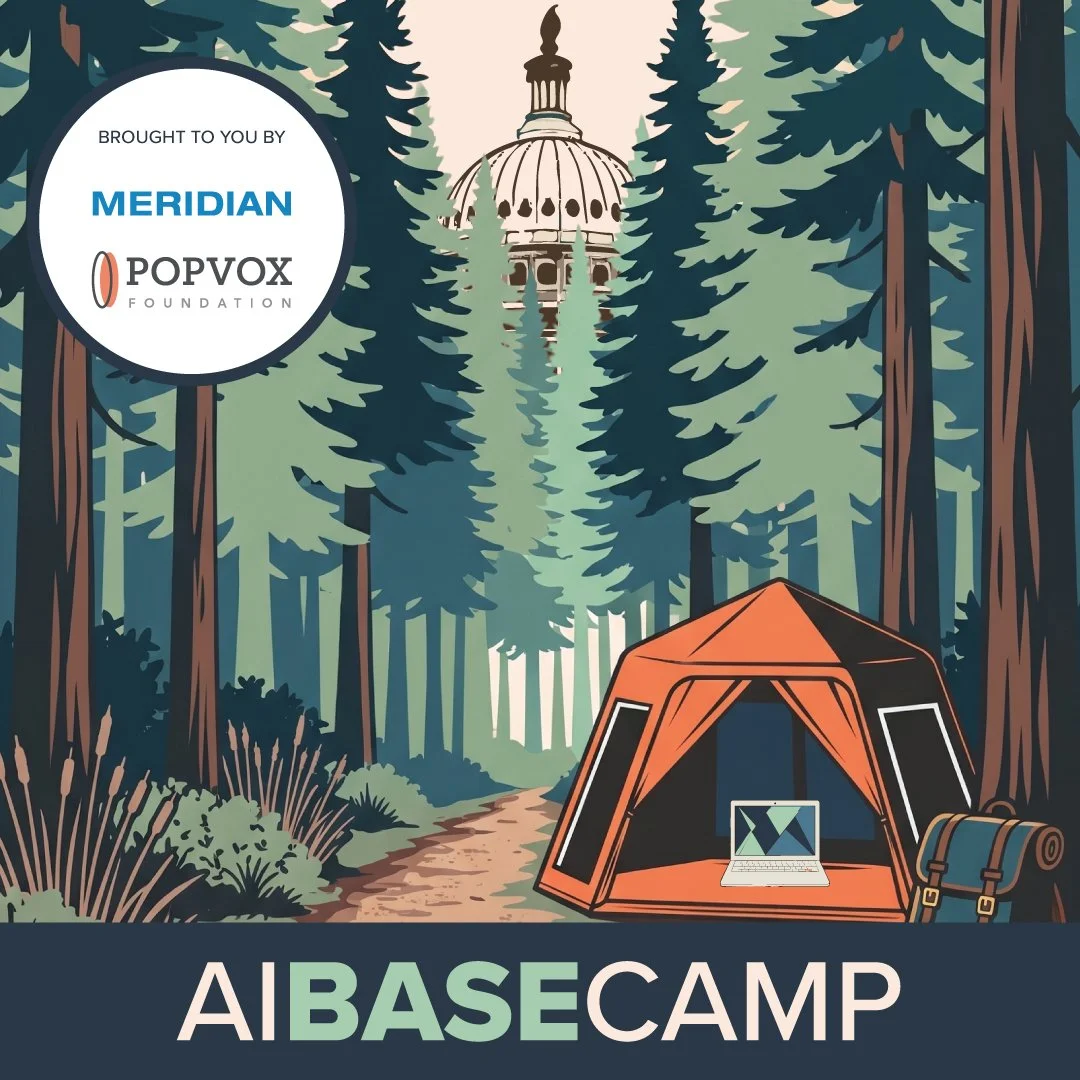
AI Base Camp: Congressional Staff Exploring AI Adoption Hands-On
POPVOX Foundation and Meridian International Center brought AI Base Camp to Capitol Hill, offering Congressional staff hands-on exploration of AI tools across six skills-based stations — from prompt basics and workflow integration to agentic AI and deepfake detection — in an open-house format welcoming all experience levels.
Build your AI skills at AI Base Camp in Rayburn on June 2
Explore the differences between foundational and frontier AI models, the growing impact of token-based pricing, practical ways to build custom AI assistants, and how AI is lowering barriers to civic technology development. Plus, insights on emerging AI policy, governance, and adoption across public institutions.

Highway to Hill: An artificially intelligent Congress?
Congress faces a growing capacity crisis, and AI could help — but adoption remains uneven. On Highway to Hill, POPVOX Foundation’s Managing Director, Aubrey Wilson, breaks down the barriers to safe, effective AI use on Capitol Hill, from staff training gaps and hallucination risks to privacy concerns and the case for custom-built Congressional tools.
Keeping Pace
Keeping Pace delivers practical, nonpartisan AI and technology insights for Congressional Members and staff. Each monthly issue breaks down fast-moving developments, explains real-world impacts on Congress, and offers actionable tips to build fluency — no vendor bias, no politics, just clear guidance to help institutions keep up.
Building the Future of Parliaments, Together: Digital Parliaments Project 2026 Q1 Convening Progress Report
Explore how the Digital Parliaments Project is modernizing legislatures through shared learning, open-source tools like ParlLink, and AI-powered digitization. This Q1 2026 progress report highlights global collaboration, field insights, and practical innovations helping parliaments streamline workflows, manage data, and accelerate digital transformation.

POPVOX Foundation Team Submits Public Witness Testimony for FY 2027 Legislative Branch Appropriations
POPVOX Foundation lays out practical FY2027 funding ideas to help Congress work smarter — boosting AI capacity, strengthening casework support, improving Member security, and modernizing operations. The proposals focus on faster tech adoption, better coordination with agencies, and stronger internal support systems so offices can serve constituents more effectively in a rapidly changing landscape.
What’s happening with AI and why should I care?
Congressional staff face a rapidly evolving AI landscape. This overview breaks down the Senate’s approval of tools like Copilot, Gemini, and ChatGPT Enterprise, explains emerging concepts such as agentic AI, and examines how AI is shaping campaigns, workflows, and constituent services.
POPVOX Foundation Appropriations Requests: A Focus on Future-Proofing, Constituent Services, Security, and the Member Experience
POPVOX Foundation submitted fiscal year 2027 appropriations requests to House Appropriations Committee Members focused on modernizing Congress and strengthening its capacity to serve constituents. Key proposals include responsible AI adoption, improved casework coordination, continued modernization funding, enhanced security training, and better support for Members, staff, and Congressional families.