
Democracy, AI, and the Limits of Technological Pessimism
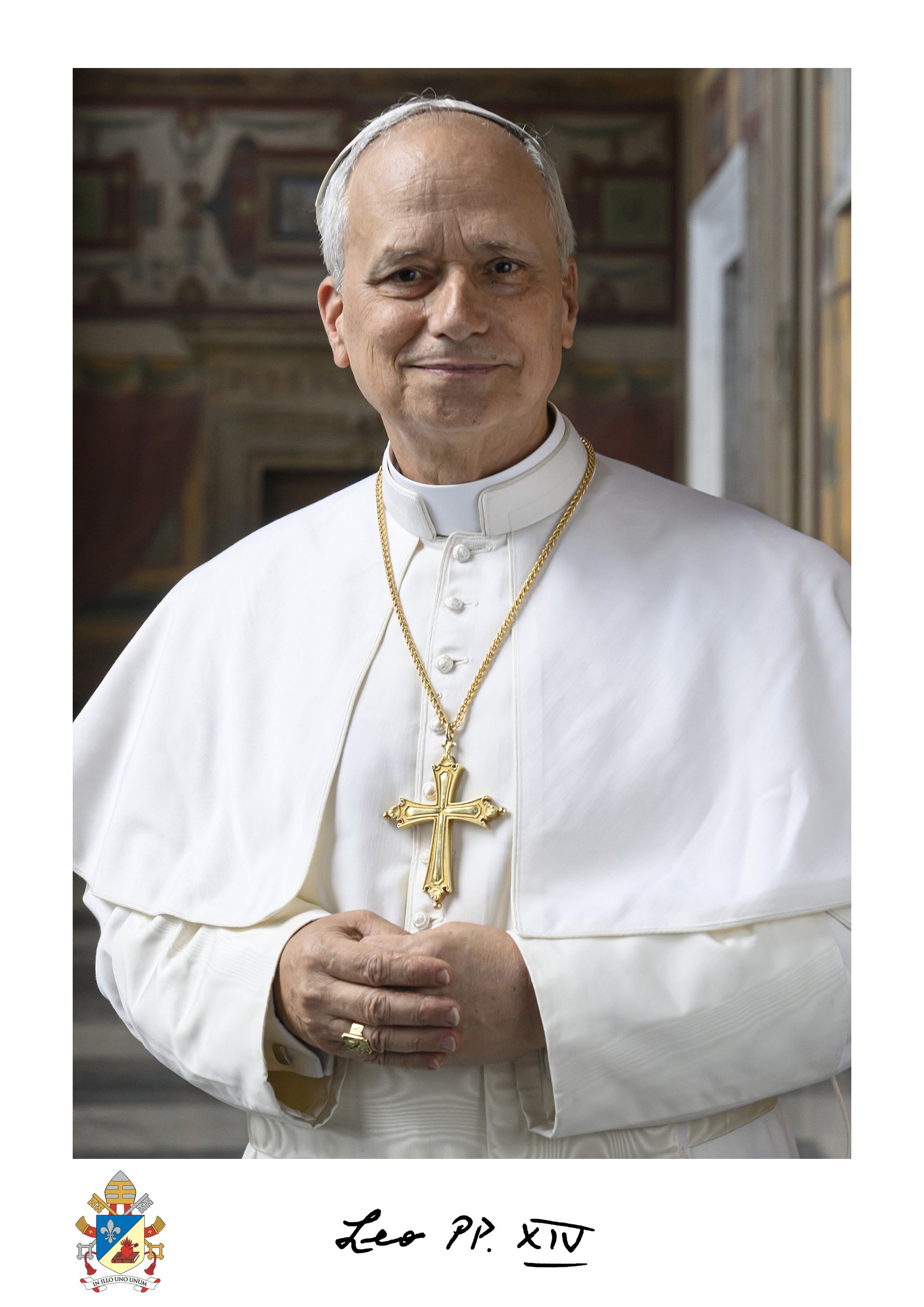
Reflections on Pope Leo XIV’s encyclical
BY BEATRIZ REY
In 1891, Pope Leo XIII published the groundbreaking encyclical Rerum Novarum, defending workers amid the profound social transformations unleashed by the First Industrial Revolution. More than 130 years later, Pope Leo XIV — who deliberately chose his papal name in reference to his predecessor — has now released his own encyclical.
For readers less familiar with the structure of the Catholic Church, an encyclical is one of the pope’s most important forms of public teaching. Addressed formally to bishops but intended for much broader circulation, encyclicals are often used to intervene in major social, political, and moral debates of a particular era. In his latest encyclical, Pope Leo XIV turns his attention to what he sees as one of the defining transformations of our time: artificial intelligence (AI).
Pope Leo XIV portrays AI primarily as a civilizational and moral challenge that risks undermining human dignity, democratic life, meaningful work, and authentic human relationships if left governed solely by logics of efficiency, automation, and concentrated technological power. I partly agree with him. While AI certainly has the potential to further fracture our social fabric, I do not think this outcome is as deterministic as the encyclical sometimes suggests. My disagreement begins with the very analogy through which the Pope frames the rise of AI: namely, as a phenomenon akin to the Industrial Revolution.
The Industrial Revolution transformed society through mechanization: factories reorganized labor, industrial machinery reshaped production, and new forms of energy and transportation reordered economic and social life around material infrastructure. AI emerges under very different historical conditions. Rather than primarily transforming physical production, it operates through information and cognition, reshaping how societies process knowledge, coordinate decisions, communicate, and navigate increasingly complex informational environments. Because AI primarily transforms informational rather than industrial systems, its democratic effects cannot be understood in isolation from the broader evolution of contemporary informational life.
In the encyclical, Pope Leo XIV writes that “peace itself is at risk when technology weakens our critical sense.” Yet our collective capacity for critical judgment was already under strain long before the rise of AI. The fragmentation of public discourse, the acceleration of information flows, and the weakening of shared epistemic authorities began with the broader digital transformation ushered in by the internet and social media. In that sense, AI does not emerge into stable democratic systems only to destabilize them. It arises within democracies that were already struggling to process growing informational complexity, polarization, and institutional distrust.
This distinction matters because it shifts AI from being understood solely as the source of democratic erosion to being seen as part of a much longer transformation of contemporary informational life. It also opens space for a more nuanced discussion about the relationship between AI and democracy. Having followed many debates — as well as concrete institutional experiments on the use of AI in representative systems that ModParl has highlighted, and whose broader democratic implications still require careful study — I find that the encyclical captures only part of the picture.
While AI undoubtedly carries risks of manipulation, concentration of power, and epistemic fragmentation, it also has the potential to help democratic institutions navigate some of the informational and organizational pressures they already face — provided, of course, that human beings remain responsible for political decisions, and accountable to the People. None of this eliminates the very real geopolitical asymmetries emerging around AI development, particularly as computational capacity and frontier models become concentrated in a small number of countries and corporations.
Precisely because the stakes are so high, I find it increasingly difficult to approach AI through purely celebratory or purely catastrophic lenses. My strategy in a constantly changing world has been to study the very forces transforming it. In recent years, I have been studying AI and its implications for politics and democratic institutions. The more I engage with these questions, the more I understand why figures such as Pope Leo XIV have warned about the risks AI may pose to human dignity, social life, and democracy. I believe he is filling an important role in drawing attention to these dangers (many of which I myself have often emphasized).
But if we are truly serious about critical thinking — about what Hannah Arendt, drawing on Immanuel Kant, described as the ability to test our judgments by imagining the standpoint of others — then I cannot treat the Pope’s interpretation as the final word on the matter. AI may deepen some of democracy’s existing pathologies, yet it may also create new possibilities for democratic institutions operating under conditions of growing complexity. Understanding which of these futures emerges requires not only moral caution, but intellectual openness.
Modern Parliament (“ModParl”) is a newsletter from POPVOX Foundation that provides insights into the evolution of legislative institutions worldwide. Learn more and subscribe at modparl.substack.com.