
BY AUBREY WILSON
A little over a year ago, parliamentarians from across the Caribbean pitched an idea during a convening in Miami that would become the Digital Parliaments Project (DPP). The starting point was belief in collective progress: in a time of rapid technological change, regional collaboration can help parliaments learn together. Fast forward to today and we — with our country partners, collaborators, and advisors — are wrapping up our first full year of learning, building, and sharing what the future of parliamentary operations looks like.
Progress tends to focus on what is new. This is a moment to start with what came first: the groundwork, the early decisions, and the care taken to build a strong foundation, because understanding where we are requires knowing how we got here.
Fall 2024: DPP Started When Parliamentarians Raised a Need
In September 2024, the House Democracy Partnership and ParlAmericas convened Caribbean Members of Parliament in Miami to discuss "The Role of Parliaments in Transforming Digital Economies in the Caribbean." During a facilitated brainstorm session, one question became central to the discussion: What is one project that could benefit every parliament in the region?
The answer was surprisingly unanimous. Parliamentarians across different countries, political parties, and chambers all pointed to the same thing: they needed help modernizing the internal operations of their legislatures and were hungry for tools they could all share and use. They were frustrated that every country had to find its own resources and reinvent the wheel. They wanted to learn from each other. And they saw the arrival of AI as a unique window of opportunity — one that could help the entire region leapfrog forward together.
At POPVOX Foundation, we saw it too. That conversation became the Digital Parliaments Project.
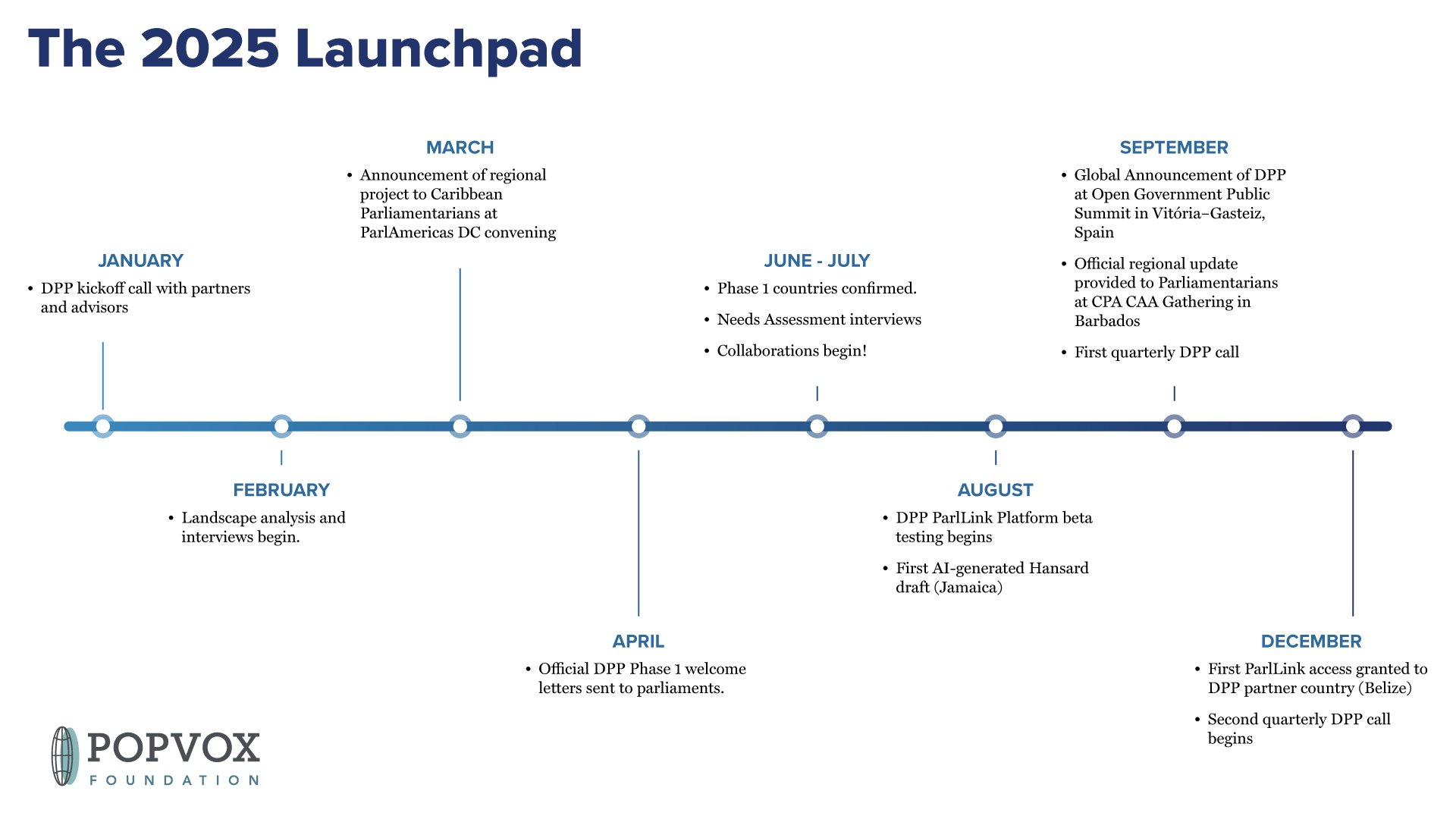
Figure 1: A timeline of the Digital Parliaments Project progress in 2025.
Spring and Summer 2025: With a Full Scope in Mind, We Named the First Cohort of Countries as Official DPP Partners
In the spring — with the invaluable support and collaboration of ParlAmericas — we began needs assessment conversations across the Caribbean region to learn about where the greatest urgency existed regarding the need for resources or technology integration.
Although the adoption of AI has come to dominate government modernization discussions, we learned that the need was more foundational: starting with records digitalization and data standardization to unlock AI’s full potential.
Across legislatures, historic Hansards, laws, and budget tables are found not only in legacy IT systems but also on bookshelves, printed and bound on paper. Parliaments need to transform those pages — and the valuable information they contain — into structured data. Some parliaments we spoke to reported Hansard publication delays of months and even years. Many shared concerns over records preservation, citing past experiences of losing official legislative records to mold or water damage, without having a digital backup. Digitized legislative records and data provides record redundancy and opens the door for the use of cutting edge tools for research, legal precedents, and public transparency.
In our initial conversations, five countries stepped forward to join the inaugural DPP cohort to collaborate on a solution to address this digitization and modernization gap: Belize, Dominica, Grenada, Jamaica, and Saint Lucia.
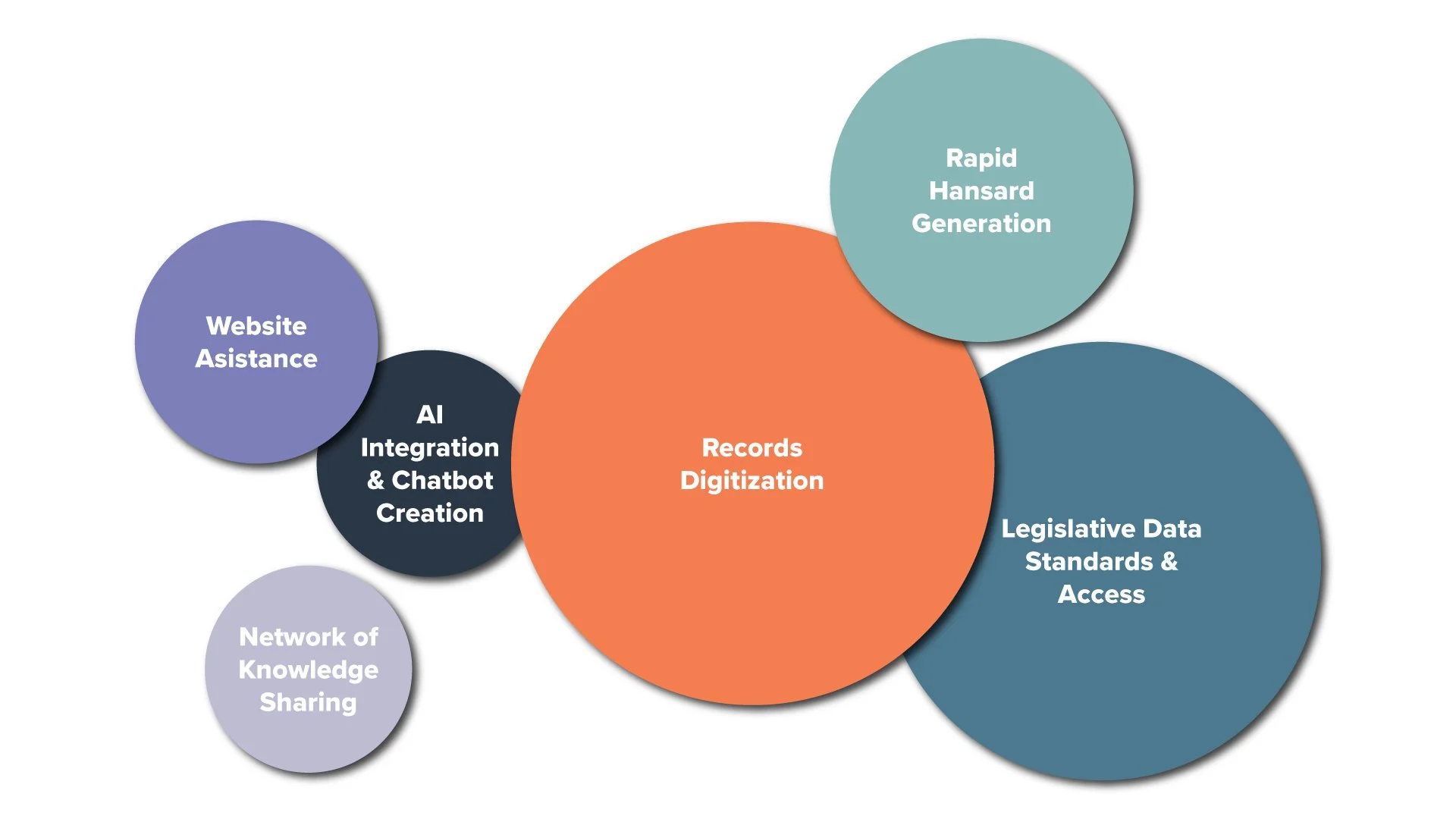
Figure 2: Visualization of needs assessment outcomes for DPP Cohort 1 Countries.
With this clarity, we entered the build phase. Instead of simply making recommendations or advising institutions on steps they could take, the Digital Parliaments Project took a different approach: we started building tools to meet the needs and priorities our parliamentary partners shared As shown in Figure 2, countries most prominently identified records digitization as an urgent, shared need.
It became clear that the easiest way to make these new resources available to participating parliaments was to set up a dedicated platform that would allow them to set up secure accounts, with separate databases for each country. This was the beginning of “ParlLink,” an online, open source legislative data management dashboard with AI-integrated OCR features to streamline the creation of standardized legislative data by digitizing paper parliamentary records.
The system is designed to be scalable, with support for all countries and the ability to expand eventually to all languages, and to provide a standardized underlying structure that facilitates the development of tool building and sharing across parliaments. As we work with our partners through constant check-ins and opportunities to provide feedback, ParlLink will continue to evolve to meet ongoing needs across different regions (as identified in Figure 2).
Today on ParlLink, parliamentary staff are able to upload scans or photos of their legislative documents to the platform via drag-and-drop. Parliaments can design the metadata structure they need for different types of documents. Our AI-enabled system converts source documents to data and extracts the desired fields, such as:
Providing a short summary of the document
Identifying key outcomes
Identifying keywords or subjects
Identifying people mentioned
Identifying committees mentioned
Flagging similar documents
The enriched file can be reviewed and edited by parliamentary staff. And all data is then accessible via automated programming interface (API) or bulk download. And we will soon make embeddable “widgets” available for easy display of the information or a search functionality on parliamentary websites.
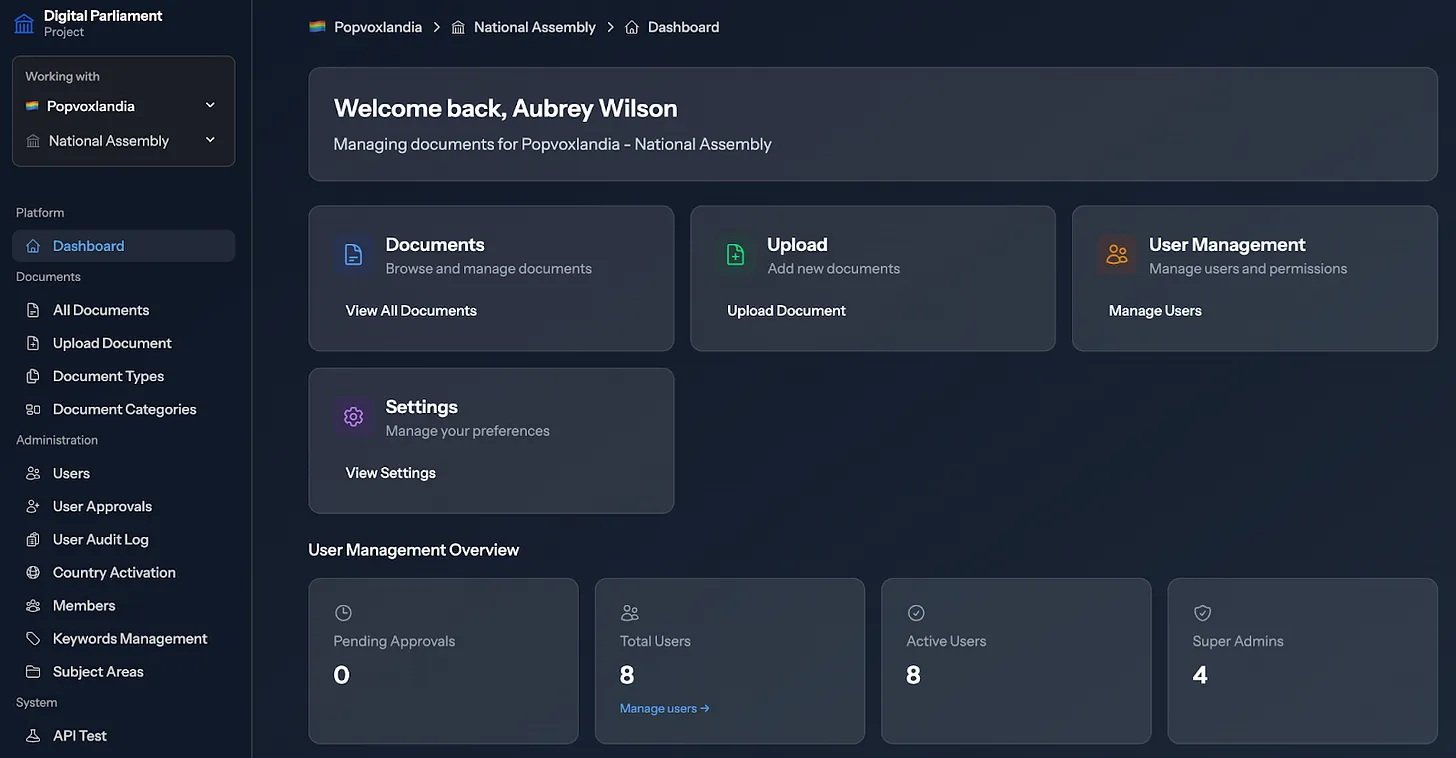
Figure 3: Screen capture of the ParlLink Dashboard for the National Assembly of POPVOXlandia, a fictional country used for demo purposes.
Fall 2025: We Shared News of DPP and Celebrated Caribbean Leadership in Parliamentary Transformation
In October, we announced the Digital Parliaments Project at the Open Government Partnership Summit in Spain. During this event, we emphasized the shared experience of parliaments around the world in this time of rapid technological change and worked to raise awareness of the unique opportunity emerging technology presents to assist legislatures in leapfrogging in their internal operations.
We also traveled to Barbados for the Commonwealth Parliamentary Association's Caribbean, Americas, and Atlantic regional meeting, where we delivered an official update to leaders and DPP partners, and presented the inaugural DPP Innovator Awards to the Speakers, Presidents, and Clerks who are championing this work.
Winter 2025: We Expanded ParlLink Access to Partnering Countries
December 2025 brought the virtual ribbon-cutting of ParlLink as we moved into the next phase of beta testing and officially extended ParlLink access to our DPP Cohort 1 partner countries. The National Assembly of Belize became the first DPP partner to receive full ParlLink access, and POPVOX Foundation signed an MOU with Saint Kitts and Nevis, welcoming them into the DPP as an official partner country. We ended 2025 with the second DPP Quarterly Convening where we presented the year in review and began mapping 2026.

Figure 4: Screen capture of the End of Year DPP Cohort Convening, featuring representatives from DPP partnering countries, project advisors, and funders.
What's Next
In year one of the Digital Parliaments Project, we focused on building a strong foundation: understanding parliaments’ real needs and priorities, exploring the capabilities of emerging technology to solve modernization challenges, and partnering with countries to make real, material progress. In year two, we will build on that foundation with a growing suite of capabilities and expanded access to ParlLink.
In February, we are heading to the National Assemblies of Saint Lucia and Dominica for in-person collaborations and to pilot mobile OCR technology to streamline document digitization. Throughout 2026, we will expand ParlLink access to more partner countries, and have set the goal to develop and launch an AI-integrated transcription platform, roll out website templates, and keep growing our community of practice through quarterly convenings and a new DPP network newsletter.
We are also excited to welcome new partner parliaments as we expand beyond Cohort 1 — not only in the Caribbean, but in Africa, the Balkans, and beyond.
Our Biggest Takeaway
Parliamentary innovation does not come from emerging technology — it comes from people working within them who have the drive and commitment to lead their parliaments into a new chapter of internal operations. As we wrap up the inaugural year of the Digital Parliaments Project, we are immensely grateful to all who have been part of it.
To the Speakers, Presidents, Clerks, and staff of our Cohort 1 partnering parliaments — Belize, Dominica, Grenada, Jamaica, Saint Lucia, and Saint Kitts and Nevis—thank you for your trust, collaboration, and leadership. You are the reason this project exists.
To ParlAmericas and the House Democracy Partnership: thank you for helping spark this initiative and for your continued partnership and guidance.
To the Filecoin Foundation for the Decentralized Web and the Patrick J. McGovern Foundation: thank you for your financial support and shared emphasis on the vital importance of democratic institutions.
To all our additional advisors and organizational partners: thank you for your expertise, networks, and enthusiasm for what the future of legislatures looks like.
And to everyone who has joined a call, answered an interview question, uploaded a document, or cheered us on from the sidelines: thank you. We are just getting started.
About the Digital Parliaments Project
The Digital Parliaments Project is an initiative of POPVOX Foundation in partnership with ParlAmericas and the House Democracy Partnership. To learn more or inquire about joining a future phase, visit our Digital Parliaments Project page.