
"How well we serve our constituents"
Hi caseworkers,
In this week’s House Legislative Branch Appropriations Subcommittee hearing, Rep. Mike Quigley [D, IL] noted that “a lot of things get us here, but what keeps us here is how well we serve our constituents.” Amen to that! And that takes institutional investment and support. We’ll flag briefly that our team has submitted several recommendations for appropriations requests to strengthen casework, including…
The creation of a Casework Liaison Office in the House
Expanding CRS’ liaison list to include regional, local, and processing center agency contacts
Preventing unnecessary delays and overly burdensome restrictions on agency staff in responding to casework requests.
Our usual roundup of agency news below, including a significant amount of coverage on how caseworkers are handling the ongoing Middle East evacuations. For everyone taking these tough calls, we’re thinking of you.
If you have questions about our work or suggestions for how we can be helpful, please feel free to reply to this email, or reach out to me at anne@popvox.org.
Anne Meeker
Managing Director
POPVOX Foundation
Upcoming Events
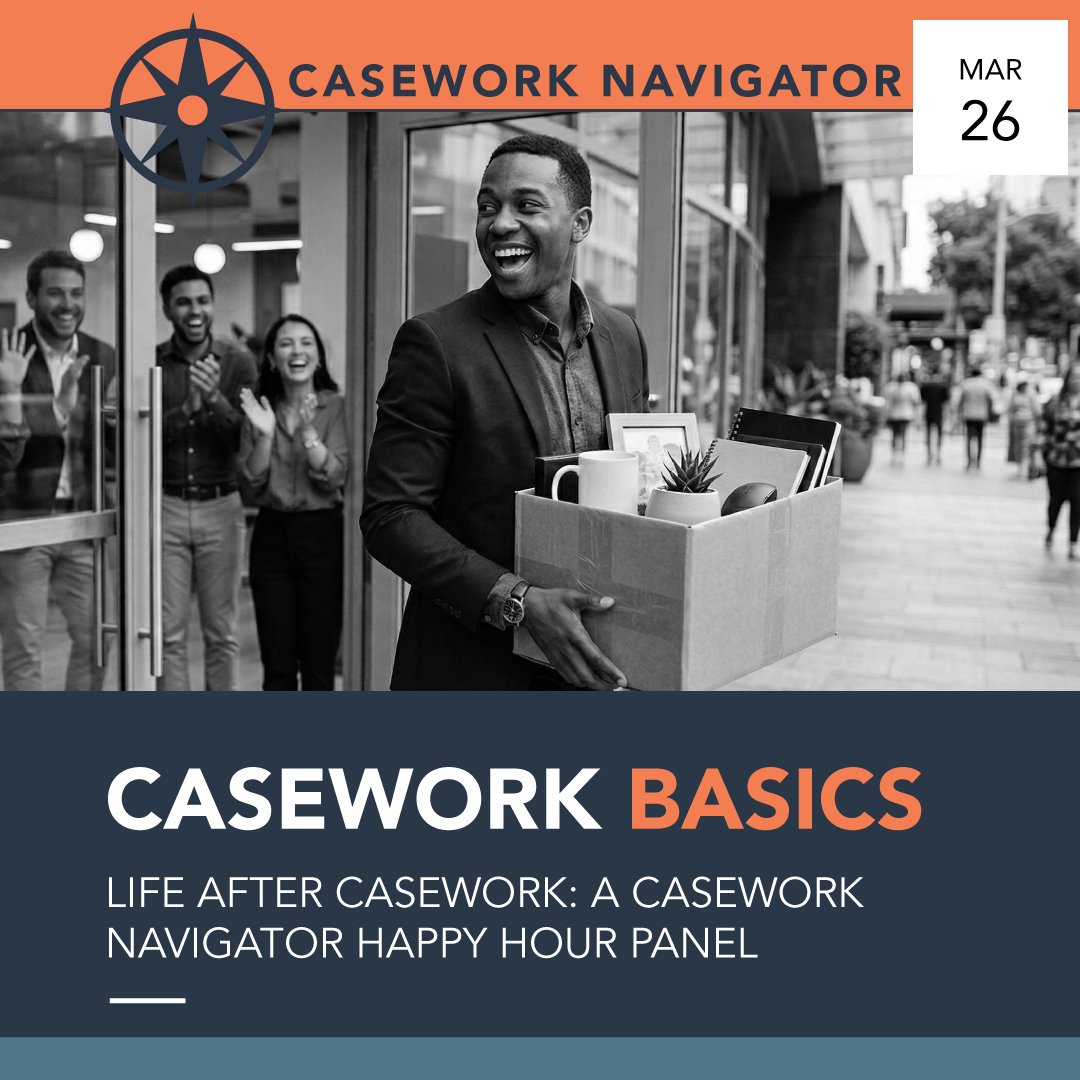
Life After Casework: A Casework Navigator Happy Hour Panel
Thursday, March 26 at 4 PM ET
Congressional caseworkers build highly transferable skills — navigating federal agencies, managing complex caseloads, advocating for people in crisis, and working across institutions. This conversation will explore how those strengths translate into careers in senior Congressional roles, federal agencies, health care, policy organizations, social services, and more!
Casework News
Senate friends! ICYMI, the Senate Employee Assistance Program team has new features for state staff on Webster: log in with your Senate credentials, look for the State Staff tab, and browse their collection of resources on casework.
A new UK report finds MPs’ offices face the same challenges as Congressional offices — outdated systems, fragmented tech, inadequate management support — and argues practical reforms could improve constituent services and staff wellbeing.
Nominations are open for CMF’s Democracy Awards, which include a Best of Constituent Service category — consider nominating an office that’s gone above and beyond.
I joined Federal News Network’s Federal Drive to discuss what Congressional caseworkers are experiencing on the front lines of the Middle East evacuation crisis, including the “doom loop” between constituents, Congress, and the State Department, and why tools like Case Compass matter.
From CNBC: Caseworkers on both sides of the aisle are reporting constituents feeling stranded and frustrated by inconsistent government messaging, an overwhelmed State Department help line, and evolving guidance; charter flight capacity has increased but demand and access remain uneven.
The State Department has been in contact with more than 88 Congressional offices and 1,300 staffers regarding Americans in the Middle East.
Rep. Blake Moore [R, UT] and the Utah delegation worked around the clock — including direct outreach to Secretary Rubio — to get a large stranded tour group onto commercial and charter flights home from the UAE.
Rep. Nancy Mace [R, SC] traveled to the Middle East to help secure a plane for Grey Bull Rescue’s 808th mission, bringing 155 stranded Americans home.
Rep. Brad Sherman’s [D, CA] immigration resources page is a strong example of a Congressional Know Your Rights page, with ICE encounter guidance, a removal order intervention form, and a directory of local legal services.
Rep. Nicole Malliotakis’ [R, NY] office contacted seven embassies over multiple years to secure a visa interview for a constituent’s wife stranded abroad — she has now reunited with her husband.
Congratulations to Rep. Eugene Vindman’s [D, VA] team who, since January 2025, have closed 560+ cases and returned $5M+ in federal benefits to constituents across Social Security, VA, Medicare, and IRS refunds.
Agency News
Supporting Constituents Overseas
If your office is getting calls from constituents trying to leave the Middle East and this is a new area of casework for you, start here: Supporting Constituents Overseas. It covers Consular on the Hill contacts, the CACMS registration system, how to screen and escalate urgent cases, and how to set expectations with constituents and families. We covered the Middle East situation in depth in our last issue; the bullets below reflect the latest developments.
Since Feb. 28, the State Department has issued mandatory ordered departures for non-emergency staff and families at US missions in Saudi Arabia, Iraq, Jordan, and Bahrain by land — commercial flights are not operating — with recommended overland routes to Jordan, Kuwait, Saudi Arabia, and Turkey. In-person consular services across these countries are severely limited or unavailable.
What constituents are dealing with: One stranded traveler in Qatar arranged his own 62-hour, $10,000 journey home through Saudi Arabia, Ethiopia, and Rome after commercial flights were grounded. Many others across the region relied on WhatsApp groups and crowdsourced tips to find routes out when commercial options were unavailable.
Veteran diplomats and stranded travelers argued that the State Department failed to adequately prepare for or respond to Americans caught in the Middle East conflict, pointing to a slow evacuation response, no pre-strike travel warnings, and staffing gaps at key embassies as evidence that budget cuts and mass layoffs had left the department critically unprepared for a crisis it should have anticipated.
Immigration
The Supreme Court is considering emergency petitions to end TPS for 350,000 Haitians and 6,000 Syrians; TPS termination for 300,000+ Venezuelans is already proceeding.
A bipartisan House bill would waive the $100,000 H-1B visa fee for foreign health care professionals, aiming to protect hospitals serving rural and underserved communities.
Effective April 13, the State Department is cutting the fee to renounce US citizenship from $2,350 to $450, a return to the 2010 rate.
IRS
Over 830,000 taxpayers — disproportionately low-income, unbanked, disabled, or living abroad — are waiting months for tax refunds after the IRS phased out paper checks.
The IRS has a program, developed with the FBI and State Department, to freeze tax accounts and defer penalties for Americans held hostage or wrongfully detained abroad; a TIGTA audit found implementation gaps the IRS has agreed to fix.
SSA
Initial disability claims are now processing 33 days faster nationally, with hearings/appeals 20 days shorter and pending initial cases down by 250,000+ in one year.
A whistleblower complaint alleges a former DOGE engineer copied SSA databases covering 500M+ Americans’ Social Security numbers and personal data onto a thumb drive; the IG is investigating and has alerted four Congressional committees.
An arbitrator ordered SSA to restore telework for its 38,000 AFGE bargaining unit employees; SSA is appealing the ruling.
DHS
As the DHS shutdown passes one month, roughly 90% of the department’s 260,000 employees have missed their first full paychecks. Constituents planning air travel should arrive 3–4 hours early at affected airports. TSA officers missed their first full paychecks on March 14, compounding financial strain from the 43-day shutdown last fall; Spring Break travel is pushing already-short-staffed checkpoints past their limits.
CNN has a live tracker of TSA lines at major airports.
TSA officials have warned that small airports may close due to staff shortages if the shutdown continues.
A DOD memo directed supervisors to encourage civilian employees to volunteer for details supporting DHS immigration enforcement operations; offices handling immigration constituent cases should be aware DOD civilians may be involved in detention logistics.
VA
An OIG audit found no effective oversight of contracted community-based outpatient clinics (CBOCs) after contracts were awarded; offices with veterans struggling to access CBOC care now have documented OIG findings to reference when escalating cases.
A new VA-DOJ agreement gives VA officials authority to initiate guardianship proceedings for veterans deemed unable to make their own health care decisions; the primary focus is ~700 veterans in VA facilities with no family or legal representation, though a broader pilot is underway.
Federal Workers
We’d like to give a well-deserved round of applause to OPM’s rebuilt Congressional Liaison team for a very informative approach to briefing caseworkers handling OPM-related work recently. Always nice to see agencies treat the Legislative branch as a partner in the shared mission to serve the American public.
After weeks of delay, OPM has mailed the remaining 1099-R tax forms to federal retirees who requested paper copies; forms should arrive by March 18.
OPM launched a voluntary HR shared service center offering agencies consolidated tools for payroll, benefits, onboarding, and workforce planning.
Miscellaneous
President Trump signed a bill into law extending SSA’s authority to share its death records list with the Treasury to prevent improper payments to dead people.
Federal reconciliation law changes will require states to fund a share of SNAP benefits for the first time starting in 2026; CBO estimates some states may exit the program, which could affect constituent access to food assistance.
The House Subcommittee on Modernization approved funding for FlagTrack 2.0, giving constituents a public-facing portal to track flag requests and streamlining processing for Congressional offices.
Rising car prices, interest rates, insurance costs, and gas prices — further inflated by the Iran war — are pushing more Americans into auto loan delinquency, bankruptcy, and uninsured driving, with lower-income households hardest hit and monthly new-car payments averaging $774, up from $588 in 2021.
In his FY2027 budget testimony, Capitol Police Chief Sullivan highlighted a 58% surge in threats against members of Congress in 2025 and noted that mutual aid agreements with local law enforcement have more than doubled to cover all 50 states.
Trump signed an executive order creating a multi-agency fraud task force that will have 30 days to identify their most fraud-prone benefit programs.
A Missouri woman lost her Medicare coverage after setting up a PO Box triggered an address change that caused Medicare mail to bounce back unforwarded — a cautionary tale for caseworkers that address changes, even temporary ones, can inadvertently cut off federal benefits with little to no notification to the constituent.
Casework Navigator Newsletter
Get tools and tips to level up your casework, as well as the latest casework news and agency updates.