
On Day One: Are Parliaments Preparing for AI — or Being Pulled by It?
Notes from the opening day of the global conference hosted by the IPU, CPA, UNDP and the Malaysian Parliament on the future of responsible AI in legislatures
BY BEATRIZ REY
I’m writing from Kuala Lumpur, Malaysia, where Marci Harris, cofounder and executive director of POPVOX Foundation, and I are participating in the Artificial Intelligence Conference: The Role of Parliament in Shaping the Future of Responsible AI. The Inter-Parliamentary Union (IPU), the Commonwealth Parliamentary Association (CPA), the United Nations Development Programme (UNDP), and the Malaysian Parliament organized the event. We couldn’t be more excited to be here. It’s energizing, and honestly just fun to spend time with other legislative nerds.
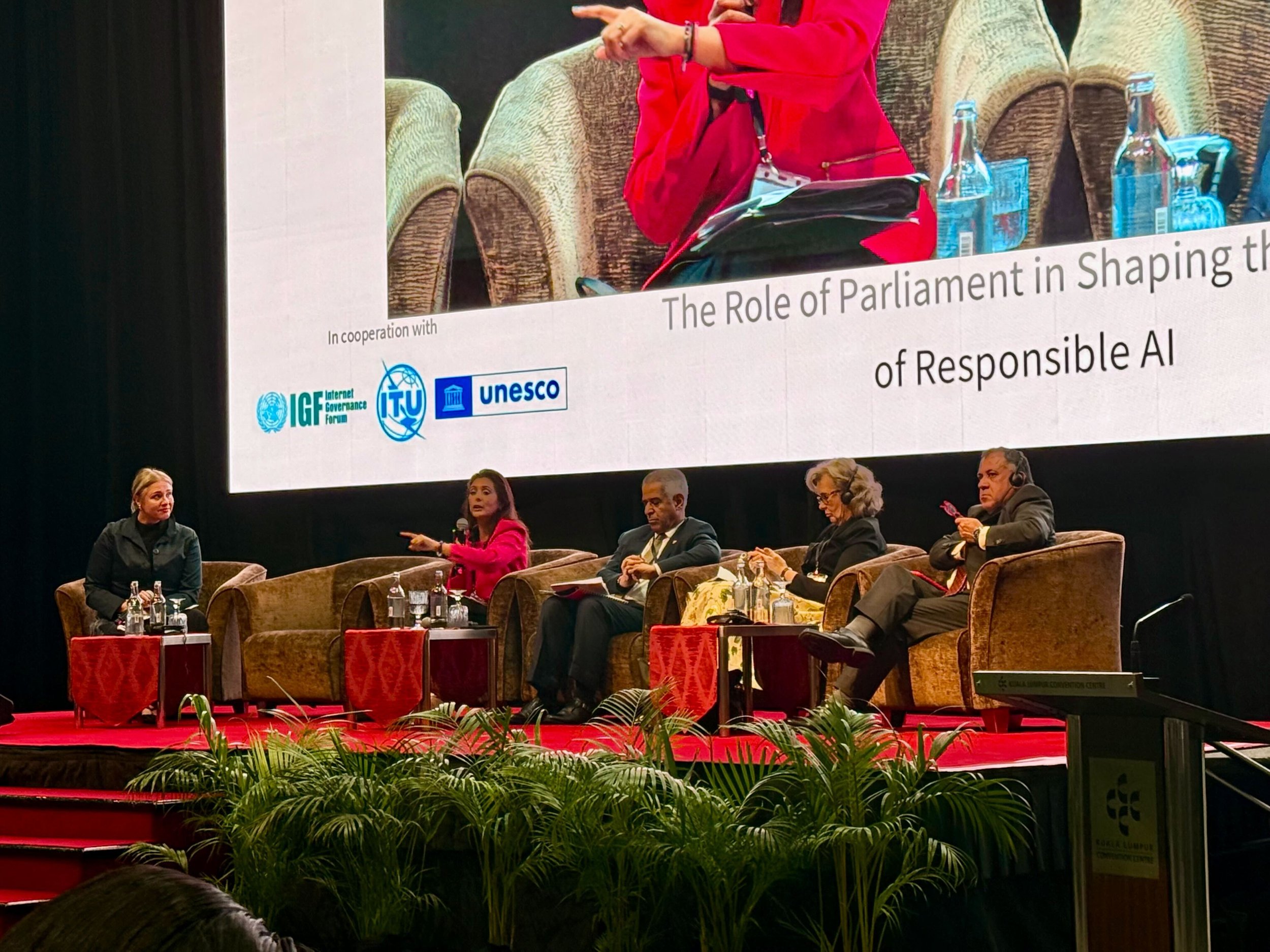
The first substantive session focused on the future of parliaments. Marci moderated the debate and introduced five scenarios showing how AI might reshape legislative work in the coming years. Developed through a partnership between the IPU and POPVOX Foundation, these scenarios are designed not to forecast the future, but to stimulate critical reflection on potential pathways. These are:
One member of parliament from Jordan put it perfectly. “These scenarios make us confront a key question: are we shaping AI, or is AI shaping us?”
A panel of four members of parliaments joined Marci in exploring the scenarios:
Nusrat Ghani, Deputy Speaker of the House of Commons (United Kingdom),
Abdulnabi Salman, First Deputy Speaker of the Council of Representatives (Bahrain),
Margareta Cederfelt, Member of Parliament (Sweden), and
Eric Aedo, Vice President of the Chamber of Deputies (Chile).
Both Ghani and Salman engaged directly with the hypothetical futures. They noted that they would prefer a hybrid model in their own countries, combining algorithmic processing with human judgment. Ghani raised an important point: perhaps 15 years is too soon for these futures to materialize. I am not entirely convinced, given the pace of technological change.
One theme cut across all five contributions: humans must remain in the loop. As Ghani emphasized, AI adoption cannot move so fast that it breaks the relationship between elected officials and the people they represent. Constituents need to feel comfortable with the pace of change.
Cederfelt added another layer: leadership. Those currently in positions of institutional authority will shape the ethical dimension of AI adoption. She said that AI is never human, and it is not a friend. Human decision-making must remain predominant. Aedo agreed. According to him, AI adoption must be prudent, republican, and overseen by humans.
A widening gap in technological capacity across countries also emerged as a concern. While Chile can draw on decades of digitalization efforts, including laws digitized from more than 200 years ago, others like Kenya are still navigating digital transformation itself before even reaching the question of AI use, as one MP in the audience noted.
One final point drew consensus: AI could free up time for something legislators everywhere say they lack but deeply need due to time constraints: meaningful human connection. At the end, Cederfelt was relieved we still had two more days of discussion because the implications of AI are vast and complex. I couldn’t agree more.
Modern Parliament (“ModParl”) is a newsletter from POPVOX Foundation that provides insights into the evolution of legislative institutions worldwide. Learn more and subscribe at modparl.substack.com.