
On Day Three: The Final Recommendations Shaping the Future of AI in Parliaments
Notes from the third day of the global conference hosted by the IPU, CPA, UNDP, and the Malaysian Parliament on the future of responsible AI in legislatures
BY BEATRIZ REY
On the final day of the Artificial Intelligence Conference: The Role of Parliament in Shaping the Future of Responsible AI, participants adopted a preliminary resolution outlining 12 recommendations. Several of these focus specifically on how parliaments can use AI to strengthen and modernize legislative processes.
Key recommendations for AI in parliaments include:
Assess AI readiness and create a roadmap (Rec. 1): Parliaments should evaluate their current technological capacity and develop a strategic plan for integrating AI tools into their operations.
Develop shared standards for AI use in political life (Rec. 2): Establish codes of conduct and regulatory guardrails for applications such as AI-generated content, campaign use, and the prevention of digital harms.
Build internal AI capacity (Rec. 4 and Rec. 5): Parliamentary members and staff should receive continuous AI training, and institutions should tap into external expertise to stay informed on emerging risks and opportunities.
Strengthen AI oversight inside parliament (Rec. 6): Dedicated committees or oversight bodies should be created or empowered to scrutinize AI systems and sector-specific regulation.
Establish AI-governance infrastructure within parliaments (Rec. 11): This includes developing clear governance models, technical capabilities, and organizational processes to enable safe and effective adoption of AI tools.
Share learning and use cases across legislatures (Rec. 12): Parliaments are encouraged to exchange experience and best practices to accelerate responsible innovation.
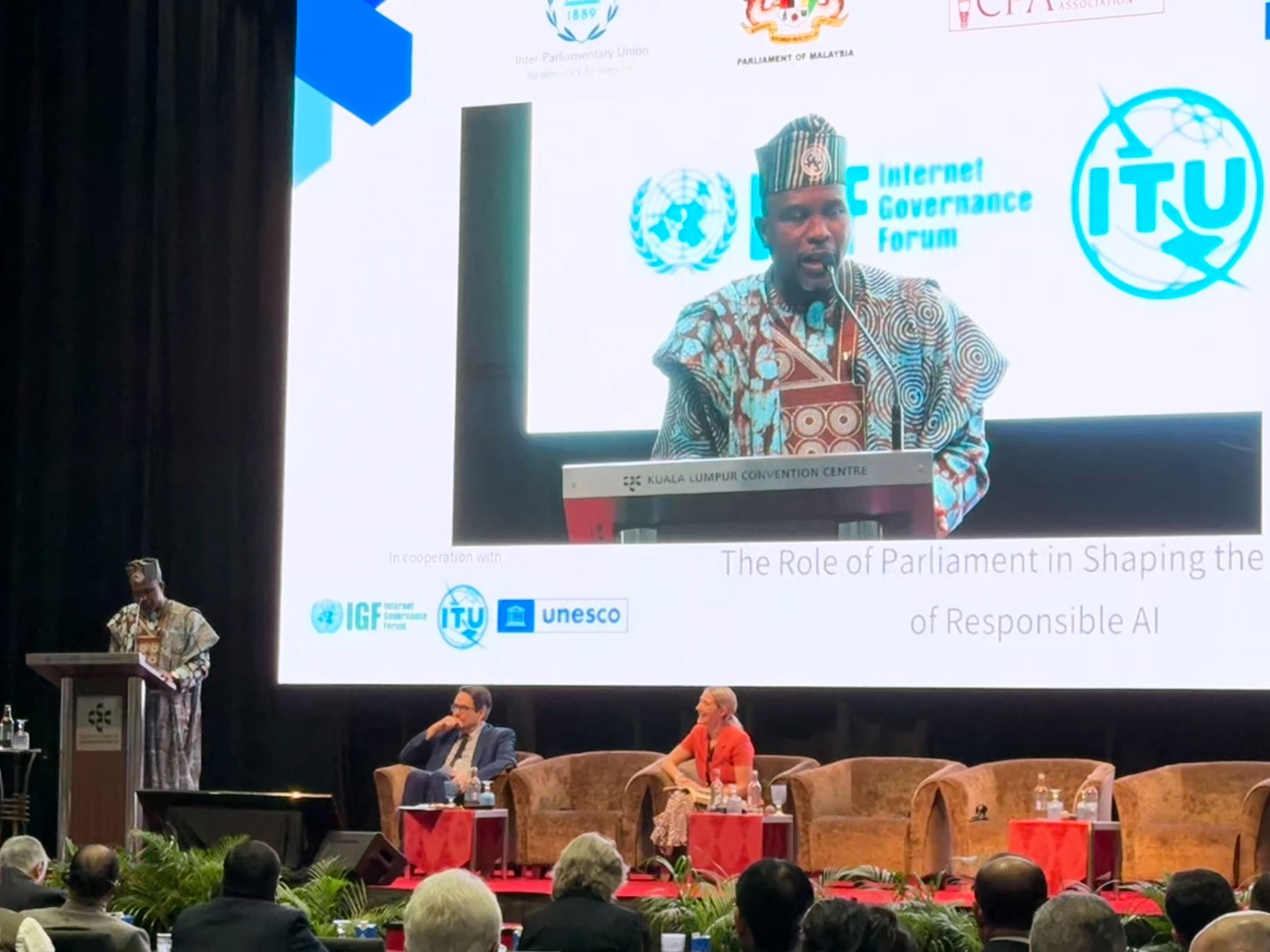
Senator Shaiub Salisu (Nigeria) reminded participants that AI adoption in parliaments must be strategic and rooted in capacity building — not adhoc experimentation.
In closing remarks, Senator Shuaib Afolabi Salisu, rapporteur of the AI-in-Parliaments track and Chair of the Senate Committee on ICT & Cybersecurity in Nigeria, distilled discussions into three key messages:
Adoption should be purposeful. AI is not a one-size-fits-all solution; strategic implementation can reduce resistance and foster internal champions.
AI literacy must be redefined. Parliamentarians do not need to code. Instead, they should be equipped to assess implications: risk, ethics, data sovereignty, and governance.
Move beyond ad-hoc experimentation. To ensure sustainability, parliaments should invest in structured capacity-building and consider establishing AI units and not just relying on IT departments.
Takeaways from the “Using AI in Small Parliaments” Unconference
I also took part in an unconference session focused on how small parliaments can adopt AI, attended mainly by legislative staff and IT managers. One recurring challenge was how to secure meaningful engagement from MPs. Interest exists — as shown by Trinidad and Tobago, which had one government MP and one opposition MP present — but time constraints are a major barrier. Participants explored new ways to communicate with MPs, including the idea of lightweight tools or apps that periodically ask MPs how AI could support their work. In this model, MPs become providers of insight rather than active champions.
Another takeaway was the need for leadership buy-in. Clerks and Speakers often make or authorize operational decisions, meaning AI initiatives are unlikely to progress without their support. Participants noted that curious, tech-open leadership can accelerate change. In this sense, the conference’s final resolution will likely be a valuable tool to take home and use as justification for beginning institutional AI exploration.
A more reflective and comprehensive post is already forming in my mind — coming soon.
Modern Parliament (“ModParl”) is a newsletter from POPVOX Foundation that provides insights into the evolution of legislative institutions worldwide. Learn more and subscribe at modparl.substack.com.