
Congress in 2040?
POPVOX Foundation’s “Future-Proofing Congress” is a newsletter created for the busy Congressional staffer to keep you updated (and inspired!) about operational improvements and new resources on and off the Hill. Learn more and subscribe here.
Insights from the global “AI for Parliaments” summit and why US lawmakers can’t afford to fall behind
At the risk of overplaying my invitation to guest post to “Future-Proofing Congress,” I wanted to send a short follow up on my Thanksgiving post (ICYMI: The Future Won’t Slow Down, But Congress Can Get Ready) with takeaways from the international “AI for Parliaments” conference for the US Congress and state legislatures.
Futures Thinking: Legislatures in 2040
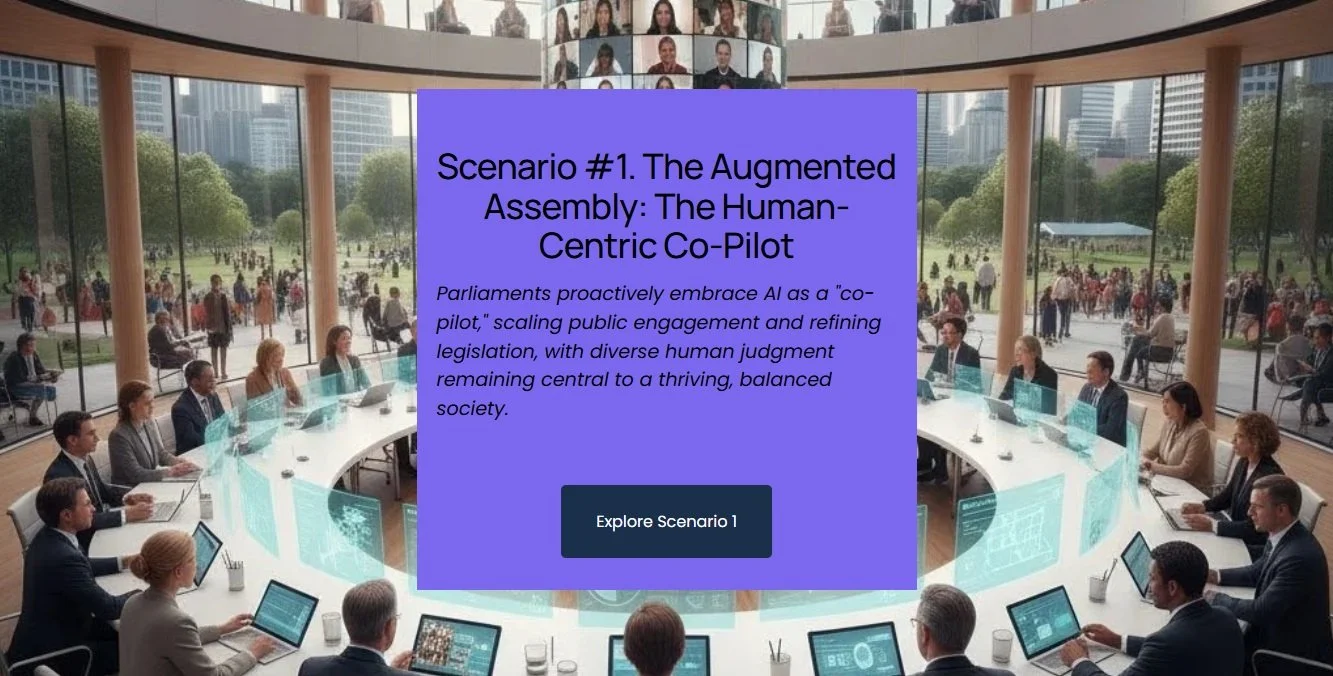
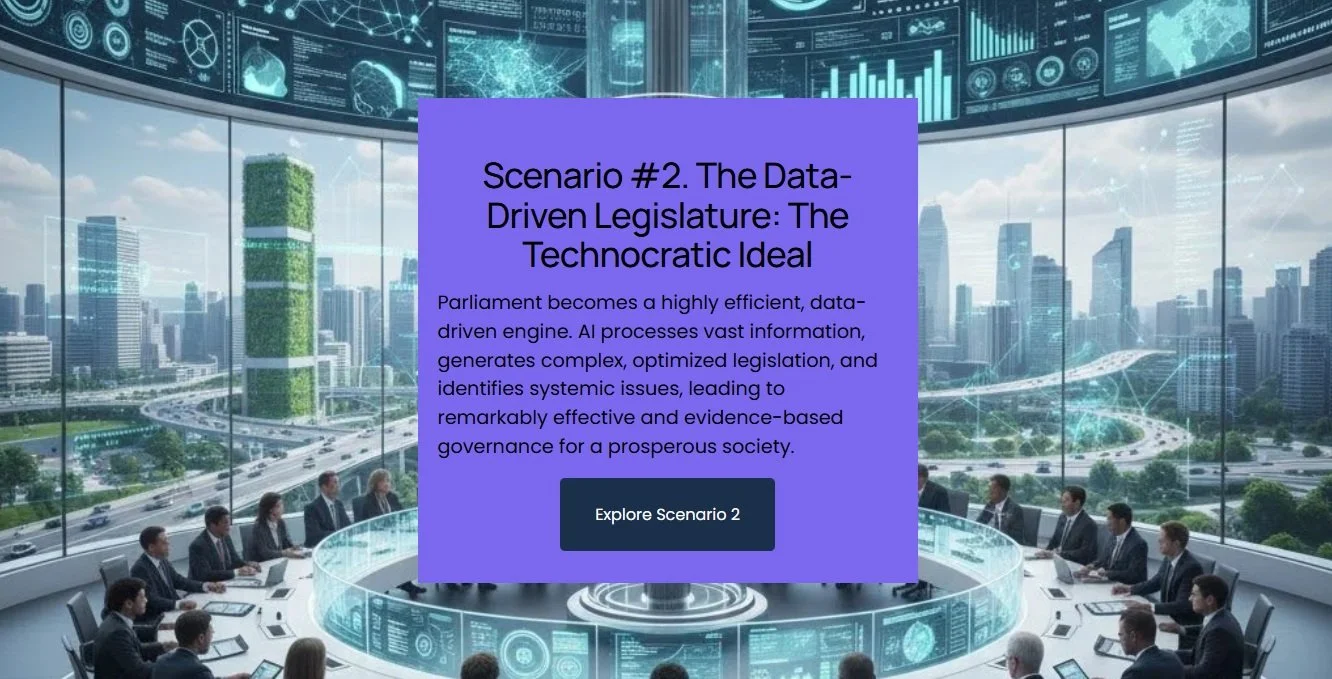
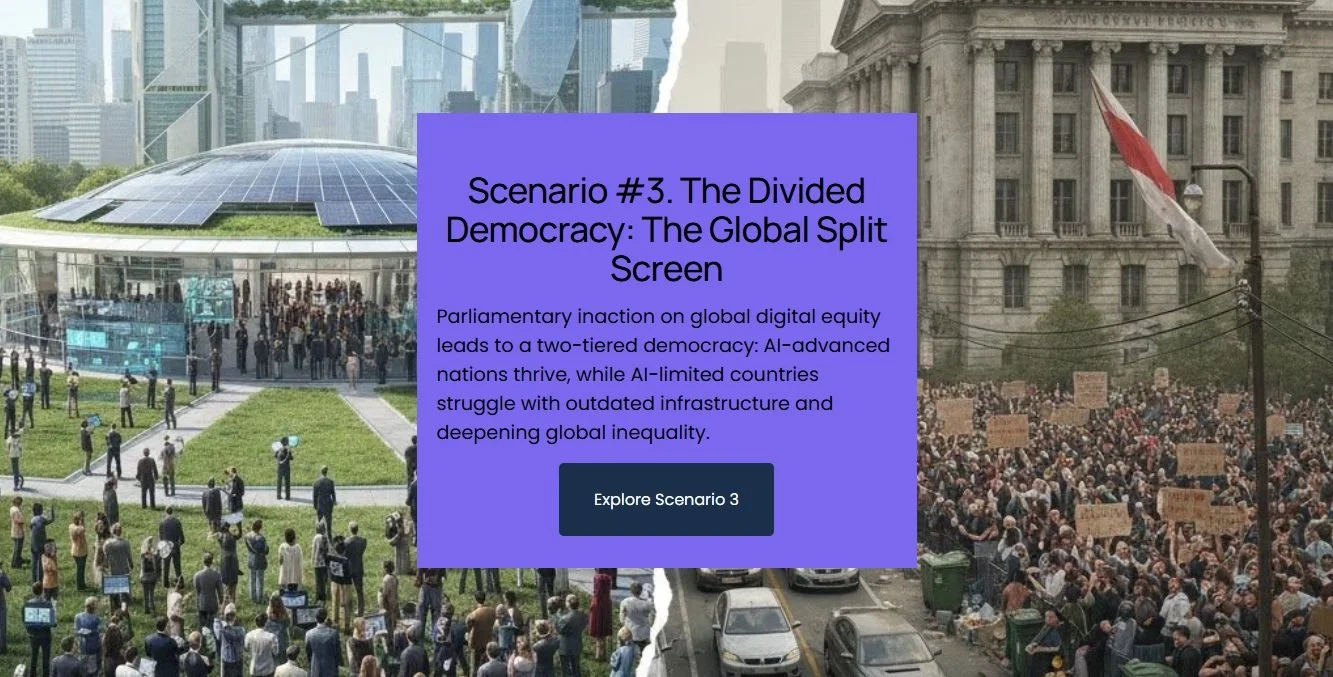
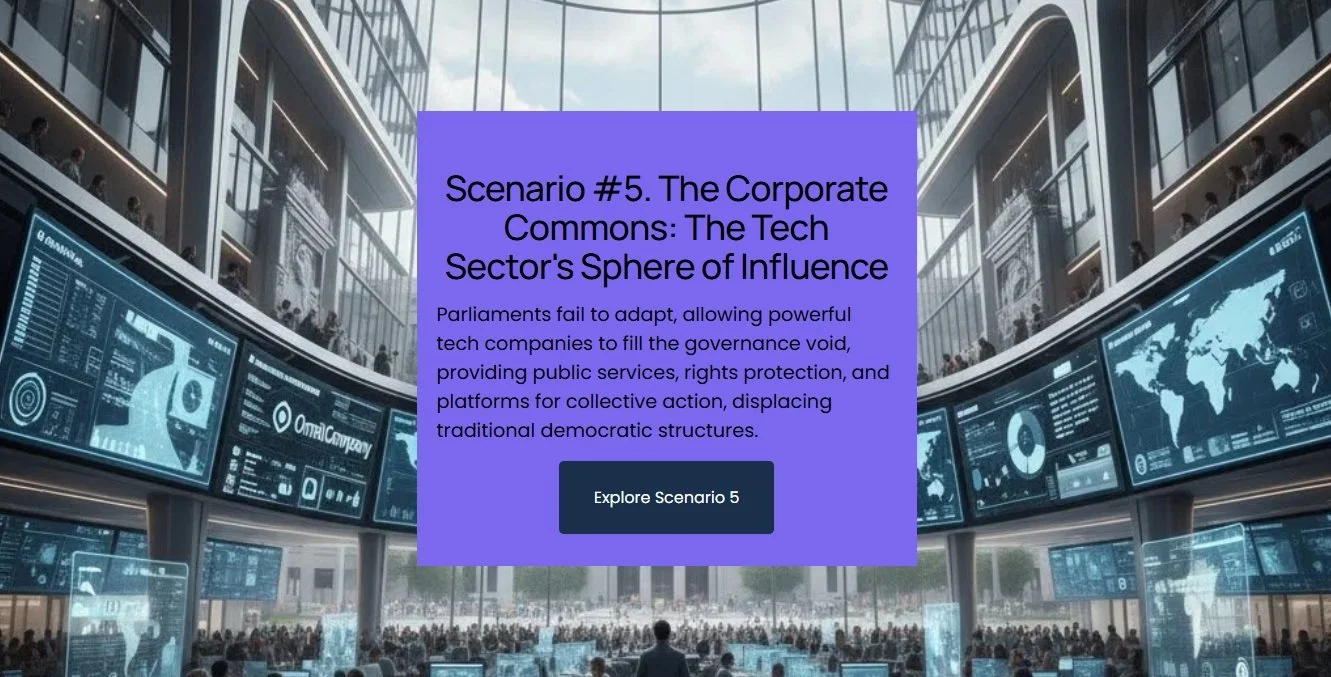
I was asked to set the stage for the conference with five “futures” for the year 2040, so with the help of my AI friends, I shared the following potential paths:
The Augmented Assembly (AI as tool, humans in charge)
The Data-Driven Legislature (optimized for efficiency)
Divided Democracy (the haves and have-nots of legislative AI)
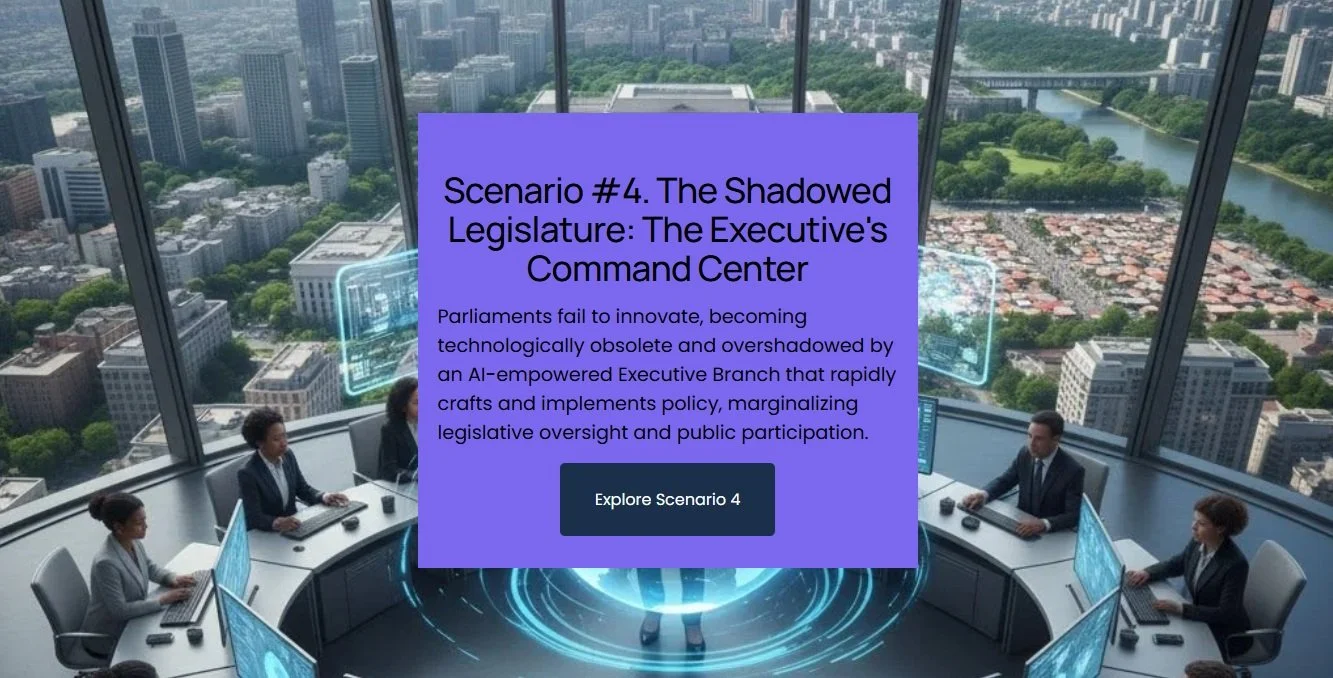
The Shadowed Legislature (eclipsed by an AI-powered Executive branch)
The Corporate Commons (governance outsourced to Big Tech)
Of course, futures thinking is not prediction and these possible futures are just tools for thinking about what decisions we need to make today. But they do emphasize the importance of legislatures keeping pace with technology and making conscious decisions to leverage these tools to make better policy, better serve constituents, and to preserve the checks and balances of our constitutional system!
Global Legislatures Leading on AI
I was inspired by the examples of AI leadership on display from parliaments of all sizes around the world. While our House of Representatives recently celebrated approval of Microsoft Copilot for use by Congressional offices, this step puts the US at the average compared to its peers in AI adoption. Just a few examples:
The UK Parliament established a Speaker’s Steering Group on AI in Parliaments. Its leader, Deputy Speaker Nusrat Ghani, aims to make Westminster “the most AI-proficient legislature in the world.”
Chile shared how its “Caminar” AI-enabled platform developed out of its long history of digitizing public information and experimentation with data-driven governing.
Even small countries like Mauritius are leveraging AI for transcription and instant summaries in English and French.
Beatriz Rey has more coverage and perspective on the conference in the most recent ModParl.
CAO Leadership Change is a Chance to Recalibrate
Former Chief Administrative Officer, Catherine Szpindor, led the House of Representatives through a series of modernization initiatives that laid important groundwork for future technical progress. Her retirement presents an important opportunity for the next CAO to prioritize innovation that advances the essential mission of equipping Members and staff to serve their constituents effectively. Aubrey Wilson and Caitlin McNally celebrate Szpindor tenure and lay out concrete recommendations for her successor.
AI Directives in House Rules & Approps
As a reminder, the House rules of the 119th Congress included language directing the Committee on House Administration, the Clerk, the Chief Administrative Officer, and other officers and officials to “continue efforts to integrate artificial intelligence technologies into the operations and functions of the House.”
Both the House and Senate included AI directives in committee reports for the Legislative Branch Appropriations bill, including quarterly reports on progress. This reporting will be a welcome renewal of the House’s initial commitment to transparency and public reporting of AI use in the Legislative branch. From September 2023 through December 2024, the House Modernization Subcommittee released monthly “Flash Reports” on AI strategy and implementation in the House but that reporting was discontinued in the 119th. For reference, the CAO’s most recent biannual report (January – June 2025) mentions artificial intelligence only twice (in the context of cybersecurity and LinkedIn learning modules).
Congressional Data Task Force Meeting: December 9, 2025
One of the best ways to hear updates and engage on Congressional tech upgrades is to attend the public meetings of the Congressional Data Task Force. The next meeting was just announced:
Tuesday, December 9, 2025, from 2-4 PM
Hybrid event hosted in Longworth B-248/B-249 and on WebEx
The Future Keeps Coming
ChatGPT officially launched on November 30, 2022 and the ripple effects are changing the world.
To recap the crazy past week in AI:
Nov 18: Gemini 3 crushed benchmarks and was the top model for a few days.
Nov 24: Claude Opus 4.5 takes the lead in coding and other benchmarks.
Dec 1: OpenAI launched a new “alignment” blog to share “ideas that are too early, too narrow, or too fast-moving for a full paper.”
Dec 1: China’s DeepSeek released a new open-source model claiming to match GPT-5 on reasoning benchmarks.
Dec 2: OpenAI reportedly declares “code red” on competition threat (but maybe there’s a secret super model in the works?).
Amazon’s annual cloud conference kicked off with announcements on “agentic AI” for security, coding and developer operations.
Self-driving cars: transportation issue or public health?
Revealed: the “soul spec” for Anthropic’s Claude LLM tool
MIT / Oak Ridge National Lab “Iceberg Index” finds that AI can already replace 11.7% of the US workforce.
Learn About Tech & Oversight with International Peers
We at POPVOX Foundation are honored to join the Westminster Foundation on Democracy and the University College of London to co-lead a course on what is called “legislative scrutiny” internationally. (The term refers to what we in the US mean by hearings, budget modeling, and oversight.) The hours are a little crazy for US-based staffers, but we would love to have you join us if you can handle the insomnia!

About POPVOX Foundation
POPVOX Foundation is a nonpartisan nonprofit that helps democratic institutions keep pace with a rapidly changing world. Through publications, events, prototypes and technical assistance, the organization helps public servants and elected officials better serve their constituents and make better policy.
