The POPVOX Foundation Model
POPVOX Foundation is a nonpartisan team of institutionalists who have worked inside Congress and alongside policymakers around the world to help legislatures, the bedrocks of democracy, stay relevant in a rapidly changing world. We refuse to give up on Congress and believe that legislatures around the world are worth investing in. To help Members and staff fortify their institutions from the inside out, we model the actions, pilot the technologies, and teach the methods back to those who can implement them.
This is the POPVOX Foundation model, and the examples below show it in action.
Recognizing a signal calling for improvement
Mapping existing pain points and identifying ideal outcomes
Proposing solutions
Piloting those solutions, leading to improvement
Advising and knowledge sharing to help pilots become adopted and institutionalized
Continuity of Remote Operations
In March 2020, as COVID-19 closed offices and halted travel, Congress had no tested way to hold a hearing or markup without gathering in person. To find out how remote proceedings could work, POPVOX Inc., (under a project that later became POPVOX Foundation) co-organized a mock remote hearing and markup on Zoom with Lorelei Kelly of Georgetown's Beeck Center and Daniel Schuman of Demand Progress. Former Reps. Brian Baird and Bob Inglis and former House Parliamentarian Charles Johnson III joined staff and reform experts in role-playing as Members, a clerk, and a witness. The experiment highlighted pain points and we shared the lessons learned with the institution. POPVOX Foundation Cofounder and Executive Director Marci Harris said the goal was for the panelists to experience those problems "so that current Members and staffers don't have to."
A second exercise on April 16 brought in dozens of former Members of Congress, with testimony from retired Gen. David Petraeus, UK MP Chi Onwurah, and a Spanish parliamentary official describing Spain's remote voting system. Again, we shared what we learned with committee staff, and on April 20, a dozen organizations from across the political spectrum, including POPVOX, wrote to House leaders asking for temporary rules allowing remote floor debate and committee work, plus new Legislative branch technology funding.
The House Veterans Affairs Committee hosted the first (unofficial) virtual House hearing on April 28, 2020 and the Homeland Security & Governmental Affairs Permanent Subcommittee on Investigations on April 30, 2020. The House officially adopted temporary rules to allow remote proceedings and proxy voting on May 15, 2020.
Internapalooza
At the start of the 117th Congress, while the COVID-19 pandemic continued, POPVOX Foundation and a community of civil society organizations saw a growing crisis in the professional development and support of Congressional interns. Internships are a key hiring pipeline in the House and Senate. Because of widespread remote work and the lack of a standardized approach to intern onboarding and education, POPVOX Foundation orchestrated the first intern-focused professional development conference, Internapalooza, and hosted it eight more times. In 2024, the House adopted the event as the official Capitol Intern Summit, which the new House Intern Resource Office now organizes.
Read the Internapalooza Case Study for insights into the program, partners, and pathway to institutionalization.
Formalizing Support for Casework
Casework is the most direct assistance Congressional offices provide in supporting constituents. From helping a veteran obtain benefits to orchestrating international immigration transfers following incidents of war or natural disaster, casework jurisdiction spans nearly every federal agency and include hundreds of cases per office each year.
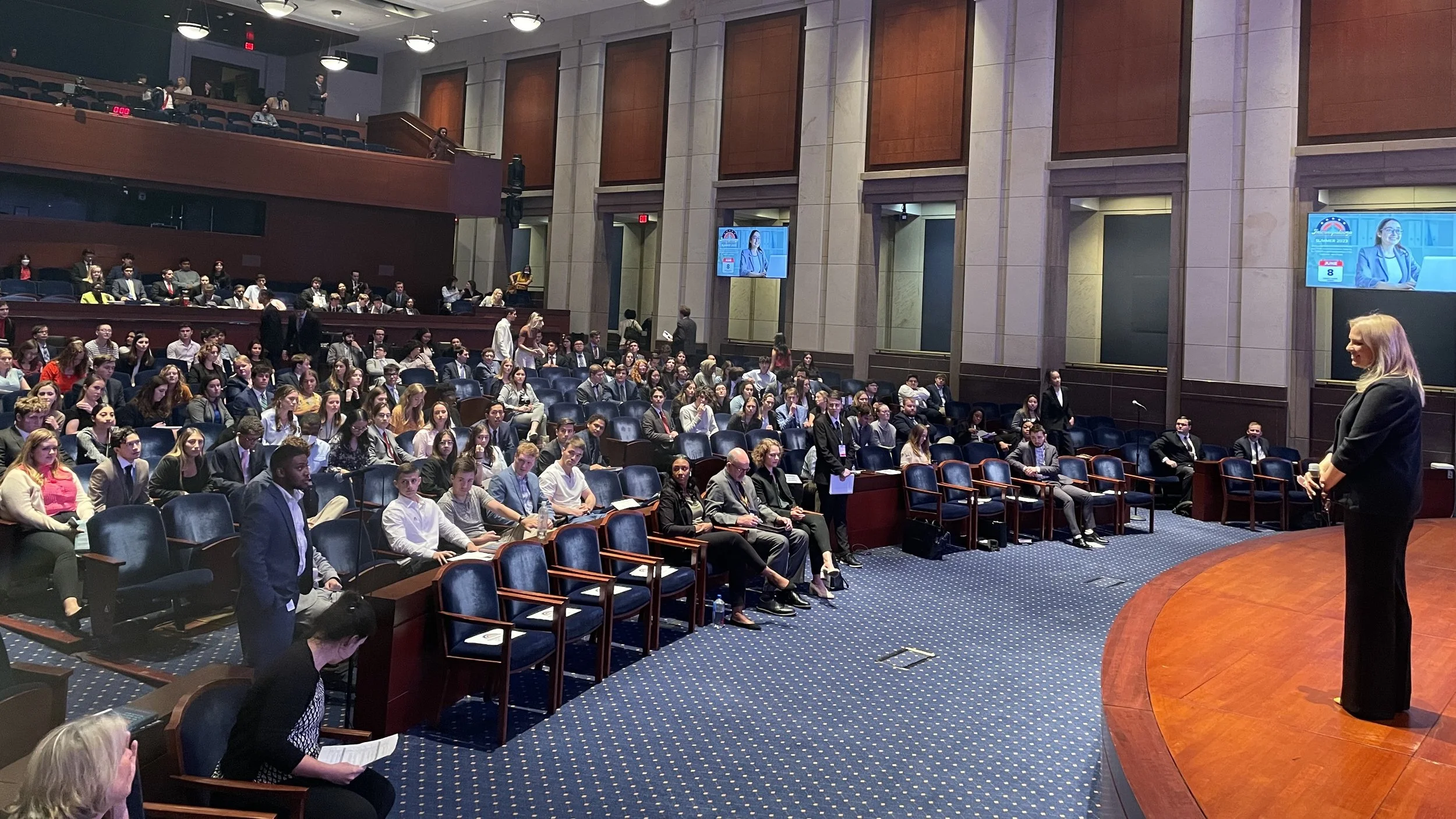
Through listservs and Microsoft Teams chats, Congressional caseworkers share tips and flag unusual spikes in demand, but every office tracks casework with its own categories, tags, and counting methods. As a result, a pattern in one office's caseload was easy for an agency liaison to dismiss as a fluke, and offices could not tell whether they were even measuring the same thing. In 2022, POPVOX Foundation’s Director of Strategic Initiatives Anne Meeker testified before the Select Committee on the Modernization of Congress about the need for a unified casework data system, and its final report recommended an optional system that lets offices share anonymized casework data to identify trends and systemic problems. In July 2023, we released the white paper "Roadmap for Casework Data," which laid out how such a system could work. The Casework Navigator newsletter (now housed at the Constituent Service Institute), continued to give caseworkers tools, tips, and agency updates.
The institution began implementation of the unified casework data system in 2024. The Committee on House Administration's Subcommittee on Modernization and Innovation reported a pilot working group with House Digital Services, which spent 2024 and 2025 working with caseworkers from both parties to develop technical standards. In July 2025, House Appropriations encouraged the Chief Administrative Officer to keep prioritizing the project. House Digital Services has since released a draft unified data schema for feedback, which will feed Case Compass, a dashboard of anonymized, aggregate casework data that helps offices see trends in context. Next steps include collecting caseworker feedback, creating a Casework Liaison Office under the CAO to own the project long term, and bringing the Senate in.
Read the Casework Navigator Case Study for additional context. Additionally, in August 2026, POPVOX Foundation published The State of Congressional Casework, a landscape analysis of Congressional constituent services teams, with recommendations for revitalizing this essential element of Congress’ duty to the American people.
AI Training for Legislative Staff
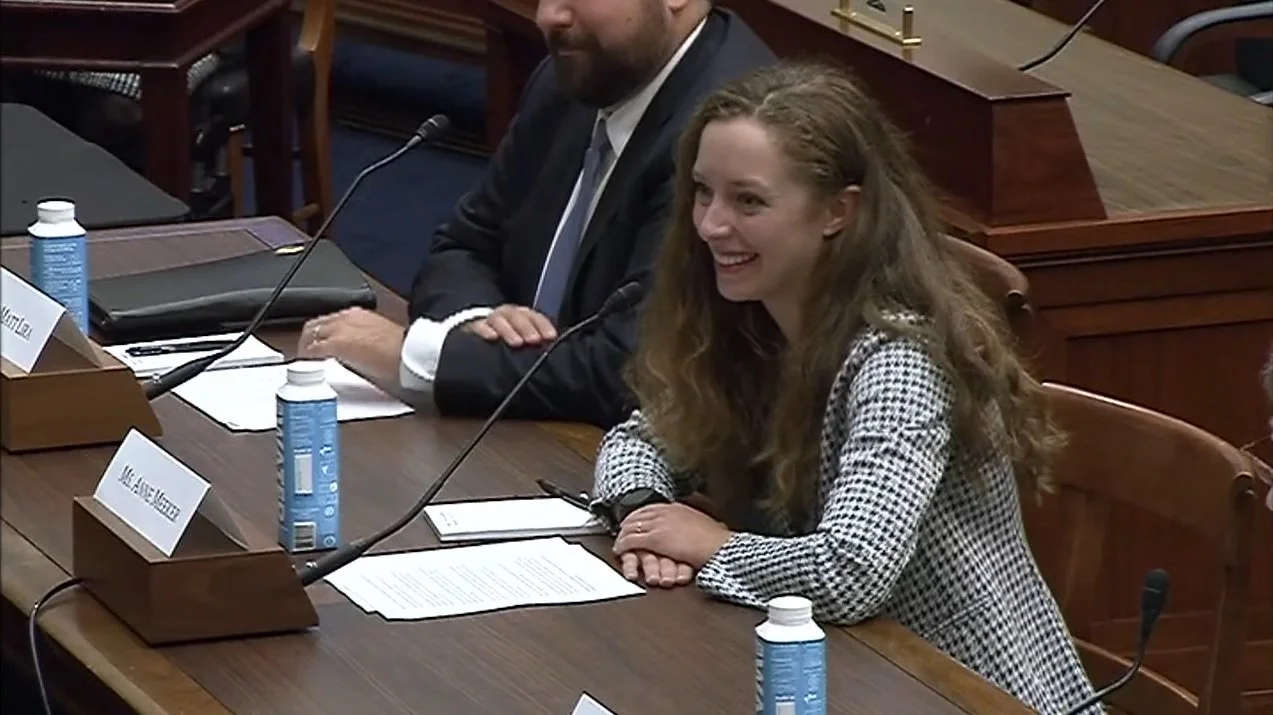
In 2023, POPVOX Foundation hosted its first AI training for Congressional staff, when the tech industry was adopting AI LLMs rapidly but most of Capitol Hill's workforce had yet to discover them. Seeing the pacing problem emerge, then-Director of Government Innovation Aubrey Wilson developed an on-demand AI 101 explainer video with best practices, cybersecurity tips, and use cases tailored to legislative staff. Since then, we have expanded our bank of AI explainers, training, and newsletters to keep staff informed and help them innovate responsibly and effectively.
The House released its first internal suite of AI educational briefings in 2025, and the Senate followed in 2026. POPVOX Foundation continues to conduct trainings and produce AI resources to keep legislators in Congress and around the world informed of emerging technologies’ rapid development.
Inspiring Continued Congressional Modernization
As an active collaborator in the Fix Congress Cohort, POPVOX Foundation staff have brainstormed and supported improvements to Congressional capacity and operations since the Foundation's founding in 2021. When the House Select Committee on the Modernization of Congress sunset, we saw the need to capture its work and bring a new generation of Congressional innovators into the conversation, so in 2024, we created Future Proofing Congress.
In 2026, we revisited this work to re-evaluate which modernization ideas have evolved, progressed, stalled, or failed. In July, we issued a public call for ideas from Congressional staff, civil society, academics, technologists, and the general public, and the hundreds of ideas we received went onto a matrix measuring implementation effectiveness and long-term institutional improvement, which became the Three Horizons for Congress Public Draft.
In August 2026, the Committee on House Administration's Subcommittee on Modernization and Innovation issued its own public call for modernization ideas to inform the future roadmap.
Fostering First-Hand Experiences with Emerging Technologies
In August 2025, POPVOX Foundation released AI Summer Camp, an on-demand, online educational experience for Congressional staff. We designed the resource as a self-led adventure so participants could choose a learning path based on their specific job title and be introduced to six unique approaches to using AI to improve their capacity. The camp included sample prompts, example scenarios, and best practices for mitigating cybersecurity risks and following institutional AI use guidelines.
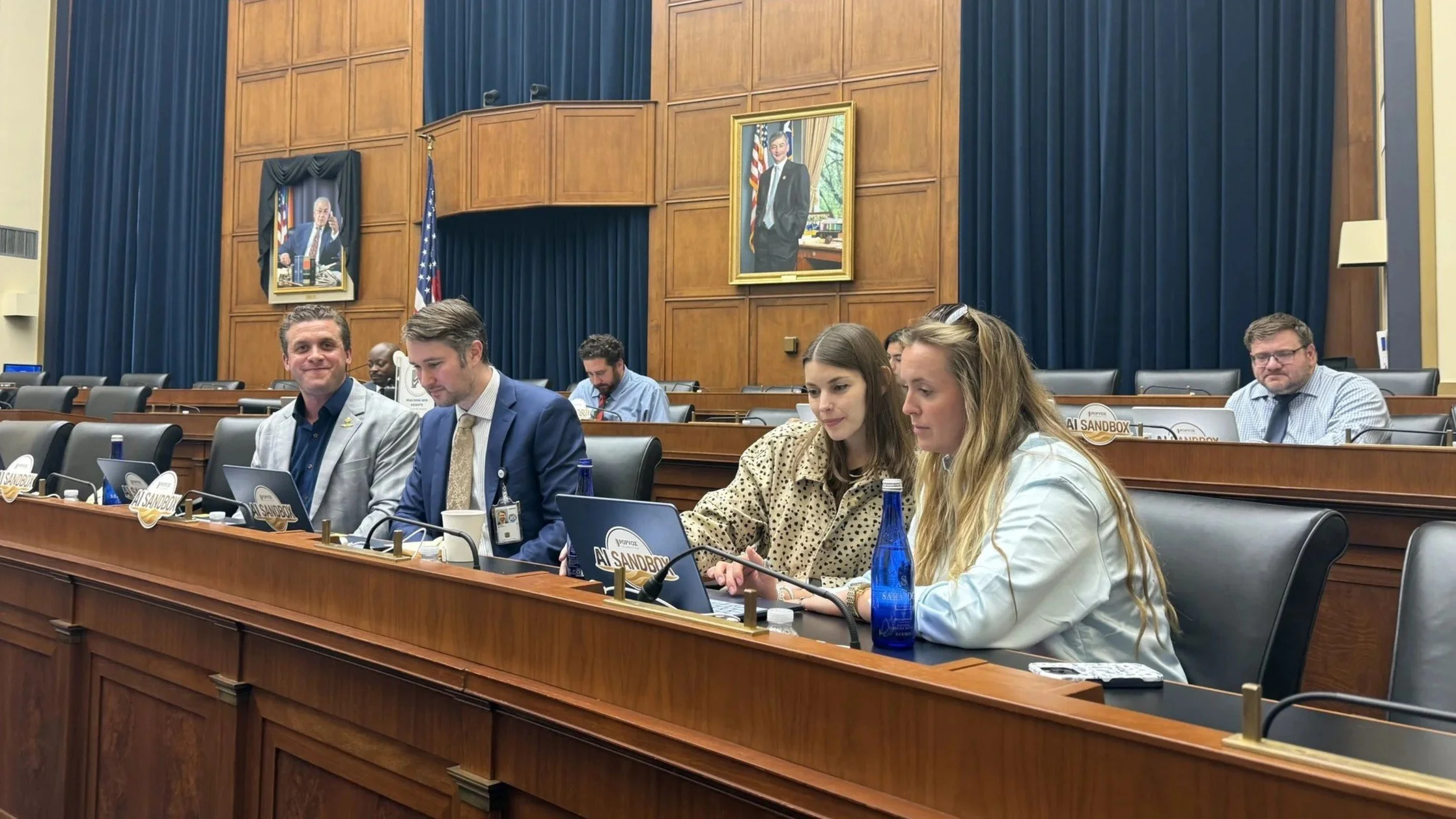
In June 2026, POPVOX Foundation partnered with Meridian International to turn AI Summer Camp into AI Base Camp, an immersive Capitol Hill event with six stations around a House hearing room, each demonstrating an AI use case more advanced than the last. Participants could visit every table or go straight to the one matching the skills they wanted to build. The first four tables covered implementable use cases, such as prompt engineering and custom AI bot creation, and the final two introduced staff to cutting-edge deepfake technology and agentic AI coding and design tools. Participant feedback was unanimous on two points: it was the first time attendees had seen these technologies firsthand, and it was the first event that met each person where they were on their AI journey, for new and experienced users alike.
In September 2026, House Information Resources and the House AI Center hosted its own version of AI Base Camp.
The Model Continues
The above case studies are recent, Congressionally-focused examples of the POPVOX Foundation model, and each followed the same path. We recognized a problem, mapped it with the people closest to it, proposed a solution, piloted it ourselves, and shared what we learned so the institution could adopt the work.
POPVOX Foundation measures its work by what legislative institutions adopt. We will keep piloting new approaches alongside the people who will use them and sharing what we learn to help legislatures keep pace.