1. Introduction: The Pacing Problem at the State Level
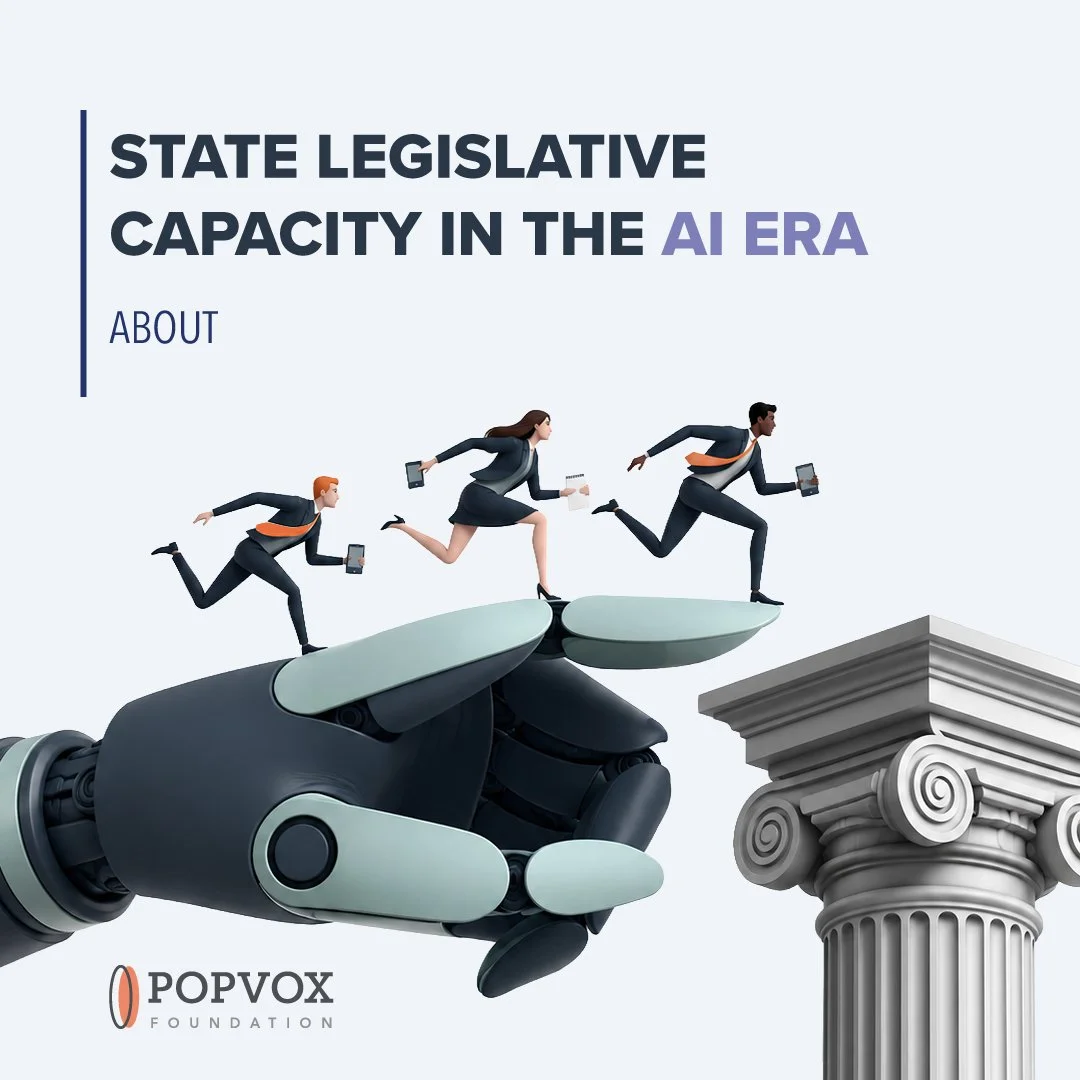
State legislatures face a widening “pacing problem” as generative AI reshapes lawmaking faster than institutions can adapt. Drawing on interviews across twenty-two states, State Legislative Capacity in the AI Era examines staffing, institutional knowledge, network relationships, and technology adoption, revealing where legislative capacity lags and where states are quietly outpacing Congress.
2. About This Paper and Methods
State Legislative Capacity in the AI Era draws on original interviews across twenty-two states with legislators, staff, and civil society partners to explore AI adoption and governance. It details a practitioner-driven methodology, recruitment pathways, and confidentiality practices shaping this exploratory, cross-state analysis.
3. The State of AI Adoption in State Legislatures
State legislatures show uneven AI adoption, with generative tool use among staff jumping from 20% to 44% between 2024 and 2025 while formal policies lag behind. Rising bill drafting requests, synthetic constituent outreach, and members citing AI outputs as authoritative raise new governance and literacy risks.
4. Explaining the Gap: The Capacity Landscape AI Is Entering
State legislatures face uneven AI adoption rooted in capacity gaps across people, institutional knowledge, external networks, and technology. Overworked staff, thin onboarding, dependence on lobbyists and the Executive branch, and inconsistent data infrastructure shape whether legislatures capture AI's benefits or absorb its costs.
5. Assessing Legislative Capacity in the AI Era
Traditional legislative capacity metrics like salary, session length, and staff numbers fail to capture how well legislatures adapt to AI. A new Legislative Adaptive Capacity Index proposes measuring people, institutional knowledge, network relationships, and technology readiness to guide investment and resource allocation.
6. Recommendations
State legislatures can strengthen AI readiness through thirteen recommendations spanning data infrastructure, transparent guidelines, and customized tools; adoption support like phased integration and upskilling; and governance measures addressing human accountability, caucus procurement risks, and interstate collaboration to build lasting institutional capacity.
7. Conclusion
State legislatures show uneven AI adoption, with progress tracking institutional role more than geography. Foundational gaps in people, knowledge, networks, and infrastructure shape outcomes, leaving open questions about partisan asymmetries, Executive branch dynamics, and civil society's capacity to support legislative governance ahead.
8. About
State legislatures face a widening “pacing problem” as generative AI reshapes lawmaking faster than institutions can adapt. Drawing on interviews across twenty-two states, State Legislative Capacity in the AI Era examines staffing, institutional knowledge, network relationships, and technology adoption, revealing where legislative capacity lags and where states are quietly outpacing Congress.


